On the Material Supremacy of Imperial Silk
To engage with silk is to engage with a material that has, for millennia, defined the very parameters of luxury, power, and cultural sophistication. It is not merely a textile; it is a testament to human ingenuity, a physical manifestation of imperial will, and a currency of diplomacy that shaped the contours of global history. The legacy of imperial silk weaving is not a relic to be viewed under glass, but a foundational chapter in the annals of material excellence, one that continues to inform the most exacting standards of craftsmanship today. To understand its provenance is to appreciate the unyielding pursuit of perfection that characterises the finest creations, sartorial or otherwise.
The Sovereign Fibre: A Monopoly of Power and Prestige
Imperial engagement with silk was never casual; it was, from its inception, an affair of state. The Chinese emperors of antiquity understood this with crystalline clarity, establishing and guarding the secrets of sericulture—the cultivation of the Bombyx mori silkworm and the unreeling of its continuous filament—as one would guard the plans to a citadel. This was not simply an industry. It was a sovereign monopoly. The Silk Road, that legendary network of trade routes, was less a spontaneous artery of commerce and more a deliberate, state-sanctioned conduit for this most precious commodity. Silk flowed west, while gold, horses, and ideas flowed east, establishing a geopolitical and economic dynamic that endured for centuries. The Byzantine Empire, upon securing its own production capabilities, treated its silk workshops, the gynaecea, as a direct instrument of imperial policy, controlling distribution to reinforce the hierarchy of the court and to dazzle foreign emissaries. The message was unequivocal: control of this material was synonymous with control of prestige itself.
The Loom as Throne: Architectural Precision in Weaving
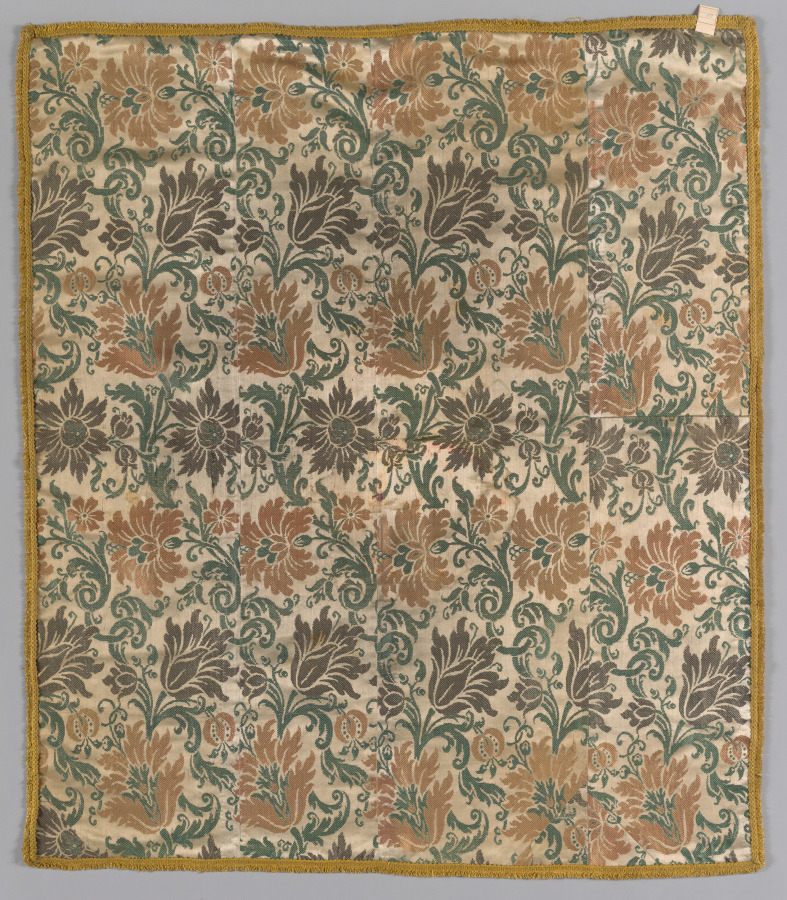
The imperial ateliers, whether in Luoyang, Constantinople, or later, Lyon under royal patronage, were laboratories of technical ambition. Here, the loom was not a mere tool but a complex engine of creation, an architectural apparatus demanding the most disciplined of minds and hands. The development of the drawloom, a machine of formidable complexity, allowed for the execution of vast, intricate patterns—imperial dragons, phoenixes, double-headed eagles, fleurs-de-lis—that were impossible on simpler frames. Operating such a device was a feat of coordinated intellect, requiring a master weaver and a drawboy, the latter acting as a human memory bank, selectively raising thousands of warp threads to create the pattern. The process was slow, meticulous, and prohibitively expensive. A single length of figured silk, dense with symbolic imagery woven in gold and silver-wrapped thread, could represent months of labour. This was not production; it was a form of material coronation, where the woven pattern served as a direct, legible proclamation of dynastic authority and divine right.
A Lexicon of Lustre: The Uncompromising Standards of Finish
The pursuit was not for mere colour or pattern, but for a specific, transcendent materiality. Imperial silks were judged by a lexicon of qualities that separated the regal from the merely decorative. Lustre—the characteristic shimmer born from the triangular prism structure of the silk filament that refracts light—was paramount. It conferred a luminosity that appeared intrinsic, as if the fabric were illuminated from within. Drape was equally critical; the finest silks possessed a weightless, fluid authority, falling in clean, sculptural lines that animated the wearer with a graceful, deliberate presence. The hand—the tactile sensation of the cloth—had to communicate substance without heaviness, a cool, smooth density that spoke of its inherent value. Dyes were sourced from the most exclusive and far-flung territories: crimson from kermes insects, Tyrian purple from molluscs, vibrant blues from lapis lazuli. The result was a chromatic depth and fastness that lesser materials could not emulate. Each bolt was a sensory manifesto, declaring its superiority to sight, touch, and even sound, as the finest silks were said to possess a distinctive, whisper-like "scroop."
The Enduring Legacy: A Benchmark for Contemporary Excellence
The dissolution of empires did not negate the standards they established; rather, it democratised the aspiration. The legacy of imperial silk weaving is precisely this: it established an immutable benchmark for quality, complexity, and expressive potential. The great fashion houses of Paris, the revered mills of Como, and indeed, the most discerning bespoke establishments on Savile Row, operate in the long shadow of these imperial ateliers. When a contemporary designer specifies a jacquard-woven silk for a limited-edition collection, or a cutter selects a heavyweight silk faille for a bespoke waistcoat, they are participating in a continuum. They are invoking that history of uncompromising material selection, of technical mastery over the loom, and of understanding cloth as a medium for conveying identity, authority, and artistry.
To commission a garment in a truly exceptional silk, therefore, is to do more than select a fabric. It is to align oneself with a heritage of sovereign ambition. It is to drape oneself in the product of a history where the boundaries of the possible were constantly redrawn by imperial decree and artisan genius. The filament remains, as it always was, a thread connecting the wearer not merely to a silkworm's cocoon, but to the very looms that once wove the tapestry of power. In an age of the ephemeral, such material permanence is not merely an advantage; it is a statement of principle.