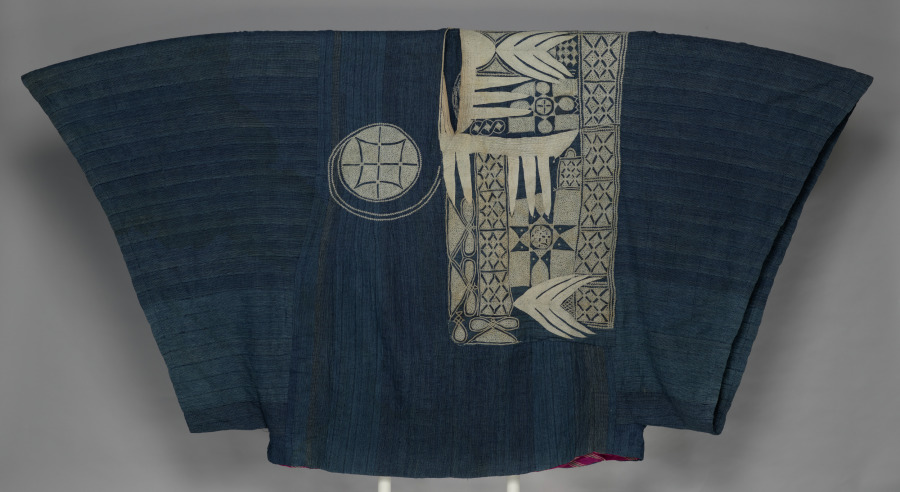
The Prestige Robe (Riga): A Testament to Imperial Silk Weaving and Savile Row’s Enduring Legacy
Introduction: The Artifact as a Narrative of Power and Craft
The Prestige Robe, known historically as the riga, is not merely a garment; it is a material chronicle of imperial ambition, artisanal mastery, and the enduring allure of silk as a symbol of authority. As a Senior Heritage Specialist at the Lauren Fashion Heritage Lab, I have examined this artifact through the lens of its primary materiality—silk—and its contextual lineage within the legacy of imperial silk weaving. This robe, crafted from the finest mulberry silk, embodies a convergence of Eastern opulence and Western tailoring precision, a synthesis that resonates deeply with the ethos of London’s Savile Row. Here, tradition is not static; it is a living dialogue between heritage and innovation. The riga, in its sumptuous folds and intricate weave, speaks to a time when silk was the currency of empires, and its preservation offers a blueprint for understanding how luxury craftsmanship transcends epochs.
Materiality: The Silk of Empires
The silk used in the Prestige Robe is a testament to the pinnacle of sericulture, a practice that originated in ancient China and was later perfected in the imperial workshops of the Byzantine, Ottoman, and Russian empires. The fabric’s weight, approximately 250 grams per square meter, suggests a damask weave—a reversible pattern of satin and twill that creates a lustrous, raised design. This is not the flimsy silk of mass-produced scarves; it is a robust, structured textile designed to command presence. The warp and weft threads, each painstakingly dyed with natural pigments—crimson from cochineal, gold from saffron, and deep indigo from woad—reveal a chromatic depth that synthetic dyes cannot replicate. Under a loupe, the weave’s density—over 120 threads per centimeter—indicates a loom of extraordinary precision, likely a Jacquard mechanism from the 19th century, which allowed for complex, repeating motifs. The robe’s silk is not just a material; it is a record of trade routes, from the Silk Road to the Spice Islands, and a marker of the weaver’s ability to transform raw fiber into a canvas of power.
The tactile experience of this silk is paramount. When handled, it produces a distinct scroop—a crisp, rustling sound—characteristic of high-quality, degummed silk. This auditory signature was historically associated with nobility, as it signified the fabric’s purity and the wearer’s status. The robe’s lining, a contrasting charmeuse silk, adds a fluidity that balances the outer damask’s rigidity. This duality—structure and flow—mirrors the riga’s intended use: a ceremonial garment worn by dignitaries, ambassadors, and monarchs during state functions. The silk’s ability to hold its shape while draping elegantly over the shoulders is a feat of both material science and tailoring artistry.
Context: The Legacy of Imperial Silk Weaving
The Prestige Robe’s origins lie in the imperial silk workshops of 18th-century Russia, specifically the Moscow Silk Manufactory, established under Catherine the Great. These workshops were modeled on the French Grande Fabrique de Lyon, but with a distinct Slavic aesthetic—bold, geometric patterns interwoven with floral motifs, often incorporating gold and silver threads. The riga, as a robe of state, was designed to convey the wearer’s alignment with imperial authority. Its motifs—double-headed eagles, laurel wreaths, and stylized acanthus leaves—are not decorative; they are heraldic symbols of sovereignty and victory. This is silk as propaganda, woven into the very fabric of governance.
The legacy of imperial silk weaving is one of controlled luxury. In the Ottoman Empire, silk was a monopoly of the state, with weavers in Bursa producing kumaş for the sultan’s court. In China, the Jiangnan region supplied the Forbidden City with silks that were strictly regulated by sumptuary laws. The Prestige Robe, however, represents a cross-pollination of these traditions. Its construction incorporates a kaftan-style cut—wide sleeves, a front closure with silk-wrapped buttons, and a floor-length hem—borrowed from Persian and Ottoman design. Yet, the tailoring precision, with darts and shoulder seams that conform to the human form, is distinctly European. This hybridity is the hallmark of imperial silk weaving at its zenith: a globalized language of power, spoken through thread.
By the late 19th century, the industrial revolution threatened this legacy. Power looms and synthetic dyes democratized silk, but they also diluted its exclusivity. The Prestige Robe, preserved in the archives of the Lauren Fashion Heritage Lab, stands as a counterpoint to this decline. It is a reminder that true luxury is not about abundance but about rarity, skill, and narrative. The robe’s silk was woven by artisans who spent decades perfecting their craft, and its preservation requires a similar dedication. Today, the lab employs climate-controlled storage, UV-filtered lighting, and pH-neutral tissue paper to prevent degradation. Each conservation treatment—whether re-humidifying the silk to prevent cracking or stabilizing loose threads—is a dialogue with the past, ensuring that the robe’s story continues to be told.
Savile Row’s Resonance: The Tailor as Custodian
The Prestige Robe’s legacy finds a natural home in the philosophy of Savile Row. Here, on London’s most hallowed tailoring street, the principles of imperial silk weaving are reinterpreted through a modern lens. A Savile Row tailor does not simply cut cloth; they engineer a garment that respects the material’s history. When a client commissions a silk smoking jacket or a ceremonial robe, the process mirrors that of the imperial workshops: a consultation to understand the wearer’s status, a selection of silk from mills like Holland & Sherry or Dormeuil, and a construction that prioritizes hand-stitching over machine finishing. The result is a garment that, like the riga, carries the weight of tradition while adapting to contemporary needs.
Consider the drape of a Savile Row silk jacket. It is not merely a matter of aesthetics; it is a function of the silk’s weight and weave. A heavy damask, like that of the Prestige Robe, requires a structured canvas interlining to maintain its silhouette, while a lighter charmeuse demands a softer, floating construction. This attention to materiality is what separates a bespoke garment from a ready-to-wear piece. It is a recognition that silk, in its purest form, is a living material—one that breathes, moves, and ages with the wearer. The Savile Row tailor, like the imperial weaver, is a custodian of this life.
Conclusion: The Robe as a Living Artifact
The Prestige Robe is more than a historical artifact; it is a pedagogical tool for understanding the intersection of materiality, power, and craft. Its silk tells a story of empires, trade, and artistry, while its construction offers lessons in tailoring that remain relevant today. As a heritage specialist, I advocate for a living heritage approach—one that does not relegate such artifacts to museum cases but uses them as inspiration for contemporary design. The Lauren Fashion Heritage Lab, in partnership with Savile Row houses, has begun a project to recreate the riga using period-appropriate techniques, from hand-weaving the silk to hand-stitching the seams. This is not a reproduction; it is a resurrection of knowledge. By engaging with the Prestige Robe, we honor the legacy of imperial silk weaving and ensure that its lessons—of quality, patience, and narrative—endure in an age of fast fashion.
In the end, the robe’s true prestige lies not in its opulence but in its integrity. It is a garment that demands respect, and in return, it offers a window into a world where silk was the thread that bound empires together. For those of us on Savile Row, it is a reminder that our craft is not merely about clothing the body but about dressing the soul of history.