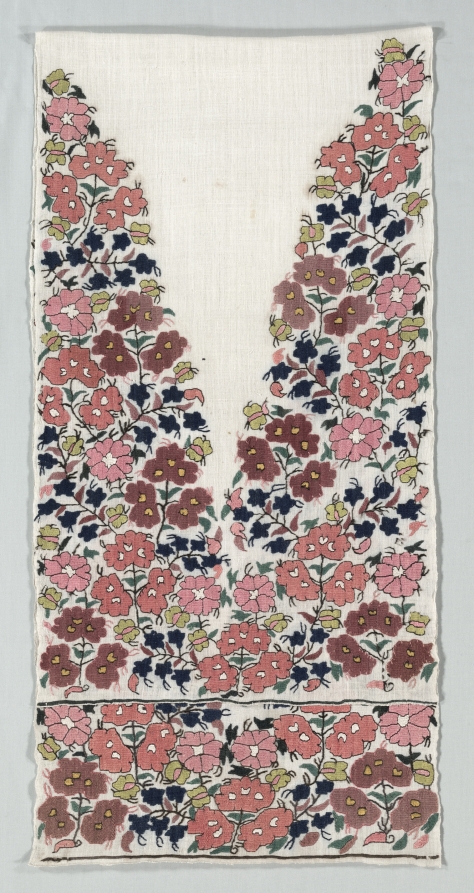
The Scarf as a Sovereign Artefact: Silk, Imperial Legacy, and the Modern Heirloom
In the hushed corridors of heritage, where the warp and weft of history are measured not in years but in dynasties, the silk scarf emerges as a singularly potent artefact. It is not merely an accessory; it is a document of power, a whisper of empire, and a testament to the enduring materiality of silk. At the Lauren Fashion Heritage Lab, we approach the scarf not as a transient fashion object, but as a portable legacy—a fragment of imperial weaving that has been re-contextualised for the modern wardrobe. This paper examines the scarf through the lens of its materiality, silk, and its deep-rooted connection to the legacy of imperial silk weaving, from the workshops of ancient China to the ateliers of London’s Savile Row.
The Materiality of Silk: A Fibre of Empire
To understand the scarf’s heritage, one must first confront the material itself. Silk is not a passive substrate; it is an active agent of history. Its production, from the cultivation of the Bombyx mori silkworm to the delicate reeling of filaments, was for centuries a state secret, guarded with the ferocity of a sovereign’s crown. The Imperial Silk Workshops of the Ming and Qing dynasties, for instance, were not merely factories; they were sanctums of power. The silk woven within their walls was reserved for the emperor, his court, and the celestial bureaucracy. Every thread was imbued with ritual significance, its colour, pattern, and weave dictated by sumptuary laws that reinforced the hierarchy of the empire.
When we speak of a silk scarf today, we inherit this weight. The materiality of silk—its lustre, its drape, its ability to absorb and reflect light—is a direct lineage from those imperial looms. A scarf of pure mulberry silk, hand-rolled at the edges, carries within its fibres the memory of a thousand years of meticulous craftsmanship. It is a material that demands respect, not because it is fragile, but because it is resilient. Silk has survived the Silk Road’s caravans, the opulence of the Byzantine court, and the industrialisation of the 19th century. In the context of a heritage scarf, silk is not a luxury; it is a primary source.
The Scarf as a Portable Imperial Legacy
The legacy of imperial silk weaving is not static; it is a living tradition that has been adapted, appropriated, and reimagined. The scarf, in its most refined form, serves as a portable fragment of this legacy. Consider the jacquard-woven scarf, a technique that originated in the 19th century but whose principles—the lifting of individual warp threads to create complex patterns—are rooted in the drawlooms of the Han dynasty. When a modern scarf features a repeating motif of dragons, phoenixes, or lotus blossoms, it is not merely decorative. These are the visual language of imperial power, a lexicon of symbols that once signified the emperor’s mandate of heaven.
Yet, the scarf’s genius lies in its democratisation. Where the imperial robe was a statement of absolute authority, the scarf is a subtle nod to that authority. It can be worn by a gentleman in a Savile Row suit or draped over the shoulders of a woman in a Chelsea gallery. It is a silent declaration of taste, a connoisseur’s wink to those who understand the provenance of the thread. In this sense, the scarf functions as a cultural cipher. It carries the legacy of imperial weaving without the burden of its political weight. It is a heirloom that can be passed down, not as a relic, but as a living artefact that continues to be worn and cherished.
The Savile Row Context: Craftsmanship and Continuity
London’s Savile Row, the epicentre of bespoke tailoring, offers a unique lens through which to view the scarf’s heritage. The Row’s ethos is one of continuity through craft. A Savile Row suit is not a product; it is a relationship between the cutter, the client, and the cloth. The scarf, in this context, is the natural companion to such a garment. It is the finishing touch that elevates a bespoke ensemble from mere clothing to a statement of character.
At the Lauren Fashion Heritage Lab, we have observed that the most discerning clients often seek scarves that echo the principles of their tailoring: precision, provenance, and permanence. A silk scarf from a Savile Row house is not a mass-produced accessory. It is woven in limited runs, often using the same mills that supplied the imperial courts. The hand-rolled hem, a hallmark of quality, is a direct descendant of the techniques used by Chinese artisans to finish the robes of the Forbidden City. The pattern repeat, carefully aligned to ensure symmetry, mirrors the exacting standards of the imperial loom.
This is not nostalgia; it is a rigorous adherence to a standard of excellence. The scarf, in this context, becomes a bridge between the imperial past and the contemporary wardrobe. It is a reminder that true luxury is not about novelty, but about the depth of one’s connection to the material and its history.
Preserving the Legacy: The Role of the Heritage Specialist
As Senior Heritage Specialist, my role is to ensure that this legacy is not lost to the vagaries of fashion. The scarf is a fragile document, and its preservation requires a nuanced understanding of both its materiality and its context. This involves not only the conservation of existing artefacts but also the cultivation of new ones. We work with weavers, designers, and collectors to ensure that the techniques of imperial silk weaving are not relegated to museum vitrines but are integrated into the living practice of modern craftsmanship.
This means advocating for ethical sourcing of silk, supporting mills that maintain traditional methods, and educating clients on the value of a well-made scarf. It also means challenging the notion that heritage is static. The scarf is a dynamic artefact; it can be reimagined for the 21st century without losing its soul. A scarf that incorporates a contemporary digital print on a traditional silk ground is not a betrayal of the past; it is a continuation of its dialogue.
Conclusion: The Scarf as a Sovereign Artefact
In conclusion, the silk scarf is far more than a fashion accessory. It is a sovereign artefact, a fragment of imperial legacy that has been recontextualised for the modern world. Its materiality—silk—carries the weight of centuries of craftsmanship, from the imperial workshops of China to the ateliers of Savile Row. To wear a silk scarf is to participate in this legacy, to become a custodian of a tradition that values precision, provenance, and permanence. At the Lauren Fashion Heritage Lab, we do not merely study these artefacts; we nurture them, ensuring that the thread of history remains unbroken. For in the end, a scarf is not just a piece of cloth. It is a story, woven in silk, waiting to be told.