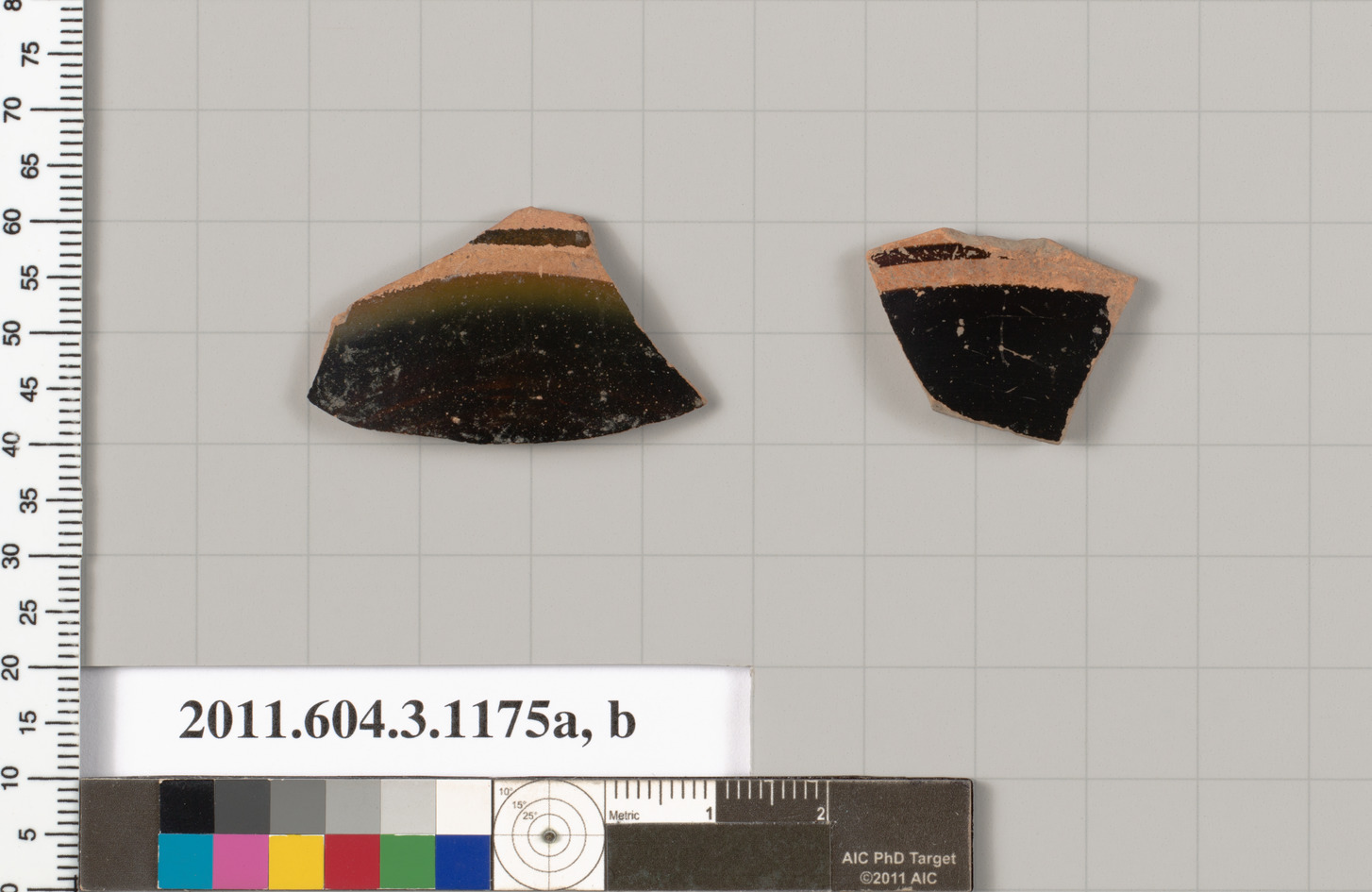
Vessel, Void, and Volume: The Attic Terracotta Fragment and the 2026 Silhouette of Substantial Absence
The Lauren Fashion Heritage Lab, in its ongoing excavation of form, turns from the luminous spirituality of comparative sacred objects to the grounded, tactile world of the ancient Mediterranean. The terracotta fragments of mastoids (drinking cups) and kyathoi (ladles) from Attic Greece present not a complete aesthetic doctrine, but a foundational grammar of containment and gesture. These are not artifacts of display, but of use; not of narrative, but of ritual and daily life. Their shattered state is itself instructive, revealing not a loss, but an essential truth: the silhouette is born from the void it surrounds. For the 2026 Old Money aesthetic—a concept demanding recalibration from overt opulence to unassailable substance—these fragments provide the critical blueprint for a silhouette of authoritative ease, built upon the principles of the containing curve, the measured pour, and the patina of inherent value.
Archaeology of the Silhouette: The Containing Curve
The mastos, with its distinct narrow base and swelling, often breast-like cup, presents a study in precarious balance and generous volume. Its silhouette is biomorphic, derived from the body itself, yet abstracted into a perfect vessel of utility. This is not the rigid, hierarchical geometry of the medieval Finial, nor the flowing, narrative curve of the 善财童子. It is a curve of purpose. The narrow base necessitates a confident, steady hand—a physical metaphor for the poised bearing of the established elite. The broad, containing curve of the bowl speaks to a capacity that is ample but defined, generous but not overflowing. Translated into the 2026 Old Money silhouette, this informs a radical departure from the sharp, constructed shoulders and severe tailoring of power-dressing pastiche. Instead, we propose a return to the architecture of the natural shoulder and the deliberate, containing drape.
Jackets and coats will derive their authority not from padding, but from precise, minimal seaming that follows the scapula, creating a subtle, inherent breadth. Volume is introduced not through excess fabric, but through strategic, parabolic curves—a coat’s skirt flaring gently from a suppressed waist like a mastos swelling from its stem, or a dress employing a single, masterful cut that encompasses the body in a contained, elegant volume. The silhouette becomes a vessel for the individual, not a cage. It offers space for movement and breath—the sartorial equivalent of the steady hand that holds the full cup without spillage. The “Old Money” implication is one of inherited confidence: the power is within, and the clothing is merely its elegant, perfectly calibrated container.
The Gesture of Restraint: The Measured Pour
The kyathos, or ladle, fragment is perhaps even more profoundly instructive. It is an instrument of transfer, of measured extraction and deliberate offering. Its entire form is an act of intention: the cup to gather, the handle to direct, the pour to distribute. This embodies the 2026 Old Money ethos of measured allocation and discerning curation. In an era of relentless consumption, true status lies in the edit, in the knowing precisely what to take and what to leave. The kyathos’s gesture informs a philosophy of dressing that is precise and considered.
This translates to silhouettes that are complete and resolved in themselves, requiring no additive logomania or trend-driven clutter. A single, impeccably rendered piece—a dress cut from a single pattern, a coat with a line so pure it needs no fastening—performs the sartorial equivalent of the measured pour. It is a complete statement, delivered with quiet authority. Furthermore, the ladle’s function suggests the idea of investment dressing as a curated repository. The wardrobe is not a chaotic closet, but a curated collection of vessels (garments), each chosen for its capacity to perform a specific, elegant function within the social ritual. The silhouette of each piece must therefore be timeless in its proportions, yet exact in its contemporary execution, ready to be deployed with the precise intent of the kyathos dipping into the krater.
The Patina of Substance: Terracotta as Inherent Value
Finally, the materiality of these fragments—terracotta, fired earth—is paramount. It is a humble material elevated through craft (the Attic potter’s wheel, the black-figure technique) and, crucially, through the accretions of use and time. These fragments are not gold or marble; their value is not declared but earned. They bear the marks of the wheel, the variations of the kiln, and the wear of centuries. This directly informs the 2026 material and color philosophy for the Old Money silhouette, which we categorize under Heritage-Black.
Heritage-Black is not a mere color. It is a material condition. It is the deep, mineral-rich black of aged terracotta, not the flat black of new ink. It is found in fabrics that possess a inherent depth: woolens with a lifetime’s worth of loft, cashmeres that grow softer and more personal with wear, heavy silks that hold shadow and light in their folds like pottery holds glaze. The silhouette, built on containing curves and measured intent, must be rendered in materials that develop a narrative patina. Seams may soften, wool may bloom slightly, a collar may develop a personal crease—these are not flaws, but the evidence of a garment’s integration into a life of substance. Like the terracotta fragment, the value is in the object’s history and enduring form, not in its superficial newness. The 2026 Old Money silhouette thus rejects the glossy and the immaculate in favor of the confidently weathered, the substantially quiet, and the authentically deep.
In conclusion, the Attic terracotta fragments guide Lauren Fashion toward a 2026 Old Money silhouette of profound substance. It is a silhouette built from the containing curve of the mastos, offering poised volume; informed by the measured gesture of the kyathos, advocating for curated resolution; and finished in the Heritage-Black patina of terracotta, valuing depth and narrative over sheen. This is the silhouette of the modern agora: not a shout of wealth, but the quiet, unshakeable presence of the vessel that has held its contents, gracefully, for generations.