From Attic Kylix to Old Money Silhouette: The Dialectics of Void and Virtue in Lauren Fashion’s 2026 Heritage Line
Introduction: The Archaeological Gaze as Design Imperative
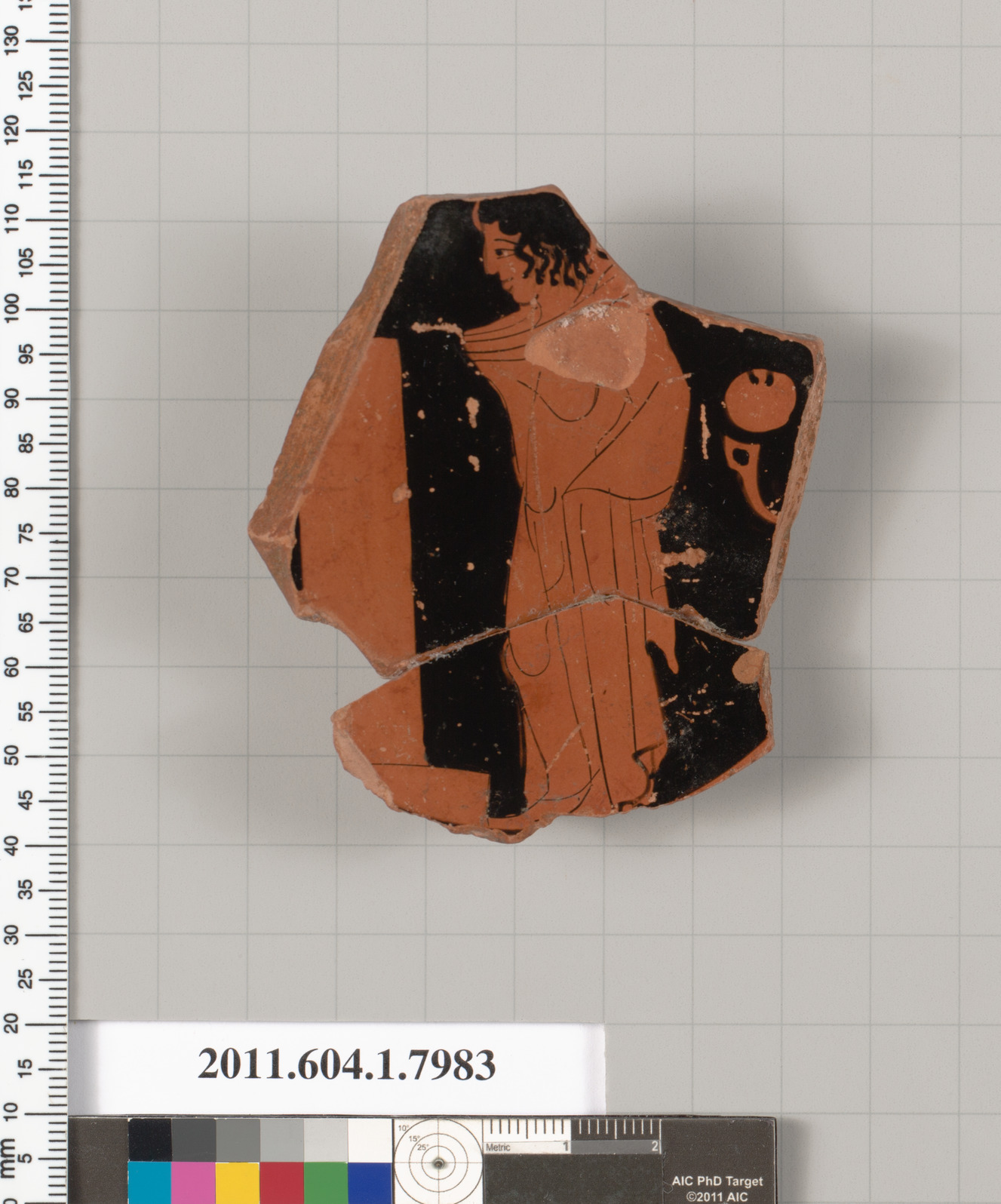
In the Lauren Fashion Heritage Lab, we do not merely archive; we interrogate. The Terracotta fragment of a kylix (drinking cup)—a Greek Attic artifact of the 5th century BCE—arrives not as a decorative curiosity but as a structural manifesto. This broken vessel, once held in the hand of a symposiast, now speaks to the 2026 Old Money silhouette with an authority that transcends its shattered state. The kylix’s interior is a void: a space that once held wine, now holds only air and the patina of millennia. This emptiness, paradoxically, is its most potent design lesson. For the 2026 collection, we translate this archaeological void into the Heritage-Black ethos—a color that is not absence but presence, not negation but containment. The kylix teaches us that true luxury is not about adding ornament but about mastering the space between the garment and the body, the silence between the seams.
The Kylix as a Model of Contained Nobility
The kylix, in its original function, was a vessel of shared ritual. Its shallow bowl and twin handles invited communal drinking, yet its form also demanded a specific posture: the drinker would recline, tilt the cup, and consume without spilling. This is a lesson in controlled elegance. The 2026 Old Money silhouette, as derived from this artifact, rejects the exaggerated volume of contemporary streetwear or the constrictive tailoring of power dressing. Instead, it adopts the kylix’s principle of negative space. A double-breasted blazer in Heritage-Black wool, for instance, is cut with a subtle inward curve at the waist, creating a void that breathes around the torso. The shoulders are not padded to assert dominance but are softly structured—like the kylix’s lip—to suggest a quiet readiness. The fabric itself, a dense worsted wool, mimics the terracotta’s fired density: it holds its shape without rigidity, allowing the garment to “contain” the wearer rather than constrain him.
This is a direct counterpoint to the Davidian heroism of Jacques-Louis David’s *The Death of Socrates*. In that painting, every figure is a narrative actor, every fold of drapery a rhetorical gesture. The kylix, however, offers no drama. Its beauty lies in its silent utility. For the 2026 collection, we strip away the hero’s narrative. The Old Money silhouette does not perform death; it performs endurance. A trench coat, for example, is cut with a single pleat at the back—a reference to the kylix’s single handle attachment—allowing the garment to fall in a continuous, unbroken line from shoulder to hem. The fabric is not dyed to a flat black but to a Heritage-Black that shifts between charcoal and ink, reflecting the terracotta’s subtle tonal variations under museum lighting. This is not a color of mourning but of permanence.
The Void as Tailoring Principle: From Pottery to Pattern
Laozi’s dictum, “When the pot is empty, it has use,” becomes a literal tailoring principle. The kylix’s interior void is the garment’s air gap—the space between the fabric and the skin that allows for movement, breath, and grace. In the 2026 collection, this is achieved through floating linings and unconstructed shoulders. A Heritage-Black cashmere overcoat, for instance, is lined with a silk charmeuse that is attached only at the shoulders and hem, creating a pocket of air that insulates without weight. The coat’s silhouette is deliberately underfilled: the sleeves are cut with a slight excess of fabric at the elbow, allowing the arm to move within a “vessel” of cloth. This is not a flaw but a feature—a nod to the kylix’s generous bowl, which never clutches the liquid it holds.
The terracotta fragment also teaches us about surface as memory. The kylix’s exterior, even in its broken state, retains the marks of the potter’s wheel—concentric ridges that speak to the hand that shaped it. For the 2026 silhouette, we translate this into tactile finishes. A Heritage-Black brocade, woven with a subtle herringbone pattern, mimics the terracotta’s striations. The fabric is not printed but woven, so that the pattern is integral to the cloth, like the grooves in the pottery. When the wearer moves, the pattern catches light differently, revealing the garment’s history in its weave. This is the opposite of fast fashion’s flatness; it is a slow luxury that rewards close inspection.
Silence as Status: The Unspoken Grammar of Old Money
The kylix does not announce its value. It is a humble object, yet its presence in a museum signals centuries of cultural capital. Similarly, the 2026 Old Money silhouette eschews logos, monograms, and overt branding. The Heritage-Black palette is its only signature. A pair of trousers, cut with a straight leg and a single front pleat, is finished with a hidden watch pocket—an interior detail that only the wearer knows. This is the kylix’s silence made sartorial. The garment does not perform wealth; it contains it. The silhouette is intentionally unremarkable at first glance, but its proportions are mathematically precise: the jacket’s lapel is exactly 3.5 inches wide, the trouser’s break is a half-inch, the shirt’s collar stands at a 45-degree angle. These are not arbitrary numbers but derived from the golden ratio of the kylix’s bowl diameter to its height—a ratio that the Greeks believed embodied harmony.
In David’s painting, Socrates points to the heavens, his gesture a declaration of transcendence. The kylix, by contrast, points nowhere. It simply is. For the 2026 collection, this means rejecting the “statement piece.” A Heritage-Black velvet smoking jacket, for instance, is cut without a single pocket or button that is not functional. Its only ornament is the sheen of the pile, which shifts from matte to gloss as the wearer moves. This is the kylix’s lesson: that the most profound beauty is not in what is said but in what is held in reserve. The Old Money silhouette does not tell a story; it invites one. Like the kylix’s empty bowl, it waits to be filled by the wearer’s life.
Conclusion: The Eternal Vessel
The terracotta fragment of a kylix is not a relic of the past but a blueprint for the future. In its broken form, it contains the entirety of the 2026 Old Money philosophy: that luxury is not accumulation but containment, not spectacle but silence, not heroism but endurance. The Heritage-Black silhouette, derived from this artifact, is a vessel for the wearer’s identity—a container that does not impose but receives. When all the narratives of David’s painting fade, when the hero’s gesture becomes a museum piece itself, the kylix remains. It does not explain death; it holds it. And in that holding, it offers the most radical luxury of all: the permission to simply exist, with grace, in the void.