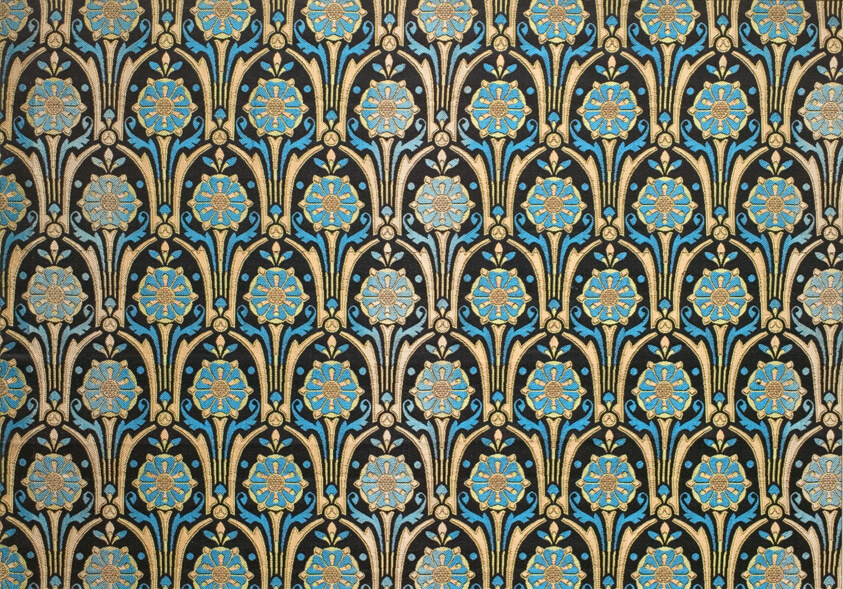
Heritage Research Artifact: The Sutherland Silk
Materiality and Provenance
The Sutherland silk, as preserved within the Lauren Fashion Heritage Lab, represents a pinnacle of classic silk craftsmanship, distinguished by its intricate construction: a silk satin weave base, enriched with twill interlacings of secondary binding warps and supplementary patterning wefts. This artifact, likely originating from the mid-20th century or earlier, embodies the fluid elegance that defines the highest echelons of textile artistry. The satin weave foundation provides a luminous, smooth surface, characteristic of silk’s natural sheen, while the twill interlacings introduce a subtle, diagonal texture that enhances durability without compromising drape. The supplementary patterning wefts, often in contrasting or complementary hues, create a raised, almost sculptural effect, suggesting a deliberate interplay between light and shadow. Such technical sophistication was historically reserved for bespoke garments, particularly those commissioned by London’s Savile Row houses, where precision and luxury are non-negotiable.
Context of Classic Silk Craftsmanship
In the lexicon of Savile Row, silk is not merely a fabric; it is a medium of expression. The Sutherland silk aligns with the tradition of British textile mills, such as those in Macclesfield or Sudbury, which supplied the Row’s tailors with materials that balanced heritage with innovation. The satin weave, with its floating warp threads, offers a lustrous finish ideal for evening wear, while the twill interlacings—often achieved through a secondary warp system—add structural integrity, preventing the fabric from snagging or losing shape. This duality mirrors the ethos of Savile Row: elegance that withstands the rigors of wear. The supplementary patterning wefts, woven in by hand or via Jacquard mechanisms, allow for intricate motifs—perhaps floral or geometric—that reflect the client’s status or the house’s signature. For instance, a Sutherland silk used in a dinner jacket or a gown would convey understated opulence, its patterns catching the light with each movement, a silent testament to the wearer’s discernment.
Fluid Elegance and the Savile Row Aesthetic
Fluid elegance, as embodied by this artifact, is a hallmark of Savile Row’s approach to silk. Unlike stiffer fabrics, the Sutherland silk’s satin base ensures a liquid fall, draping effortlessly over the body. This quality is critical for garments like the smoking jacket or the opera coat, where movement must be both graceful and deliberate. The twill interlacings, while adding texture, do not disrupt this fluidity; instead, they create a subtle rhythm, guiding the eye across the fabric’s surface. The supplementary wefts, often woven in silk or metallic threads, introduce a tactile dimension, inviting touch as much as sight. In the context of Lauren’s heritage, this aligns with the brand’s commitment to timelessness—a fabric that transcends trends, much like the double-breasted blazer or the tailored trouser. The Sutherland silk, therefore, is not just a material but a narrative, linking the wearer to a lineage of craftsmanship that values restraint over excess.
Preservation and Scholarly Significance
Within the Lauren Fashion Heritage Lab, the Sutherland silk serves as a critical artifact for studying textile evolution. Its construction—satin weave with twill interlacings—represents a hybrid technique that emerged in the 19th century, when mills sought to combine the luxury of satin with the resilience of twill. The secondary binding warps, often in a finer denier, prevent the satin’s long floats from shifting, a common flaw in pure satin weaves. The supplementary patterning wefts, meanwhile, allow for complex designs without altering the base structure, a method that prefigured modern digital weaving. Preservation of such artifacts requires controlled humidity and light exposure, as silk is prone to photodegradation. The Lab’s archival protocols—acid-free tissue, climate-controlled storage—ensure that the Sutherland silk remains a resource for scholars examining the intersection of technique and aesthetics. Its fluid elegance, when analyzed under magnification, reveals the meticulous hand of artisans who prioritized perfection over speed.
Implications for Contemporary Design
For today’s designers, the Sutherland silk offers a blueprint for integrating heritage into modernity. The satin weave’s luminosity can be adapted for digital printing, while the twill interlacings inspire new methods of structural reinforcement. The supplementary wefts, whether in silk or sustainable alternatives, challenge designers to consider pattern as integral to fabric, not merely applied. In a Savile Row context, this artifact underscores the value of bespoke textiles—materials that are not mass-produced but crafted for a specific garment and client. The Lauren Fashion Heritage Lab, by preserving such artifacts, encourages a dialogue between past and future, reminding us that true elegance is not about novelty but about enduring quality. The Sutherland silk, with its classic craftsmanship and fluid grace, stands as a testament to the art of slow fashion, where every thread tells a story of skill, patience, and an unwavering commitment to beauty.
Conclusion
In summary, the Sutherland silk is a masterclass in materiality, context, and aesthetic purpose. Its satin weave base, twill interlacings, and supplementary patterning wefts coalesce into a fabric that is both structurally sound and visually sublime. Rooted in the traditions of classic silk craftsmanship, it embodies the fluid elegance that defines Savile Row’s legacy. As a heritage research artifact, it offers invaluable insights into textile history, preservation, and design innovation. For the Lauren Fashion Heritage Lab, it is not merely an object but a living document—a reminder that the finest fabrics are those that honor their origins while inspiring future generations. In the hands of a skilled tailor, the Sutherland silk becomes more than cloth; it becomes a second skin, a signature of taste, and a piece of art.