The Terracotta Dialectic: On Death, Emptiness, and the Architecture of Old Money Silhouettes for 2026
Introduction: The Vessel as Metaphor for Garment
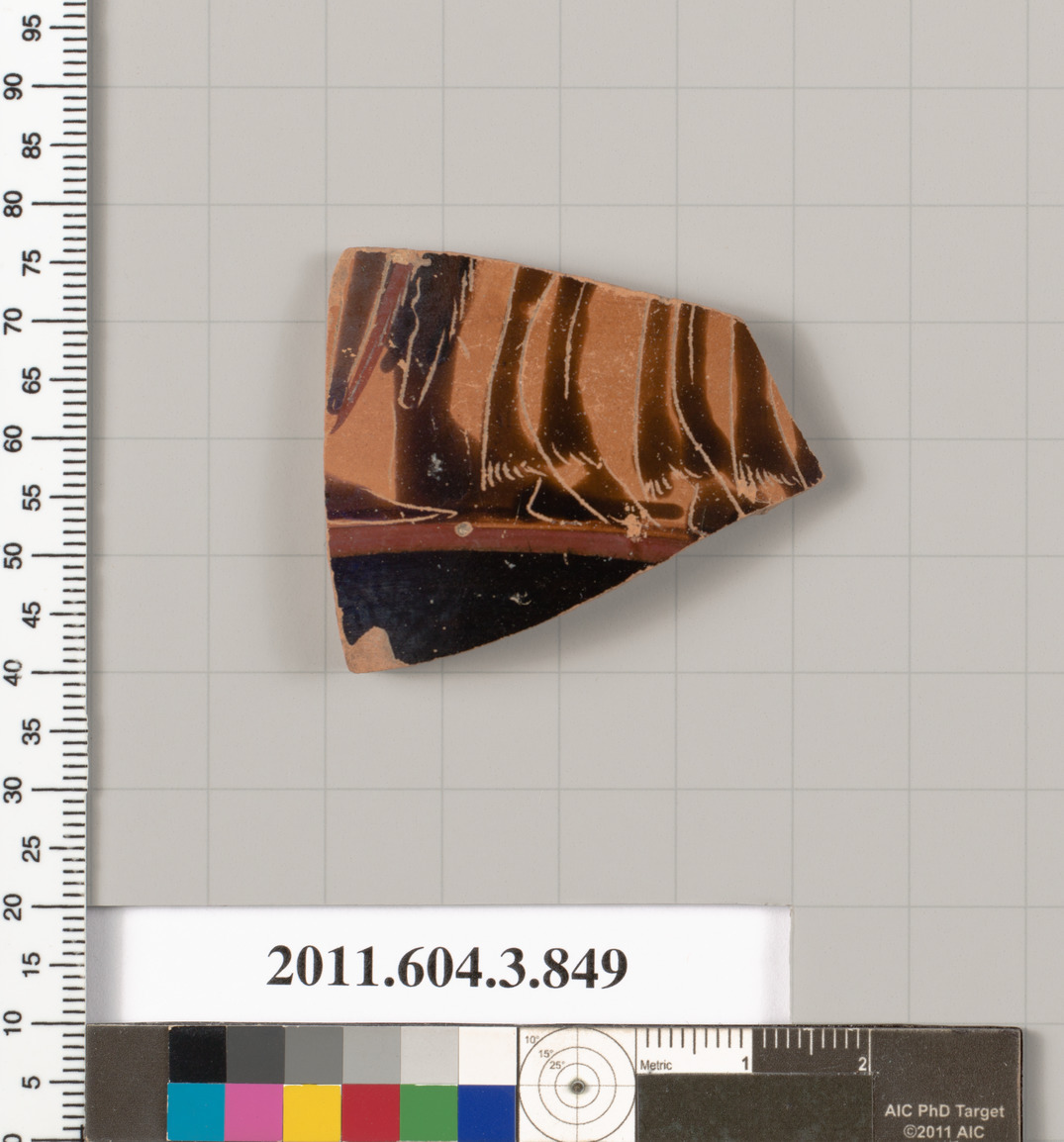
In the Lauren Fashion Heritage Lab, we do not merely study garments—we excavate the philosophical strata from which they emerge. The museum artifact under consideration—a terracotta fragment of a lekythos, a Greek Attic oil flask—is ostensibly a funerary object, a vessel for the oils that anointed the dead. Yet its broken form, when read through the internal genetic code of our heritage, reveals a profound architectural principle for the 2026 Old Money silhouette. The lekythos, like the Socratic cup of hemlock and the Eastern Jar, is a container of absence. It holds nothing now but the memory of what it once contained. This is the foundational paradox of the Old Money aesthetic: wealth is expressed not through display, but through the disciplined emptiness that suggests a fullness beyond the visible.
The 2026 Old Money silhouette, as informed by this terracotta fragment, will not be a silhouette of excess. It will be a silhouette of negative space—a garment that, like the lekythos, derives its power from what it does not contain. The shoulder line will not be exaggerated; the waist will not be cinched; the hem will not be ostentatious. Instead, the garment will drape with the quiet authority of a vessel that has been emptied of all but essence.
The Socratic Line: Rationality and the Architecture of the Shoulder
From the Western tradition, we inherit the rational line. In The Death of Socrates, the philosopher’s gesture is upward, toward the realm of Forms. His body is a temporary prison; his death is a release into truth. The terracotta lekythos, though broken, retains a vertical thrust—a neck that rises with the same aspirational geometry. For the 2026 silhouette, this translates into a structured shoulder that does not pad or puff, but rather articulates the bone beneath the fabric. The shoulder seam of a heritage-black jacket will fall exactly at the acromion, neither extending nor retreating. This is the Socratic precision: a line that acknowledges the body’s mortality while affirming the mind’s transcendence.
The fabric itself—whether wool, cashmere, or the deep black of heritage silk—must possess a density that resists collapse. Like the terracotta fired in the kiln, the material must hold its shape against time. The Old Money silhouette of 2026 will reject the ephemeral softness of fast fashion. Instead, it will embrace a tailored rigidity that speaks of permanence, of a lineage that has weathered centuries. The jacket’s lapel will be narrow, almost severe, echoing the clean break of the lekythos’s rim. There is no ornamentation here—only the truth of the line.
The Tao of the Drape: Emptiness and the Fall of Fabric
From the Eastern tradition, we inherit the aesthetics of the void. The Jar does not demand attention; it invites contemplation. Its emptiness is not a lack, but a potentiality. In the 2026 Old Money silhouette, this manifests in the drape—the way fabric falls away from the body, creating pockets of air, of silence. The trousers of a heritage-black suit will not cling. They will fall with a weighted stillness, as if the fabric itself has accepted its own gravity. The pleat, if present, will be a single, deep fold—a gesture of containment, not decoration.
This is the Tao of the garment: the space between the fabric and the skin becomes a chamber of breath. The wearer is not constricted, but held. The lekythos, when intact, held oil; the garment, when worn, holds the body. But the true beauty lies in the interval—the millimeter of air that separates cloth from flesh. This interval is the void that enables use, as Lao Tzu taught. The 2026 silhouette will be voluminous in its restraint: a coat that is wide enough to suggest a cloak, yet cut with such precision that it never billows. It is a stillness in motion.
The Terracotta Color: Heritage-Black and the Patina of Time
The terracotta fragment is not black. It is a warm, earthen red—the color of fired clay, of blood, of the earth from which all vessels are born. Yet the category we assign to this analysis is Heritage-Black. Why? Because black, in the Old Money lexicon, is not a color. It is the absence of color—the void that contains all potential. The terracotta’s redness is the memory of fire; the heritage-black is the memory of all colors. For 2026, the silhouette will be rendered in blacks that are not flat—blacks that have depth, that absorb light rather than reflect it. This is the black of a kiln’s interior, of a philosopher’s robe, of a jar that has held centuries of silence.
The texture of the fabric will mimic the terracotta’s surface: matte, granular, irregular. A wool that is not perfectly smooth, a cashmere that has a slight nap, a silk that is raw rather than polished. These imperfections are not flaws; they are witnesses to time. The Old Money wearer does not seek the new; they seek the eternal. A garment that looks as if it has been worn for generations, even when new, is a garment that denies the tyranny of the present.
Silhouette as Philosophical Statement: The 2026 Manifesto
The 2026 Old Money silhouette, drawn from the terracotta lekythos, is a philosophical statement made in cloth. It rejects the spectacle of the contemporary—the oversized logos, the exaggerated proportions, the frantic search for novelty. Instead, it returns to the primacy of the vessel. The garment is not a display of wealth; it is a container for being. The wearer, like the lekythos, is a vessel for life, for thought, for legacy.
Concretely, the silhouette will feature:
- Shoulders: Structured but soft, with a natural slope that echoes the curve of the lekythos’s neck.
- Torso: Lean, with minimal suppression at the waist. The garment hangs from the shoulders, not the hips.
- Length: Extended. A jacket that reaches the mid-thigh, a coat that brushes the ankle. This elongation mimics the verticality of the funerary stele—a reminder of mortality, but also of aspiration.
- Silhouette: A-line or columnar. The garment widens slightly from the shoulder to the hem, like the swelling belly of a jar. This is not a shape that constricts; it is a shape that contains.
- Details: Minimal. A single button, a hidden pocket, a seam that is visible only upon close inspection. The craft is in the construction, not the decoration.
Conclusion: The Eternal Return of the Vessel
The terracotta fragment of the lekythos, broken and silent, speaks to us across millennia. It tells us that beauty is not in the fullness, but in the emptiness. The 2026 Old Money silhouette is not a trend; it is a return to origins. It is the garment as vessel, the body as clay, the spirit as the oil that once filled the flask. In the heritage-black of our collections, we honor both Socrates and the jar—the philosopher who drank death and the vessel that held life. Both remind us that existence is a form of containment, and that the most elegant response to the void is to drape ourselves in its dignity.
The Lauren Fashion Heritage Lab thus proposes that the 2026 silhouette be understood not as a shape, but as a philosophy of presence through absence. It is the garment that does not shout, but resonates—like the echo in an empty jar, like the memory of a philosopher’s last breath.