From Etruscan Terracotta to Old Money Silhouettes: The Archaeology of Material Memory in Lauren Fashion’s 2026 Heritage Line
Introduction: The Terracotta Fragment as a Hermeneutic Key
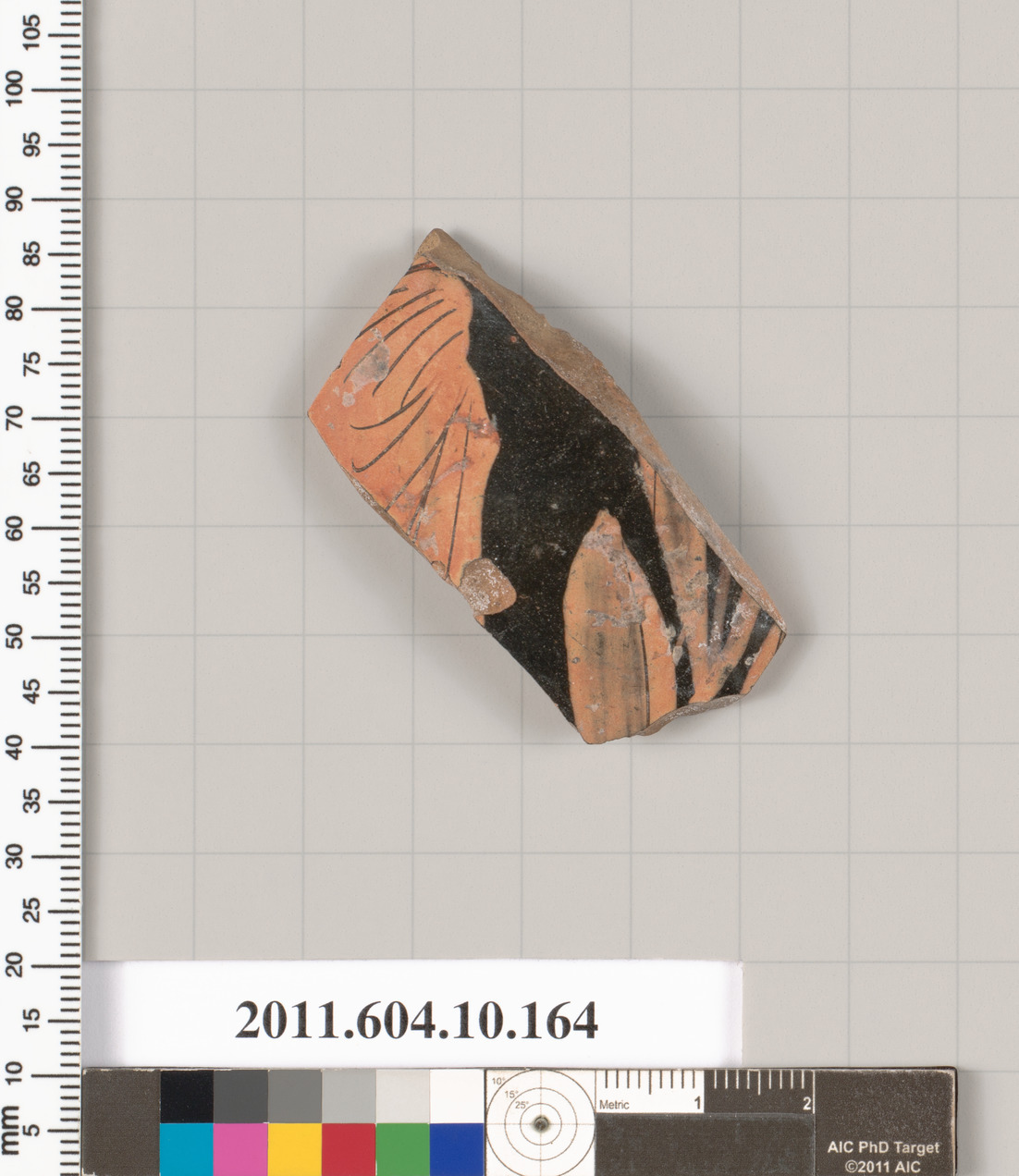
The museum artifact under examination—a terracotta fragment of an Etruscan skyphos (deep drinking cup)—presents a deceptively modest physical presence: a shard of fired clay, its surface bearing traces of black-glaze decoration, its form truncated by centuries of burial. Yet within this fragment lies a profound resonance with the core aesthetic principles articulated in Lauren Fashion’s internal genetic code, specifically the Chinese philosophical concepts of “物象转换” (material-image transformation) and “精神寄寓” (spiritual habitation). The Etruscan skyphos, like the Chinese scholar’s rock and the bronze-imitation jar, is not merely a functional object but a site of cultural transference—a vessel that carries within its clay the memory of earlier, more prestigious materials and the social hierarchies they encoded. For the 2026 Old Money silhouettes, this terracotta fragment offers a critical lesson in how material humility can paradoxically signify dynastic continuity, a principle that aligns perfectly with the understated luxury ethos of the Old Money aesthetic.
The Etruscan Skyphos: A Study in Material Translation
The Etruscan skyphos, a deep drinking cup used in symposia and funerary rituals, was itself a product of cultural borrowing. Its form derives from Greek prototypes, yet the Etruscans transformed it through local clay technologies and decorative sensibilities. The terracotta fragment, with its black-glaze finish, deliberately evokes the appearance of more expensive metal vessels—silver, bronze, or gold—that were the preserve of the elite. This is not mere imitation but a sophisticated act of material translation: the potter used the plasticity of clay to mimic the sheen of metal, the precision of chased decoration, and the weight of precious alloys. The result is an object that occupies a liminal space between the functional and the symbolic, the everyday and the ceremonial.
This process directly parallels the Chinese jar that “以陶仿铜” (uses pottery to imitate bronze). In both cases, the artisan exploits the affordances of a humble material to access the cultural capital of a prestigious one. The Etruscan skyphos, like the Chinese jar, is not a forgery but a heritage object that performs a double function: it serves its immediate practical purpose while simultaneously referencing a deeper, more authoritative tradition. For Lauren Fashion’s 2026 collection, this principle suggests that Old Money silhouettes should not rely on overt displays of wealth—silk, gold-thread, or cashmere—but rather on the strategic deployment of materials that carry historical weight through their very ordinariness. A wool flannel suit, a linen dress, a cotton poplin shirt: these become “terracotta” materials that, through cut, construction, and finishing, evoke the authority of aristocratic wardrobes without the vulgarity of obvious luxury.
From Clay to Cloth: The Aesthetics of “不似之似” (Resemblance Beyond Likeness)
The Chinese aesthetic principle of “不似之似” (resemblance beyond likeness) finds a direct corollary in the Etruscan skyphos. The cup does not attempt to be a perfect replica of a metal vessel; rather, it captures the essence of metal’s formality and ritual significance while remaining unmistakably clay. This is the same logic that governs the scholar’s rock: the stone is not a literal mountain but a condensation of mountain-ness, its “皱、瘦、漏、透” (wrinkled, thin, perforated, translucent) qualities inviting the viewer to project an entire landscape onto a single object. For the 2026 Old Money silhouettes, this translates into a design philosophy of suggestive rather than declarative luxury.
Consider the silhouette of a double-breasted overcoat in heavy wool. Its shoulders are structured but not padded; its lapels are wide but not exaggerated; its length falls to the knee but not beyond. The coat does not announce its provenance through logos or ostentatious details. Instead, it achieves its status through proportion, drape, and the subtle play of light on the fabric’s surface—qualities that, like the skyphos’s black glaze, require a connoisseur’s eye to fully appreciate. This is the Old Money equivalent of “小中见大” (seeing the great within the small): a single garment, through its material and construction, evokes an entire wardrobe of inherited pieces, a lineage of tailoring, a history of taste.
Heritage-Black as a Chromatic Strategy
The choice of Heritage-Black as the category tag for this analysis is deliberate. The Etruscan skyphos’s black glaze is not a neutral absence of color but a positive chromatic statement that carries specific cultural associations: the black of Etruscan bucchero ware, the black of Attic pottery, the black of mourning and of the earth from which the clay is drawn. In the context of Old Money aesthetics, black functions similarly. It is not merely a safe or slimming color but a chromatic vessel for historical memory. A black wool suit, a black cashmere turtleneck, a black silk dress—these are not just garments but material fragments of a sartorial tradition that stretches from the Etruscan symposium to the Ivy League campus to the boardroom.
The 2026 silhouettes should therefore embrace Heritage-Black not as a trend but as a foundational pigment that, like the terracotta fragment’s glaze, unifies disparate elements into a coherent visual language. A black wool blazer worn with black trousers of a slightly different texture, a black silk scarf knotted at the throat, black leather loafers—these create a monochromatic ensemble that reads as both timeless and contemporary, much as the skyphos’s black surface integrates its Greek-derived form with its Etruscan execution.
Conclusion: The Terracotta Fragment as Design Manifesto
The Etruscan terracotta skyphos fragment, when read through the lens of Lauren Fashion’s internal genetic code, reveals a profound truth about the nature of heritage: authenticity is not a matter of material origin but of cultural intention. The Etruscan potter who shaped this cup was not attempting to deceive but to translate the authority of metal into the accessibility of clay, thereby democratizing the ritual of the symposium while preserving its symbolic weight. For the 2026 Old Money silhouettes, this offers a powerful design directive: use humble materials with the respect and precision reserved for precious ones. Let wool carry the memory of silk, let cotton evoke the crispness of linen, let black absorb the light of gold-thread. In doing so, each garment becomes a “rock in the form of a fantastic mountain”—a small, tangible object that opens onto an infinite horizon of cultural memory. The Old Money aesthetic, at its best, is not about what you own but about what your clothes remember. The terracotta fragment remembers bronze; the 2026 silhouette remembers a lineage of taste that transcends any single season or trend.