← BACK TO ARCHIVES
Silk
Heritage Synthesis: Sampler
Curated on May 20, 2026 // Node: LDN-01
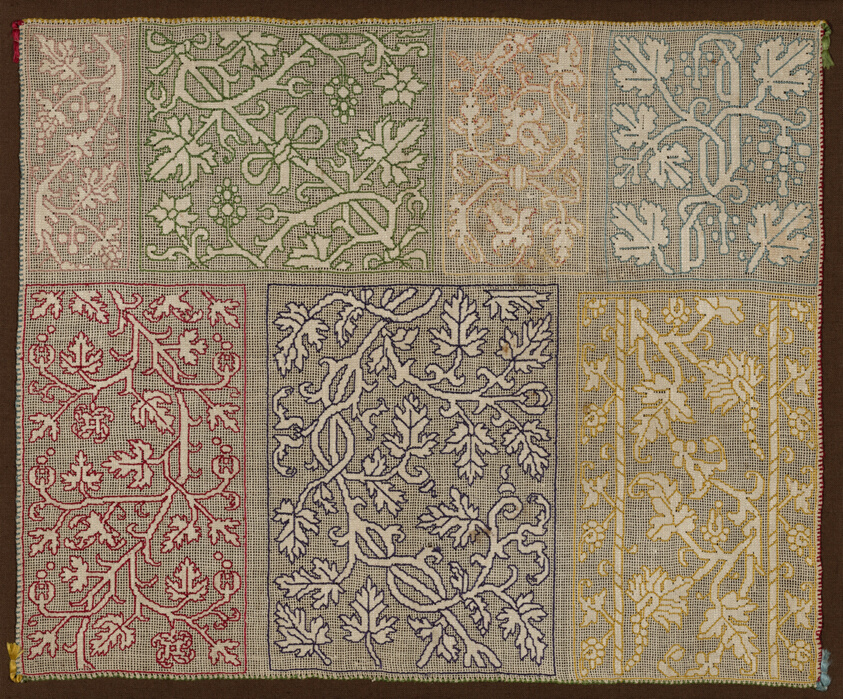
Category: Silk
The Sampler as a Testament to Silk Craftsmanship: An Artifact of Fluid Elegance
In the hallowed corridors of London’s Savile Row, where precision tailoring and heritage converge, the sampler emerges as a quiet yet profound artifact of textile mastery. This particular specimen—a linen ground of plain gauze weave, embroidered with silk floss and linen threads—embodies the intersection of materiality and artistry that defines classic silk craftsmanship. As a Senior Heritage Specialist at the Lauren Fashion Heritage Lab, I examine this piece not merely as a decorative object but as a pedagogical tool, a historical document, and a testament to the fluid elegance that silk imparts to even the most utilitarian of textile practices.
Materiality: The Foundation of Heritage
The sampler’s foundation is a linen plain gauze weave, a fabric characterized by its open, airy structure. This choice is deliberate: the gauze weave provides a translucent grid that allows the embroiderer to count threads with precision, a critical requirement for the geometric patterns and lettering typical of samplers. Linen, derived from the flax plant, offers durability and a natural luster that complements the silk floss without competing for visual dominance. The plain weave, with its simple over-under construction, ensures stability while the gauze’s openness invites light to pass through, creating a subtle interplay of shadow and illumination.
The embroidery threads—silk floss and linen—are the true protagonists. Silk floss, with its unmatched sheen and tensile strength, is the hallmark of luxury. Its ability to reflect light from multiple angles lends a dynamic quality to the stitches, shifting in brilliance as the viewer moves. The linen thread, by contrast, provides a matte, grounded counterpoint, anchoring the silk’s effervescence. Together, they create a dialogue between opulence and restraint, a balance that Savile Row tailors have long revered in their own craft.
The stitches employed—double running, stem, weaving, and buttonhole—are not arbitrary. Double running stitch, also known as Holbein stitch, is a reversible technique that creates identical patterns on both sides of the fabric, demonstrating the embroiderer’s technical prowess. Stem stitch, with its overlapping loops, mimics the fluidity of calligraphy, ideal for the sampler’s alphabets and mottos. Weaving stitch, a form of darning, fills areas with a textured, fabric-like density, while buttonhole stitch, often used for edges and loops, reinforces the sampler’s structural integrity. The applied silk tassels at each corner are a final flourish, transforming the sampler from a practice piece into a decorative object, its corners weighted with elegance.
Context: Silk Craftsmanship and Fluid Elegance
The sampler’s origins lie in the 17th and 18th centuries, a period when silk was a symbol of status and refinement. In England, the silk industry was centered in Spitalfields, where Huguenot weavers brought their expertise from France. This sampler, likely created by a young woman of means, reflects the educational and social values of its time. Samplers were not merely exercises in needlework; they were records of skill, patience, and moral instruction. The inclusion of silk floss elevates the piece, signaling that the maker had access to expensive materials and the leisure to perfect her craft.
The phrase “fluid elegance” is apt here. Silk, as a material, possesses a natural drape and movement that linen cannot replicate. When embroidered onto a gauze ground, the silk floss appears to float above the fabric, its stitches catching the light like water ripples. This effect is enhanced by the double running stitch, which creates a continuous line without visible breaks, and the stem stitch, which curves and bends with organic grace. The weaving stitch, often used for floral motifs, adds a tactile dimension, while the buttonhole stitch secures the edges with a delicate scalloped finish. The tassels, made of twisted silk, echo this fluidity, their fringes swaying with the slightest breath.
In the context of classic silk craftsmanship, this sampler is a microcosm of broader textile traditions. The silk floss, likely dyed with natural pigments such as madder for reds, woad for blues, or weld for yellows, demonstrates the dyer’s art. The linen ground, hand-spun and hand-woven, reflects the agrarian roots of textile production. The stitches themselves are a lexicon of techniques passed down through generations, each one a solution to a specific design challenge. The sampler thus serves as a repository of knowledge, a tangible link between the maker and the materials.
Significance: A Pedagogical and Aesthetic Artifact
From a heritage perspective, the sampler is invaluable. It offers insights into the education of women in pre-industrial England, where needlework was a marker of domestic virtue and social standing. The inclusion of alphabets and numerals suggests that the sampler was used to teach literacy alongside embroidery, reinforcing the idea that textile skills were integral to a young woman’s upbringing. The silk floss and tassels, however, indicate that this was not a utilitarian piece but a showpiece, intended to demonstrate the maker’s proficiency to potential suitors or family members.
Aesthetically, the sampler exemplifies the principle of “less is more.” The plain gauze weave provides a neutral canvas, allowing the stitches to take center stage. The silk floss’s sheen creates a subtle hierarchy, drawing the eye to the most intricate areas. The tassels, though decorative, are restrained in size and placement, ensuring they do not overwhelm the composition. This balance between ornament and restraint is a hallmark of Savile Row sensibility, where a well-cut suit relies on the interplay of fabric, stitch, and silhouette.
In the Lauren Fashion Heritage Lab, we view this sampler as a teaching tool for contemporary designers. Its use of silk floss on linen gauze demonstrates how material choices can elevate a simple technique into an art form. The stitches—double running, stem, weaving, and buttonhole—are still relevant today, used in haute couture and bespoke tailoring to add detail and durability. The tassels, a nod to decorative arts, remind us that even the smallest embellishment can transform a piece from functional to exquisite.
Conclusion: A Legacy of Elegance
This sampler, with its linen gauze ground, silk floss embroidery, and applied tassels, is more than a historical curiosity. It is a testament to the enduring power of silk craftsmanship and the fluid elegance that defines classic textile artistry. As we preserve and study such artifacts, we honor the makers who, through patience and skill, transformed humble materials into objects of beauty. In the spirit of Savile Row, where tradition and innovation coexist, this sampler invites us to appreciate the details—the stitch, the thread, the tassel—that together create a legacy of elegance.
Heritage Lab Insight
Lab Insight: AIC Silk Archive Node #193595.