The Vessel and the Void: Terracotta Fragments and the Architecture of Old Money Silence
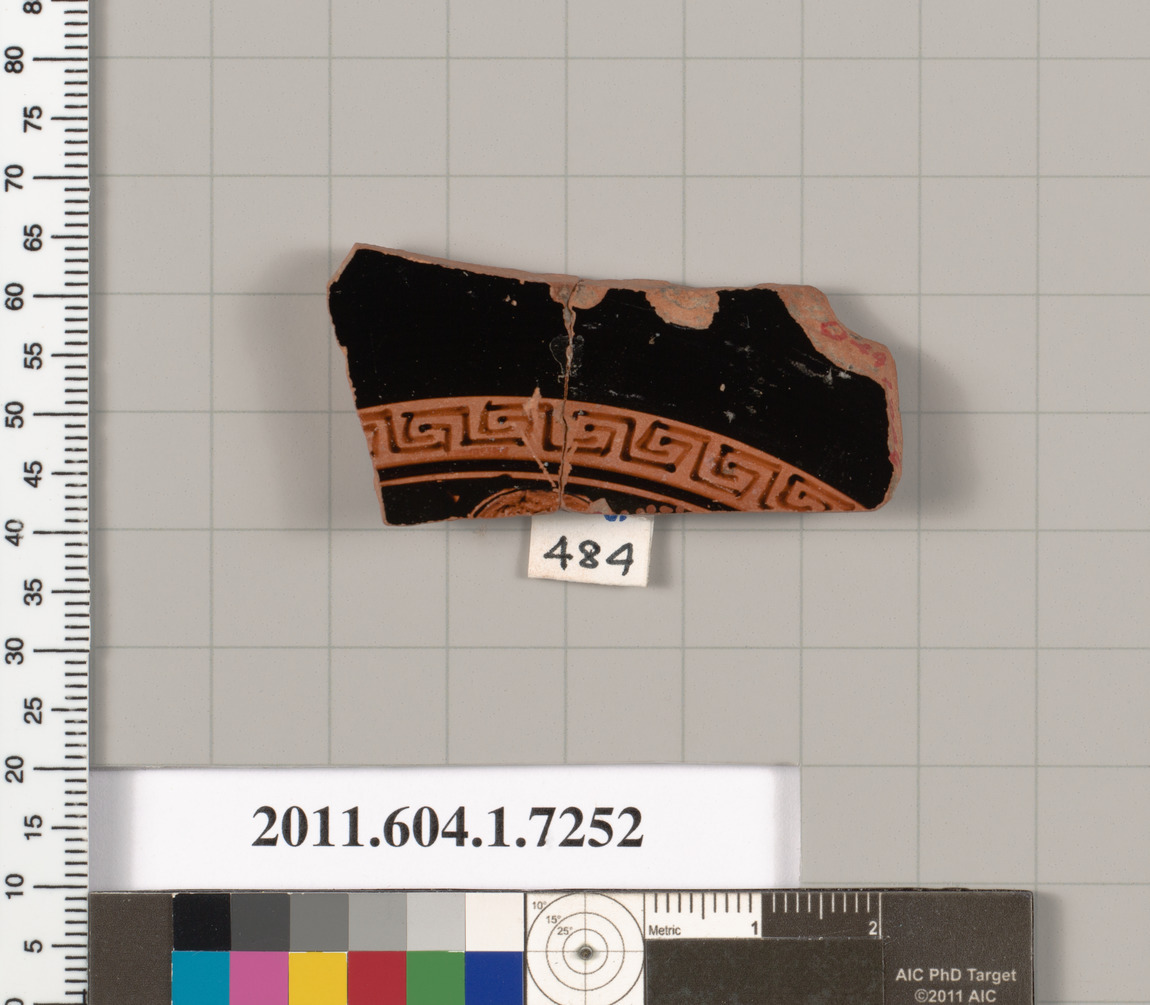
The Terracotta fragment of a kylix—a Greek Attic drinking cup, now reduced to a shard of fired clay—speaks not of the symposium’s revelry but of a more profound inheritance: the aesthetic of containment. In the Lauren Fashion Heritage Lab, we do not merely study garments; we study the cultural tectonics that shape how the body is dressed for permanence. This fragment, broken yet eloquent, offers a critical lens through which to re-examine the 2026 Old Money silhouette. The Old Money aesthetic, often misread as mere understatement, is in truth a philosophy of negative space—a disciplined refusal to overstate, a commitment to form that derives its power from what it does not say. The kylix, like the Jar of our internal genetic code, does not narrate death; it holds it. And in that holding, it instructs the tailoring of the coming season.
From Symposium to Silhouette: The Architecture of Restraint
The Attic kylix was designed for the hand, its shallow bowl and twin handles calibrated for the ritual of shared wine. Its decoration—often a gorgoneion or a symposium scene—was visible only to the drinker as he tilted the cup. This is a design of intimacy through concealment. The 2026 Old Money silhouette, as extrapolated from this fragment, rejects the broad-shouldered, aggressively structured power dressing of the 1980s and instead returns to a sculptural modesty. Jackets will feature softer, dropped shoulders; trousers will fall with a gentle, almost columnar drape. The body is not displayed but housed. The kylix’s curvature—the way its walls curve inward to hold liquid—finds its analogue in the subtle waist suppression of a double-breasted blazer or the gentle flare of a wide-leg trouser that skims the shoe without breaking. This is not the silhouette of a body in motion for spectacle; it is the silhouette of a body in residence.
The fragment’s terracotta color—a warm, earthy umber—informs the 2026 palette. We are moving away from the stark neutrals of the past decade toward a grounded chromaticism: burnt sienna, clay, ochre, and the deep black of Attic glaze. These are not colors that shout; they are colors that weather. They suggest a garment that has been worn, that carries the patina of use. The Old Money wardrobe has always prized the second-hand perfection of a well-loved cashmere sweater or a pair of leather brogues that have molded to the foot. The terracotta fragment, with its chipped edge and faded slip, validates this aesthetic of honorable wear. In 2026, we will see more garments treated with natural dyes that fade gracefully, more fabrics that are brushed or washed to simulate the passage of time. The goal is not to look new but to look settled.
The Void as Virtue: Tailoring the Negative Space
Our internal genetic code juxtaposes David’s The Death of Socrates with the Jar. The painting is a narrative of heroic finality; the jar is a vessel of silent continuity. The kylix fragment occupies a middle ground: it is a broken object that still retains its essential function—to hold. For the 2026 silhouette, this translates into a radical rethinking of pocketing, lining, and construction. The Old Money garment is not a flat surface; it is a three-dimensional container for the body. The interior of a jacket—its lining, its pocket bags, its canvas—becomes as important as the exterior. We are seeing a return to full-canvas construction in suiting, where the interior structure is hand-stitched to allow the garment to move with the body, to breathe, to empty itself of stiffness. The kylix’s interior, once glazed to hold wine, is now a metaphor for the garment’s interior: a space that is not seen but is felt.
This philosophy extends to the silhouette’s relationship with the ground. The kylix’s foot is small and stable, allowing the cup to be set down with precision. The 2026 trouser hem will follow suit: a clean, unbroken line that rests just above the shoe, with no break or a single, slight break. The hem is not a decorative flourish; it is a termination, a point where the garment meets the world. Similarly, the shoulder of a coat will be set with a soft roll rather than a rigid pad, allowing the fabric to drape from the neck like a mantle of clay. The silhouette is not built up; it is carved out. The negative space around the body—the air between the sleeve and the torso, the gap between the trouser and the shoe—becomes an active element of the design. This is the silence of the jar, the unspoken dignity of the vessel.
Materiality as Memory: The Weight of the Fragment
The terracotta fragment is a material memory. It carries the fingerprints of its maker, the residue of its use, the trauma of its breakage. For 2026, this translates into a renewed emphasis on tactile authenticity. We are moving away from synthetic blends and toward natural fibers that age with character: pure wool, linen, silk, and—most significantly—cashmere that is not mercerized to a glassy finish but left with a slight, irregular nap. The fabric should feel like fired earth—warm, granular, alive. The Old Money silhouette is not about the idea of luxury; it is about the experience of it. A garment should weigh something, should settle on the body with a gravity that announces its presence without shouting. The kylix, even in fragments, retains a heft that speaks of its origin in the earth. So too should the 2026 coat, the 2026 blazer, the 2026 trouser.
Finally, the fragment teaches us about incompleteness. The Old Money aesthetic has always been suspicious of the new, the pristine, the fully realized. It prefers the unfinished edge, the slightly frayed cuff, the button that has been replaced with a mismatched one from a grandmother’s sewing box. The kylix, broken, is still beautiful. In 2026, we will see more garments that embrace this aesthetic of the fragment: raw hems, exposed seams, linings that are left unstitched at the bottom to reveal the construction. This is not deconstruction for its own sake; it is a philosophical position. It acknowledges that the body is not a fixed form, that time will alter both garment and wearer, and that the most profound beauty lies in the space between completion and decay. The Old Money silhouette of 2026 will not be a monument; it will be a vessel. It will not explain death; it will hold life. And in that holding, it will achieve a silence more eloquent than any narrative.