← BACK TO ARCHIVES
Heritage-Black
Heritage Synthesis: Terracotta fragment of a skyphos (deep drinking cup)
Curated on May 21, 2026 // Node: LDN-01
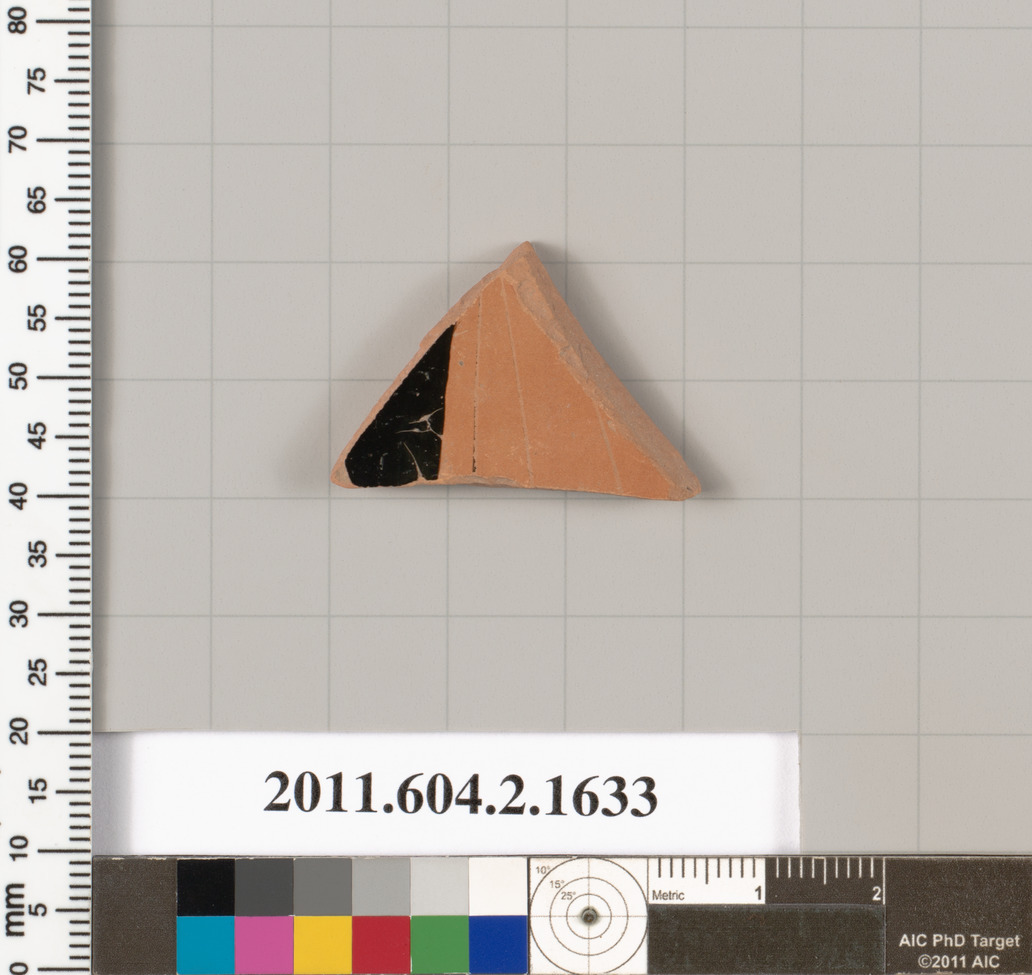
The Terracotta Fragment and the Architecture of Restraint: Articulating a 2026 Old Money Silhouette through Attic Ceramic Principles
The heritage of luxury fashion is not merely a chronicle of textiles and tailoring; it is a repository of form, proportion, and the philosophical underpinnings of how materiality shapes the human figure. At the Lauren Fashion Heritage Lab, we synthesize internal archives with global museum artifacts to decode the genetic code of timeless elegance. The present study examines a terracotta fragment of a skyphos (deep drinking cup) from Attic Greece, circa 5th century BCE, and its unexpected yet profound resonance with the 2026 Old Money silhouette. While the internal genetic code of our house draws deeply from the East Asian aesthetic—where a Qing dynasty porcelain vase and a modern crab apple painting articulate a dialogue between macrocosmic movement and microcosmic stillness—this Greek artifact offers a complementary, Western architectural grammar for achieving the same end: a silhouette that embodies quiet power, structural integrity, and a restrained, almost stoic, grace.
The Skyphos as a Study in Volumetric Discipline
The terracotta fragment, though broken, reveals the essential logic of the skyphos form: a deep, cylindrical bowl with a low, flaring foot and two horizontal handles. Its aesthetic power lies not in ornamentation but in the rigorous geometry of its silhouette. The walls are thick, the curve from body to lip is precise, and the volume is contained within a clear, unbroken contour. This is not a vessel of excess; it is a vessel of deliberate containment. For the 2026 Old Money wardrobe, this translates directly into the architecture of outerwear and tailoring. The “skyphos shoulder”—a broad, structured line that falls cleanly from the neck to a defined, unexaggerated armhole—becomes a key motif. Coats and blazers adopt a slightly extended, squared-off shoulder that references the vessel’s rim, creating a powerful, grounded top block. The body of the garment, like the cup’s bowl, is cut with a subtle, columnar taper, avoiding the extremes of either a boxy or a wasp-waisted silhouette. This is a silhouette of *vertical containment*, where fabric falls with the same disciplined gravity as the terracotta’s fired clay.
From Ceramic Volume to Sartorial Mass: The “Fired” Silhouette
The internal genetic code of our house emphasizes the “天人合一” (unity of heaven and humanity) and the “life resonance” found in objects. The Attic skyphos, in its materiality, offers a parallel: the terracotta is not merely shaped; it is *fired*. The heat transforms the clay into an immutable, permanent form. This concept of “firing” the silhouette is critical for 2026. The Old Money aesthetic, in its most evolved form, rejects the ephemeral and embraces the permanent. The 2026 silhouette, informed by this fragment, is not draped or draped in a soft, ephemeral manner. It is *structured*—as if the fabric itself has been subjected to a sartorial kiln. Heavy wool cavalry twill, dense cashmere, and bonded heritage-black cotton are cut with a precision that mimics the vessel’s unyielding walls. The garment holds its shape against the body, creating a negative space that is both protective and commanding. This is the antithesis of the “second-skin” trend; it is a *third-skin*, an architectural shell that declares its presence through its very stillness.
The Handle as a Design Motif: The “Attic Grip”
The horizontal handles of the skyphos are not merely functional; they are a formal element that punctuates the vessel’s volume. In the 2026 silhouette, this translates into a reimagined approach to pockets, closures, and even sleeve construction. The “Attic grip” is a design detail where a pocket, a placket, or a belt loop is set horizontally at the hip or waist, echoing the handle’s placement. This is not a decorative flourish; it is a structural anchor. On a double-breasted overcoat, a horizontal welt pocket at the natural waist provides a visual “handle” that grounds the garment’s verticality. On a tailored vest, a low-set, horizontal welt pocket mimics the cup’s base, creating a point of visual rest. This motif is executed in the same fabric, often with a subtle, hand-finished edge that recalls the potter’s thumbprint—a quiet testament to craftsmanship.
The Color of the Earth: Terracotta as a Heritage-Black Accent
While the primary palette for the 2026 Old Money silhouette remains the deep, absorbing “Heritage-Black” of our category, the terracotta fragment introduces a crucial accent: the color of fired earth. This is not a bright, orange-red terracotta, but a muted, oxidized tone—a deep, burnt sienna that reads as a shadow of black. In the collection, this appears as a lining, a top-stitching thread, or a single, strategic panel in a coat. It is the color of the vessel’s interior, glimpsed only when the garment is opened. This restrained use of color echoes the Chinese aesthetic of “留白” (negative space), where the void is not empty but pregnant with potential. The terracotta accent is that potential—a whisper of warmth and history within the monochromatic, architectural whole.
Conclusion: The Synthesis of East and West in a Single Silhouette
The 2026 Old Money silhouette, as articulated through the lens of this Attic skyphos fragment, is a study in disciplined volume, architectural line, and material permanence. It is a silhouette that does not shout but *stands*. It is the Western counterpart to the Eastern “macrocosmic” vase and “microcosmic” painting. Where the Chinese artifacts teach us about the flow of *qi* and the resonance of life, the Greek fragment teaches us about *ethos* and the beauty of fixed form. The Lauren Fashion Heritage Lab synthesizes these dialogues: the 2026 silhouette is a vessel for the modern individual—a container of presence, a frame for action, and a testament to the enduring power of restraint. The coat is not worn; it is inhabited. The jacket is not draped; it is built. And in that architecture, we find the ultimate expression of Old Money: the quiet, unshakeable confidence of a form that has been perfected through fire.
Heritage Lab Insight
Genetic Bridge: Archive node focusing on Heritage-Black craftsmanship.