The Silent Codex: Terracotta Fragment, Material Poetics, and the Architecture of Old Money Silhouettes
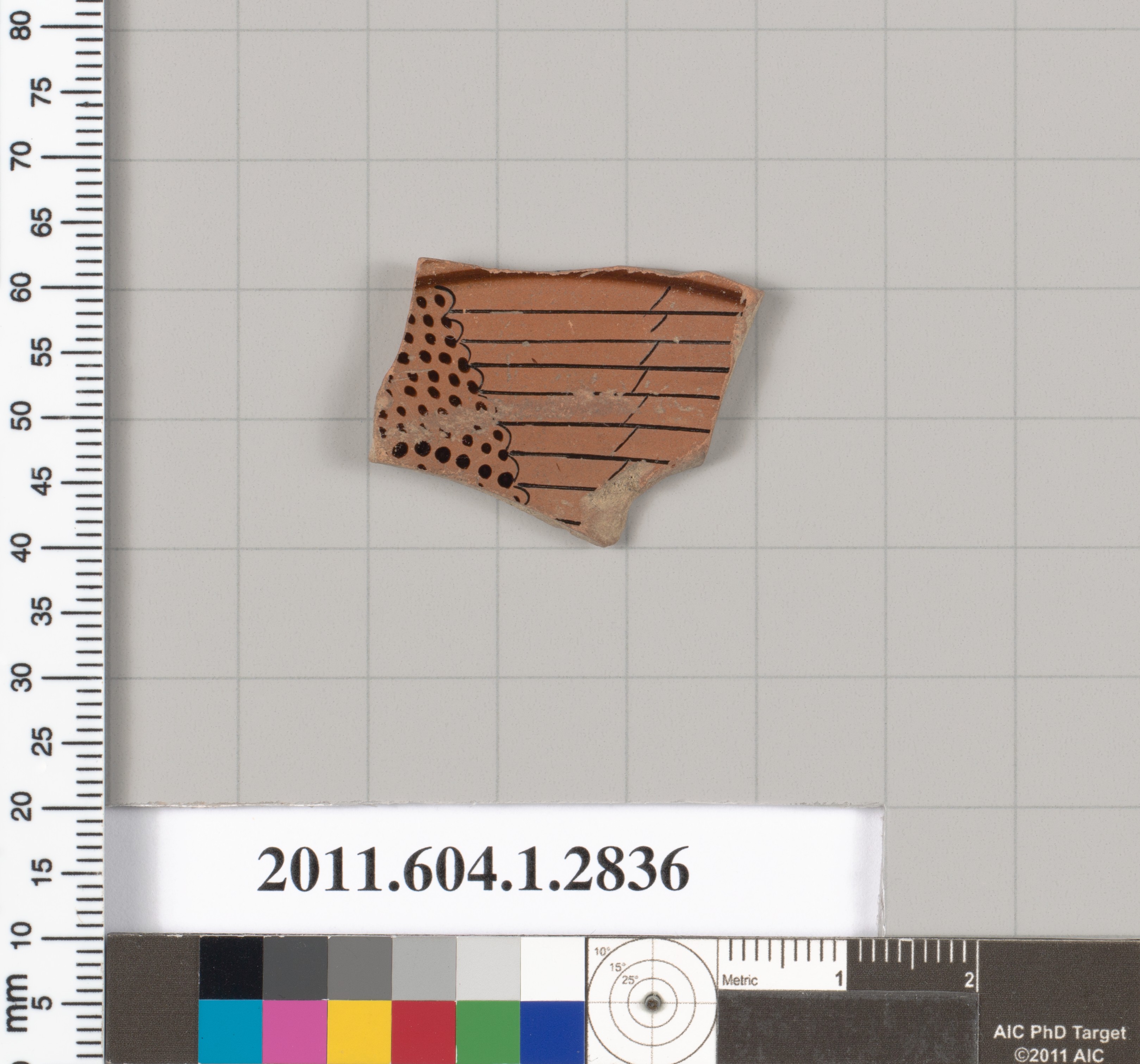
The Lauren Fashion Heritage Lab operates on the principle that aesthetic DNA is not merely inherited but archaeologically reconstructed. Our internal genetic code, a dialectical study of the Pilgrim Sudhana and the Sample of Fibrolite, establishes a foundational matrix: the profound dialogue between cultural encoding (the spiritual infusion of material) and essentialist revelation (the autonomous presence of material). This framework provides the critical lens through which we examine a seemingly distant artifact: a Terracotta fragment of a kylix (drinking cup)restrained substance, temporal integrity, and silent authority.
Fragment as Essence: The Poetics of the Broken Whole
The kylix fragment’s primary power lies in its state of arrested incompleteness. Unlike the intact Pilgrim Sudhana, which presents a resolved spiritual narrative, the fragment denies totality. It forces a shift in perception from appreciating a complete icon to deciphering a material testament. The curve of the cup’s wall, the trace of a black-figure glaze line, the coarse, porous texture of the fired clay—these are not deficiencies but the very source of its authority. This resonates with our Fibrolite sample, which is valued not for a utilitarian purpose but for its intrinsic, self-revealing structure. The 2026 Old Money silhouette, therefore, moves away from overt, declarative luxury. It embraces an aesthetic of essential form, where the integrity of a cut, the fall of a fabric, and the resolution of a seam are presented not as flamboyant statements but as self-evident truths. The silhouette is a "fragment" of a larger, implied whole—a timeless wardrobe—whose power is in its perfected, self-contained articulation, demanding a discerning, contemplative gaze.
The Terracotta Textures: Towards a Taxonomy of Authentic Surface
Materially, the terracotta fragment offers a masterclass in honest substance. Its surface bears the unvarnished history of its making: the grit of the clay, the firing’s subtle variations, the wear of millennia that has softened an edge without erasing its character. This is the antithesis of a homogenized, polished finish. It presents a taxonomy of authentic touch. For 2026, this translates into a deliberate and scholarly approach to textile and fabrication. We foresee a pivot towards materials that speak their history: heritage-black woolens with a palpable, dry hand; undyed, vegetable-tanned leathers that age with a patina; heavy, non-lustrous silks that articulate structure rather than sheen. Like the terracotta, these materials do not shout but insist. Their value is not in apparent cost but in perceived authenticity and temporal depth. The silhouette becomes a vessel for these textures, its architecture designed to highlight the material’s innate character—a shoulder line that showcases the dense moldability of cloth, a cuff that reveals the fibrous integrity of a weave.
Silhouette as Kylix: Contained Volume and Ritual Posture
The original kylix was an object of ritual and symposium, designed for the hand and the act of drinking—a fusion of graceful utility and social ceremony. Its form, a wide, shallow bowl with horizontal handles, embodies contained volume and poised extension. This informs the 2026 Old Money silhouette’s core architectural principle: contained volume anchored by precise, almost architectural, points of tension. Imagine a coat where the drape of the body—the "bowl"—is generous but rigorously controlled, its volume defined not by excess but by geometric clarity. The "handles" are translated into subtle points of structure: a precise set of the sleeve into the shoulder, a clean line from neck to waist, the discreet tension of a dart. The wearer engages with the garment as with the kylix—through ritualized, assured movement. The silhouette facilitates a posture of unburdened authority, where ease is underpinned by an invisible, exacting structure. It is the sartorial equivalent of the sprezzatura found in the fragment’s original, complete form—a studied nonchalance born of supreme artifice.
From Black-Figure Glaze to Heritage-Black: The Semiotics of Restraint
The fragment likely retains a trace of the black-figure technique, where narrative was rendered through a stark, elegant contrast between the black glaze and the red clay ground. This is not polychrome exuberance but narrative through reduction. It aligns perfectly with the Pilgrim Sudhana’s "祛物质化" (dematerialization), where form is distilled into symbolic clarity. For Lauren’s 2026 interpretation, this validates the supremacy of Heritage-Black as our core chromatic and philosophical category. Heritage-Black is not a mere color but a field of nuance—a depth in which form is revealed through shadow, line, and subtle tonal variation, much like the figures on the kylix emerged from the interplay of glaze and clay. The Old Money silhouette will employ this principle through tonal dressing, where texture and cut, not color, create visual interest. A shadow seam, the matte sheen of a specific wool, the dull gleam of a horn button—these become the modern "black-figure" motifs, telling a story of refinement through extreme restraint and meticulous contrast within a monochromatic scheme.
In conclusion, the Terracotta kylix fragment, interpreted through the Lauren Heritage Lab’s dialectic of spiritualized and essential materiality, provides a profound blueprint. It guides us toward a 2026 Old Money silhouette defined by the authority of the essential fragment, the poetry of authentic surface, the architecture of contained ritual, and the semiotics of monochromatic depth. It is a silhouette that does not seek to replicate the past but to emulate its philosophical rigor: becoming an object of enduring, silent contemplation, worn not on the sleeve but in the very grain of its being.