Echoes of Antiquity: The Terracotta Eye-Cup and the Architecture of Old Money Silhouettes for 2026
Introduction: The Vessel as a Metaphor for Heritage
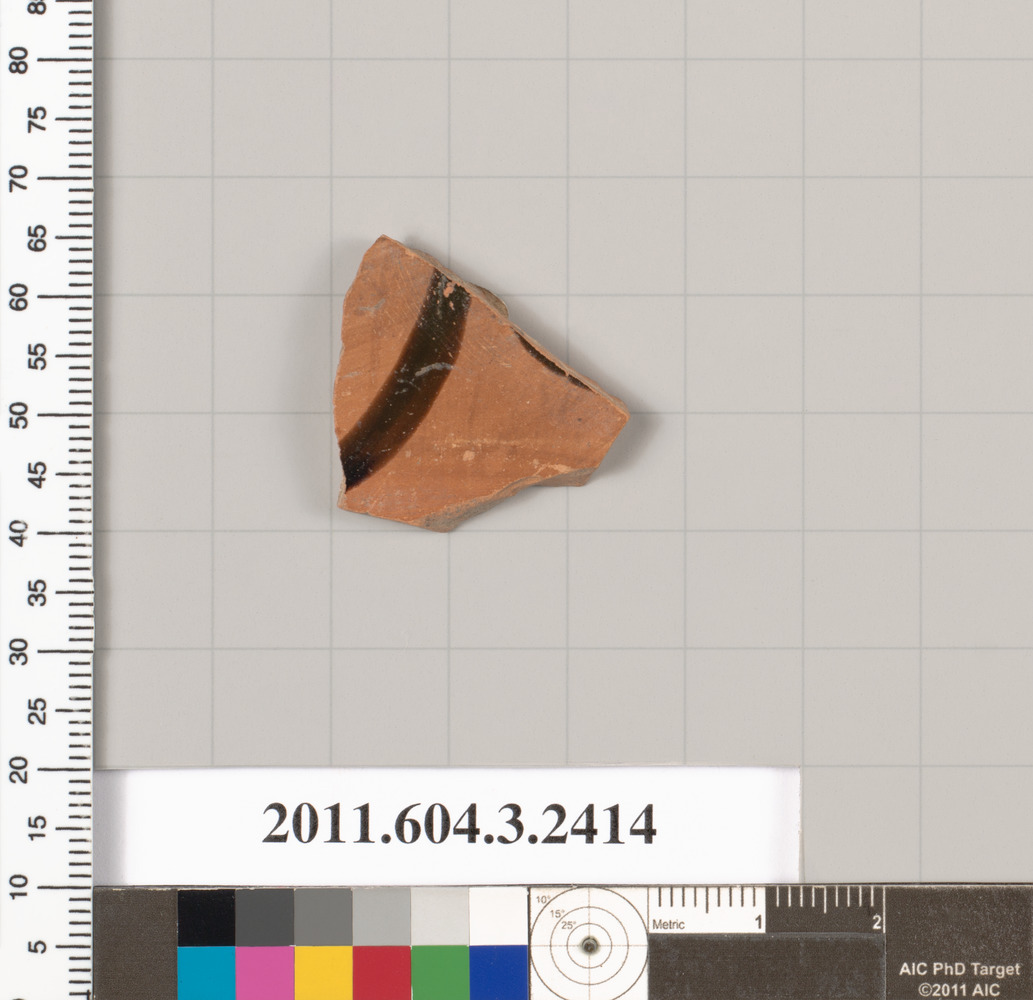
In the pantheon of Lauren Fashion Heritage Lab’s research, the museum artifact—a terracotta fragment of an Attic kylix, specifically an eye-cup from ancient Greece—serves as a profound interlocutor with our internal genetic code. While our code juxtaposes the fiery bronze of Joan of Arc with the jadeite stillness of a Shang dynasty axe, this humble drinking vessel offers a third axis: the communal, the ritualized, and the architecturally balanced. The kylix, a vessel for symposia and libations, is not a weapon of war nor a scepter of celestial order; it is a tool of social cohesion, a stage for the performance of identity within the polis. For the 2026 Old Money silhouette, this fragment dictates a return to structural clarity, balanced proportion, and the quiet authority of a lineage that needs no embellishment. It is the materialization of “Heritage-Black”—not as a color of mourning, but as the foundational void against which form and lineage are defined.
The Eye-Cup as a Diagram of Power: Symmetry and the Gaze
The defining feature of the Attic eye-cup is its namesake: the large, apotropaic eyes painted on either side of the bowl. These eyes are not merely decorative; they are functional talismans meant to ward off evil and to assert the presence of the drinker. In the context of Old Money aesthetics, this translates directly into the silhouette’s shoulder line and neckline. For 2026, we are not designing for the transient gaze of the street; we are designing for the sustained, evaluating gaze of the institution. The terracotta fragment teaches us that the most powerful statement is not a narrative, but a presence. The eye-cup’s symmetrical, frontal composition—two eyes flanking a central handle or a reserved space—becomes the blueprint for a jacket’s lapel structure or a coat’s epaulet. The silhouette must possess a “frontal authority.” This is achieved through a sharp, unbroken shoulder line that mimics the cup’s rim, and a V-shaped neckline that echoes the space between the eyes. The fabric, preferably a dense, matte wool or a stiffened silk, must hold its shape like fired clay, creating a carapace that both protects and presents the wearer. The “gaze” of the garment is not a print, but a structural assertion—a lapel cut with the precision of a temple pediment, a collar that stands as a sentinel.
From Vessel to Vestment: The Terracotta Palette and the Architecture of Restraint
The terracotta fragment’s palette—the warm, earthy orange of fired clay, contrasted with the deep black of the slip used for the eyes and figures—offers a chromatic manifesto for the 2026 Old Money wardrobe. This is not the gilded bronze of Joan of Arc nor the translucent jade of the Shang axe; it is the color of the earth, of the kiln, of the foundational. The “Heritage-Black” we invoke is not a flat absence of color, but a luminous void, akin to the black-figure pottery technique where the figures emerge from the dark slip. For the silhouette, this translates into a monochromatic, tonal system that relies on texture and cut rather than pattern. Think of a double-breasted overcoat in a charcoal melton wool, where the only relief is the subtle sheen of a horn button or the matte finish of a silk grosgrain collar. The silhouette is architectural, not sculptural. It does not cling to the body like the bronze of Joan of Arc; it frames the body like the kylix frames the wine. The waist is defined not by a belt, but by a precise seam, a dart that mimics the curve of the cup’s stem. The hem falls with the weight of a ritual garment, just as the kylix’s foot provides a stable base. The palette is restricted to black, charcoal, burnt umber, and a single accent of deep, unglazed terracotta—perhaps in a lining or a scarf, a secret nod to the artifact’s origin.
The Ritual of the Silhouette: Symposia and the New Old Money
The kylix was not a solitary object; it was used in the symposium, a ritualized gathering of equals. This social function is the key to understanding the 2026 silhouette’s proportions and layering. The Old Money aesthetic, at its core, is about belonging without performance. The garment must facilitate the ritual of social interaction, not dominate it. The eye-cup’s wide, shallow bowl encourages a shared gaze; its two handles allow for passing. The 2026 silhouette, therefore, emphasizes ease of movement and a horizontal, rather than vertical, emphasis. This is a departure from the vertical, aspirational line of the Joan of Arc bronze. The coat is cut with a generous, A-line sweep; the trousers are wide-legged, breaking over the shoe with a weight that suggests permanence. The shoulders, while strong, are not exaggerated. The silhouette is grounded, not reaching. It is the silhouette of someone who has already arrived, who does not need to ascend. The layering is deliberate: a fine-gauge cashmere turtleneck (the slip), a structured wool vest (the bowl), and a heavy, unlined coat (the kylix’s outer wall). Each layer is a separate ritual garment, yet together they form a cohesive, protective vessel. The “Heritage-Black” of the ensemble is not a color of mourning, but the color of the symposium’s wine-dark depths, the color of the void from which all form emerges.
Conclusion: The Terracotta Imperative
The terracotta eye-cup fragment, in its fragmentary state, is a perfect metaphor for the 2026 Old Money silhouette. It is not a complete story; it is a fragment of a larger, lost tradition. It demands that the wearer complete the narrative through their own bearing and context. Unlike the bronze Joan of Arc, which is a complete, self-contained narrative of sacrifice, or the jade axe, which is an object of static, cosmic authority, the kylix is a vessel for action. It is a tool for a ritual that is still being performed. The 2026 silhouette, informed by this artifact, rejects the drama of the individual hero and the frozen eternity of the ritual object. Instead, it embraces the architecture of the communal, the balance of the symmetrical, and the quiet power of the foundational. It is a silhouette built for the symposium of life—a garment that does not shout, but that provides the stage, the structure, and the sacred space for the wearer’s own, unspoken authority. The terracotta fragment teaches us that the most enduring luxury is not in the material itself, but in the precision of its form and the generosity of its function. For 2026, the Old Money silhouette is a vessel, and the wearer is the wine.