← BACK TO ARCHIVES
Heritage-Black
Heritage Synthesis: Terracotta rim fragments of kylikes (drinking cups)
Curated on May 23, 2026 // Node: LDN-01
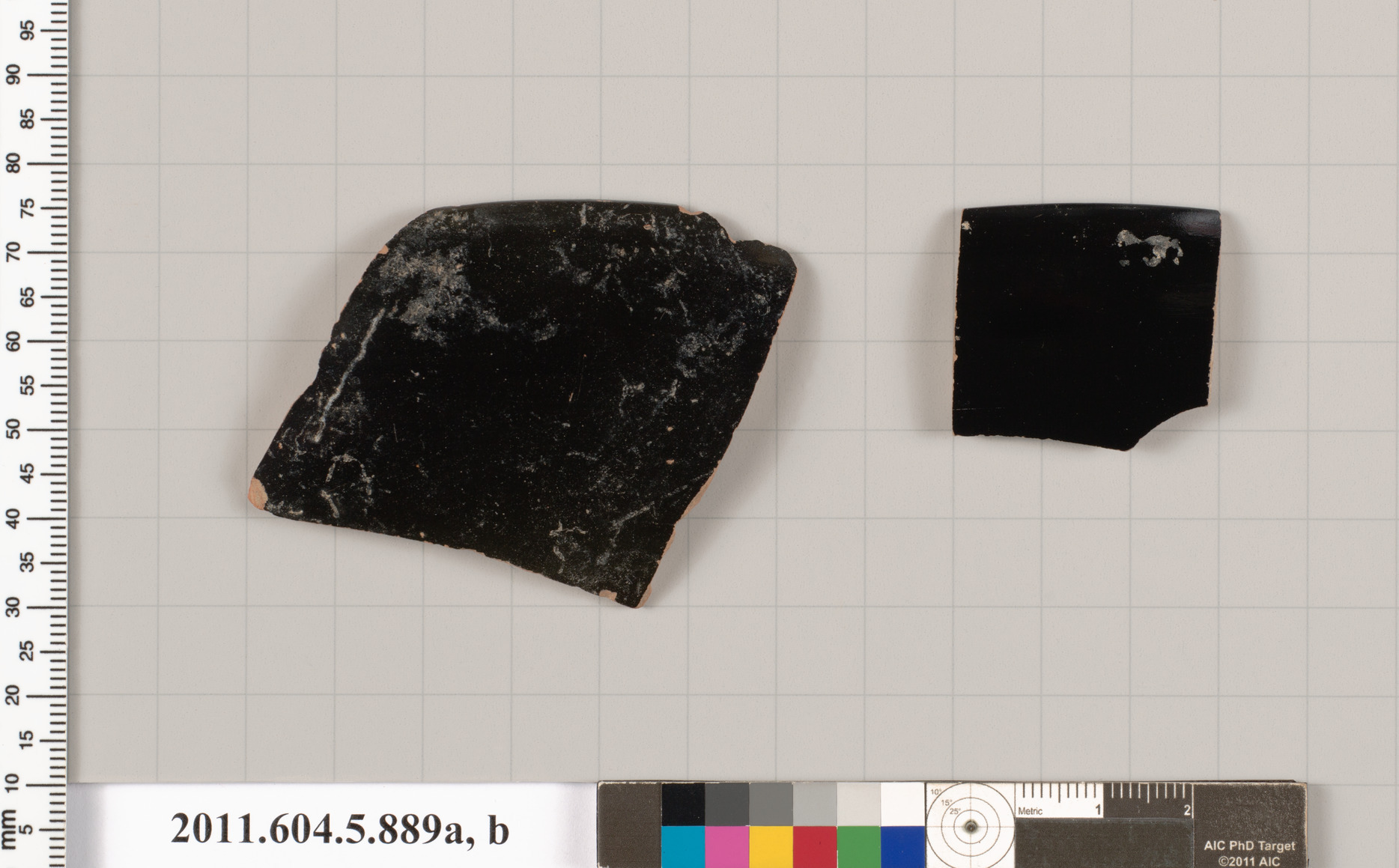
The Dialectics of Mortality and Form: Terracotta Kylix Fragments as a Blueprint for 2026 Old Money Silhouettes
The Lauren Fashion Heritage Lab has long maintained that the most enduring luxury is not born of novelty, but of a profound dialogue with the artifacts of human civilization. The museum artifact under consideration—a set of terracotta rim fragments from Attic Greek *kylikes* (drinking cups), dating to the 5th century BCE—offers an unexpectedly rich lexicon for the 2026 Old Money silhouette. These humble shards, remnants of symposia where philosophers once debated the nature of the good life, resonate deeply with the internal genetic code of our heritage: the tension between the dramatic, narrative-driven death of Socrates and the silent, ontological stillness of a Chinese *Jar (Hu)*. In these fragments, we find not a mere decorative motif, but a philosophical blueprint for garments that embody *gravitas*, restraint, and the quiet acceptance of time’s passage—the very essence of Old Money aesthetics.
I. The Kylix as a Vessel of Liminality: From Symposium to Silhouette
The *kylix* was more than a drinking vessel; it was an instrument of social and philosophical ritual. Its wide, shallow bowl and two horizontal handles facilitated the passing of wine during symposia—gatherings where, as Plato’s *Symposium* recounts, the boundaries between conviviality, eros, and metaphysical inquiry dissolved. The rim fragments we possess, with their delicate black-figure or red-figure decoration, once framed the liquid that fueled these dialogues. The act of drinking from a *kylix* was inherently liminal: one tilted the head back, exposing the throat, in a gesture that mirrored the vulnerability of the philosopher who, like Socrates, would ultimately accept the hemlock.
For the 2026 Old Money silhouette, this liminality translates into a design philosophy centered on the shoulder line and the neckline. The *kylix*’s rim—a perfect, unbroken circle—informs a new generation of tailored jackets and coats where the shoulder is not padded into aggressive angularity, but rather shaped with a subtle, continuous curve. This is not the sharp, power-shouldered silhouette of the 1980s, but a softer, more architectural form that echoes the vessel’s rim. The collar, whether a notched lapel or a mandarin stand, is conceived as a “rim” that frames the wearer’s face, creating a zone of quiet authority. The fabric—perhaps a heavy, matte-finish wool in heritage-black or deep charcoal—drapes from this rim with a weight that suggests both protection and acceptance, much like the terracotta itself, which has endured millennia of burial and excavation.
II. The Aesthetics of Fragmentation: Wabi-Sabi and the Patina of Time
These *kylix* fragments are not pristine; they are broken, chipped, and worn. Their edges are rough, their surfaces scarred by the earth. This is not a flaw, but a testament to their journey through time. Here, the internal code’s reference to the Chinese *Jar (Hu)* becomes crucial. The *Jar*’s “open crackle” and “time-burnished patina” are mirrored in the terracotta’s own history of breakage. Both artifacts embrace what the Japanese aesthetic tradition calls *wabi-sabi*: the beauty of imperfection, impermanence, and incompleteness.
In the 2026 Old Money silhouette, this translates into a deliberate rejection of the “new” and the “perfect.” Garments are designed with intentional irregularities: raw hems that are not finished, seams that are slightly off-center, and fabrics that are brushed or distressed to suggest years of careful wear. A cashmere coat, for instance, might feature a subtle, hand-finished fray at the cuff—not as a sign of neglect, but as a mark of authenticity. The silhouette itself is not rigidly symmetrical; a jacket might have one shoulder slightly dropped, or a skirt might hang with a gentle, asymmetrical drape. This is not deconstruction for its own sake, but a philosophical nod to the *kylix*’s fragmented state. The garment, like the artifact, tells a story of use, of time, of a life lived with purpose. The “Old Money” wearer does not flaunt newness; they wear the quiet evidence of a lineage.
III. The Dramatic Stillness: Socrates’ Hand and the Kylix’s Grip
The internal code’s analysis of *The Death of Socrates* emphasizes the “narrative climax” of the philosopher’s hand reaching for the cup. This gesture—a moment of supreme rational choice—is frozen in paint, yet it implies motion. The *kylix* fragments, conversely, are static. They are the cup *after* the hand has released it, after the poison has been drunk, after the narrative has ended. This is the “stillness” of the *Jar (Hu)*: an object that does not perform, but simply *is*.
For the 2026 silhouette, this dialectic between dramatic gesture and static object is resolved in the sleeve and the hand. The sleeve of a tailored blazer or a silk evening gown is cut with a subtle, forward pitch—a slight curve that suggests the arm reaching out, as if to accept or to offer. Yet the fabric falls into a quiet, unbroken line from shoulder to wrist. The cuff, perhaps in a contrasting brocade or a single gold-thread button, becomes the “rim” of the *kylix*, framing the hand. The hand itself, whether gloved or bare, is not posed dramatically; it rests, still, at the side or in a pocket. The garment does not shout; it invites the observer to look closer, to read the narrative in the details. This is the ultimate Old Money gesture: the power of suggestion over declaration.
IV. Materiality as Philosophy: Terracotta, Wool, and the Weight of Being
The terracotta of the *kylix* is a humble material—fired earth, porous and warm to the touch. It is not precious in the way of gold or silk, yet it has outlasted empires. Its color ranges from a deep, burnt orange to a muted, almost black-brown, depending on the firing. This materiality informs the 2026 palette and fabric choices. The heritage-black of the category tag is not a flat, synthetic black, but a black that breathes—a black achieved through natural dyes, through the depth of a double-faced wool, or through the matte finish of a heavy linen. Other colors are drawn from the earth: *terracotta* itself, *ochre*, *umber*, *slate*. These are not bright, attention-seeking hues, but colors that absorb light, that recede, that allow the silhouette to speak.
The fabrics themselves are chosen for their weight and drape. A 2026 Old Money coat is not a lightweight shell; it is a garment that has *heft*, that falls with a sense of purpose. This weight is a metaphor for the *gravitas* of the wearer—the weight of history, of tradition, of a life lived with intention. The terracotta fragments, when held, have a surprising density; they are not fragile, but solid. So too, the garments of this silhouette are designed to be felt, to be lived in, to become part of the wearer’s own patina.
V. Conclusion: The Eternal Rim
The terracotta rim fragments of the Attic *kylix* are not mere archaeological curiosities; they are philosophical objects that speak directly to the 2026 Old Money silhouette. They teach us that true luxury lies not in the new, but in the enduring; not in the perfect, but in the authentic; not in the dramatic, but in the still. The rim of the *kylix*—that perfect circle that once contained the wine of philosophers—now frames the shoulder of a coat, the cuff of a sleeve, the collar of a shirt. It is a reminder that every garment is a vessel, and what it contains is not a body, but a life. In the quiet acceptance of this truth, the Old Money silhouette finds its deepest expression: a form that, like the *kylix* fragments, has been broken by time, yet remains eternally whole in its purpose.
Heritage Lab Insight
Genetic Bridge: Archive node focusing on Heritage-Black craftsmanship.