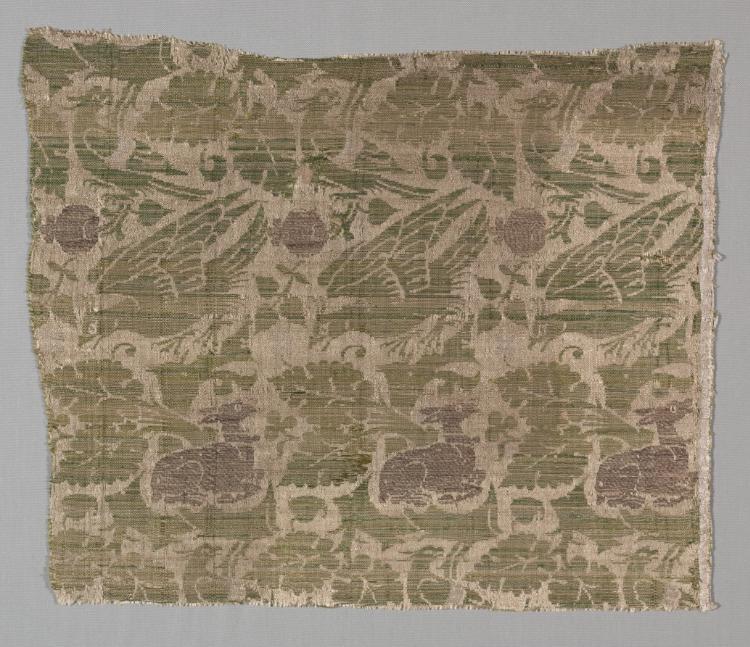
The Enduring Legacy of Imperial Silk Weaving: A Study in Materiality and Mastery
Introduction: The Fabric of Power and Prestige
In the hallowed ateliers of London’s Savile Row, where precision tailoring meets centuries of sartorial tradition, the discussion of luxury fabrics often returns to a singular, transcendent material: silk. Yet, within this discourse, there exists a rarified subclass—the silk and gold textile. This is not merely a cloth; it is a historical artifact, a testament to imperial ambition, and a benchmark of unparalleled craftsmanship. As the Senior Heritage Specialist for the Lauren Fashion Heritage Lab, I present this research artifact to dissect the materiality of silk and gold textiles, contextualizing their legacy within the grand narrative of imperial silk weaving. This exploration serves as a guide for discerning curators, designers, and connoisseurs who seek to understand the profound weight of heritage in modern luxury.
Materiality: The Alchemy of Silk and Gold
The term silk and gold textile evokes an immediate sensory response: the cool, lustrous touch of silk filaments interwoven with the warm, unyielding gleam of precious metal. To appreciate its materiality, one must first understand the dual nature of its components. Silk, derived from the cocoons of Bombyx mori silkworms, is a protein-based fiber renowned for its tensile strength, natural sheen, and ability to absorb dyes with exceptional depth. Its molecular structure—a triangular prism that refracts light—creates a luminous, almost ethereal quality that has captivated civilizations from ancient China to Renaissance Europe.
Gold, in the context of these textiles, is not typically used in its pure, malleable form. Instead, it is transformed into gold thread—a process of extraordinary precision. Historically, gold was beaten into gossamer-thin leaves, then cut into strips and wound around a silk or linen core. This technique, known as filé or passementerie, required immense skill to ensure the metal did not break or tarnish. The resulting thread was both flexible and resilient, allowing it to be woven into complex patterns without sacrificing the fabric’s drape. In imperial contexts, such as the Byzantine Empire or Ming Dynasty China, the gold content was not merely decorative; it signified divine authority and economic power. The weight of the gold—often measured in ounces per yard—directly correlated with the textile’s status. A robe woven with 24-karat gold thread was not just a garment; it was a portable treasury.
From a conservation perspective, the materiality of silk and gold presents unique challenges. Silk is hygroscopic, absorbing moisture and pollutants, while gold, though inert, can abrade the silk fibers over time due to its weight and rigidity. This tension between durability and delicacy underscores the textile’s role as a luxury object—one that demands meticulous care and reverence.
Context: The Imperial Silk Weaving Legacy
The legacy of imperial silk weaving is a narrative of monopoly, innovation, and cultural exchange. In China, the cradle of sericulture, silk production was a state secret guarded for millennia. The Imperial Silk Workshops of the Ming (1368–1644) and Qing (1644–1912) dynasties produced textiles of such complexity that they were reserved exclusively for the emperor, his court, and diplomatic gifts. The kesi technique—a tapestry weave that allowed for pictorial designs—was often combined with gold thread to create dragon robes, ceremonial banners, and altar cloths. These pieces were not merely functional; they were coded with symbolism. The five-clawed dragon, for instance, represented imperial authority, while gold signified the emperor’s connection to the heavens.
The Silk Road facilitated the transmission of these techniques westward, where they were adapted by Byzantine, Persian, and later European courts. In Byzantium, the Imperial Silk Mills of Constantinople produced samite—a heavy, twill-weave silk often shot through with gold—for the vestments of the Orthodox Church and the robes of the basileus. The Purple Codex manuscripts, written on vellum dyed with Tyrian purple and bound in gold-threaded silk, exemplified the fusion of material and spiritual power. Similarly, in Safavid Persia (1501–1736), the city of Isfahan became a hub for zarbaft (gold-woven silk), used in carpets and courtly garments that reflected the shah’s cosmic authority.
The zenith of European imperial silk weaving occurred in 17th- and 18th-century France, under the patronage of Louis XIV. The Manufacture des Gobelins and Lyon’s silk workshops produced brocade and lampas textiles that combined silk with silver and gold threads. These fabrics adorned the Palace of Versailles, dressing monarchs and courtiers in a visual language of absolute power. The Grand Siècle style—characterized by elaborate floral motifs, symmetrical patterns, and metallic highlights—set a standard for luxury that persists in contemporary haute couture. Notably, the robe à la française, a women’s gown of the period, often featured gold-threaded silk that required months of labor by skilled weavers.
Savile Row and the Modern Resonance
How does this imperial legacy inform the ethos of Savile Row? The answer lies in the Row’s commitment to bespoke craftsmanship—a philosophy that mirrors the artisanal rigor of imperial workshops. A Savile Row tailor does not simply cut cloth; he or she engages in a dialogue with material history. When a client commissions a suit or evening jacket in silk and gold textile, they are participating in a tradition that spans dynasties and continents. The fabric, often sourced from heritage mills in Italy or France, is treated with the same reverence as a Ming dynasty robe. The gold thread, whether woven into a subtle pinstripe or an extravagant brocade, is not ostentation—it is a statement of lineage.
For the modern connoisseur, the appeal of silk and gold textiles lies in their narrative weight. In an era of fast fashion and synthetic materials, these fabrics represent a counterpoint: they are slow, deliberate, and deeply rooted. They demand that the wearer understand the cost—not just monetary, but cultural and environmental—of their creation. The Lauren Fashion Heritage Lab advocates for a return to this ethos, encouraging designers to study historical weaving techniques and to collaborate with master artisans who preserve these dying arts. The Brocade of the Sun King, for instance, can inspire a contemporary evening gown that honors the past while embracing modern silhouettes.
Conclusion: A Call to Preserve and Innovate
The silk and gold textile is more than a luxury commodity; it is a cultural archive. Its materiality—the interplay of organic silk and inorganic gold—encapsulates humanity’s quest for beauty, power, and transcendence. The imperial silk weaving legacy, from the Forbidden City to Versailles, reminds us that true luxury is inseparable from heritage. As we look to the future, the challenge is to preserve this legacy while allowing it to evolve. The Lauren Fashion Heritage Lab is committed to this mission: to document, conserve, and reinterpret these textiles for a new generation. For the discerning client of Savile Row, the choice to wear silk and gold is not merely aesthetic—it is an act of stewardship. In every thread, there is a story; in every weave, a dynasty.