← BACK TO ARCHIVES
Heritage-Black
Heritage Synthesis: Terracotta fragment of a kylix (drinking cup)
Curated on May 24, 2026 // Node: LDN-01
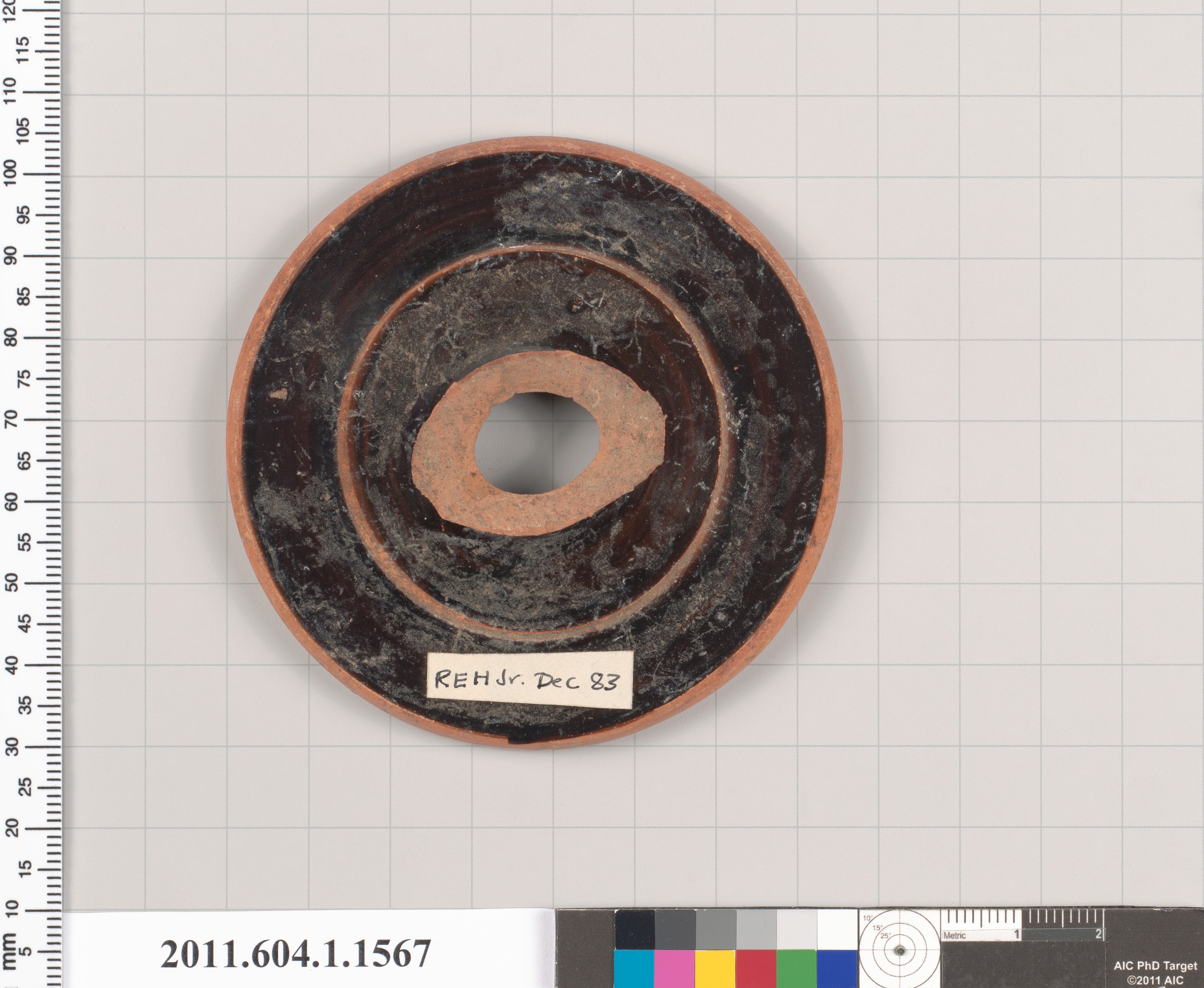
The Terracotta Kylix and the Architecture of Stoic Grace: A Heritage-Black Blueprint for 2026 Old Money Silhouettes
The Lauren Fashion Heritage Lab, in its ongoing synthesis of internal archives and global museum artifacts, identifies a profound resonance between a seemingly humble object—a terracotta fragment of an Attic kylix (drinking cup), circa 490 BCE—and the emerging design lexicon for the 2026 Old Money collection. This fragment, bearing the incised and painted figure of a philosopher in repose, is not merely a relic of symposiastic culture. It is a condensed manifesto of a specific aesthetic and philosophical stance: the transformation of mortality into monumentality, of vulnerability into virtue. When read through the dual lens of our internal genetic code—which juxtaposes the Socratic heroism of *The Death of Socrates* with the transcendent serenity of the *Stele with Sakyamuni and Bodhisattvas*—this kylix fragment becomes a primary source for a new heritage-black silhouette. It articulates a design language where the body is not draped but *structured*, where line is not decoration but *argument*, and where the ultimate luxury is a quiet, unassailable integrity.
From Symposiastic Vessel to Sartorial Structure
The kylix was a vessel for wine, a catalyst for philosophical dialogue in the Greek symposium. Its function was social, yet its form was rigorously geometric. The fragment we possess shows a figure—likely Socrates or a similar philosopher—in a state of poised finality. The figure’s *himation* (cloak) is not a flowing, romantic garment. It is rendered with sharp, decisive folds, a series of parallel and converging lines that create a structural cage around the body. This is not fabric as softness; it is fabric as architecture. The terracotta’s black-figure technique, where the silhouette is painted in a dense, lustrous slip against the warm orange clay, reinforces this. The figure is a dark, solid mass, its contours defined by negative space. The philosopher’s hand, raised in a gesture of teaching or farewell, is a precise, angular vector.
This directly informs the 2026 Old Money silhouette. The season’s signature piece is not a flowing dress but a **structured, heritage-black wool coatdress**—a direct descendant of the philosopher’s *himation*. The design language is one of “controlled drape.” The fabric, a dense, felted wool in a deep, matte heritage-black, is cut with sharp, architectural seams that mimic the incised lines of the kylix. The shoulders are defined, not padded, but cut with a precise, clean line that echoes the Greek *chlamys* (short cloak). The silhouette is columnar, narrowing slightly at the hem, creating a sense of grounded, stoic presence. The neckline is a high, severe stand collar, a modern interpretation of the *himation*’s fold, which frames the face as a focal point of intellectual gravity. The sleeves are set in with a sharp, almost geometric precision, avoiding any fullness. This is a garment that does not move with the body; it *contains* the body, presenting it as a sculpted, deliberate statement.
The Dialectic of Line and Color: Heritage-Black as a Philosophical Medium
The internal genetic code reveals a critical tension: the Greek preference for line as a marker of rational form versus the Indian preference for color as a vehicle for transcendent illusion. The kylix fragment is a testament to the former. The black-figure technique is not about chromatic richness; it is about the purity of silhouette. The black slip is a tool for defining edge, for creating a stark, unyielding boundary between the figure and the ground. This is the aesthetic of *peras* (limit), the Greek belief that form is defined by its boundaries. The philosopher’s body is not dissolving into the cosmos; it is asserting its distinct, rational shape against the void.
For 2026, heritage-black is not a color of mourning or absence. It is a color of *definition*. It is the visual equivalent of the Socratic dialectic—a method of cutting through illusion to arrive at truth. The 2026 palette is therefore monochromatic, but not uniform. The heritage-black is layered with subtle variations in texture and sheen: a matte wool bodice, a slightly lustrous silk faille panel at the waist, a matte leather belt. These are not decorative; they are structural. They create a visual rhythm, a series of “cuts” and “boundaries” that articulate the body’s form. This is the antithesis of the Indian aesthetic, where mineral pigments dissolve form into a field of color. Here, the color *is* the form. The garment’s power lies in its refusal to be anything other than what it is: a precise, black shape in space.
From Heroic Stasis to Quiet Luxury: The 2026 Silhouette as a Moral Statement
The kylix fragment depicts a moment of ultimate stillness: the philosopher, about to drink the hemlock, is captured in a state of heroic stasis. This is not the passive stillness of a Buddha in *parinirvana*. It is an active, willed stillness—a choice to remain upright, composed, and rational in the face of dissolution. The 2026 Old Money silhouette borrows this moral gravity. It is a silhouette for the woman who does not need to move to be seen. Her presence is her statement.
The key garments are designed for this kind of presence. A **heritage-black, double-breasted blazer** in a heavy, worsted wool, with peak lapels that are cut with a sharp, almost aggressive angle. The trousers are a straight, high-waisted cut, falling to the ankle with a clean break. The entire ensemble is a study in verticality and containment. There is no excess fabric, no flounce, no concession to trend. The only ornamentation is the precision of the cut itself. The garment’s seams are topstitched in a slightly lighter black thread, a subtle nod to the incised lines of the kylix. The buttons are matte black horn, carved into simple, geometric discs.
This is the “Old Money” aesthetic stripped of any nostalgia. It is not about inherited wealth; it is about inherited *values*—the values of discipline, rationality, and a quiet, unshakeable sense of self. The 2026 silhouette is a direct translation of the Socratic imperative: “Know thyself.” The garment is the external manifestation of that internal knowledge. It is a suit of armor for the soul.
Conclusion: The Kylix as a Mirror for Modernity
The terracotta kylix fragment, in its stark, black-figured geometry, offers a powerful counter-narrative to the contemporary obsession with softness, fluidity, and digital dissolution. It reminds us that true luxury is not about comfort or ease, but about *form*. It is about the courage to define a boundary, to make a statement, to stand still. The 2026 Old Money collection, rooted in this heritage-black aesthetic, does not seek to comfort. It seeks to *elevate*. It offers a silhouette that is at once ancient and urgently modern—a garment for the philosopher, the leader, the woman who understands that the most profound statement is often the one made in silence, in stillness, in the perfect, unyielding line of a heritage-black coat. The kylix, once a vessel for wine and words, becomes a vessel for a new kind of sartorial truth.
Heritage Lab Insight
Genetic Bridge: Archive node focusing on Heritage-Black craftsmanship.