The Artifact as a Testament to Silk’s Narrative Power
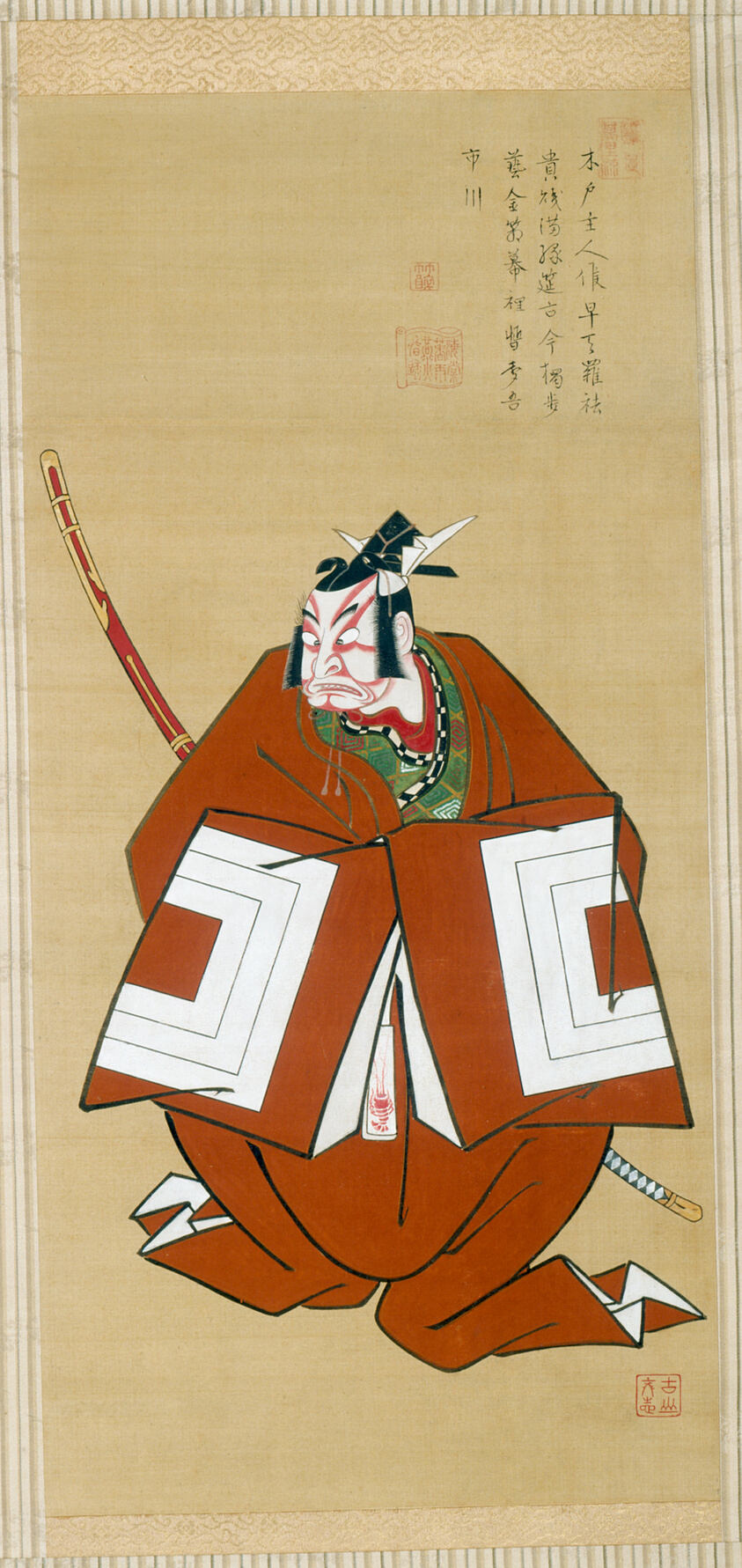
The Portrait of Ichikawa Danjuro II as Kamakura no Gongorô is not merely a depiction of a celebrated kabuki actor; it is a profound dialogue between materiality and performance. Crafted as a hanging scroll in ink and color on silk, this artifact embodies the pinnacle of Edo-period artistry, where the medium itself—silk—becomes an active participant in storytelling. At Lauren Fashion Heritage Lab, we recognize that silk, with its inherent fluidity and luminosity, is the quintessential canvas for capturing the transient, exaggerated gestures of kabuki. The choice of silk over paper or woodblock prints elevates this portrait from a simple record to a luxurious, almost tactile experience, mirroring the opulence of the actor’s stage presence.
Silk’s unique physical properties—its ability to absorb pigment with a soft, diffused glow, its tensile strength that allows for delicate brushwork, and its natural sheen that catches light like a stage spotlight—are exploited here with masterful precision. The artist, likely from the Torii school, understood that silk does not merely hold color; it breathes life into it. The ink lines defining Danjuro’s fierce expression and the vibrant mineral pigments of his costume—crimson, indigo, and gold—are rendered with a fluid elegance that suggests movement, as if the actor might step off the scroll and into the theater. This is not static portraiture; it is a frozen moment of dynamic energy, preserved in a material that itself suggests flow and change.
Silk as a Conduit for Kabuki’s Theatricality
Kabuki, at its core, is an art of exaggerated emotion and stylized action. The actor Kamakura no Gongorô, a character from the play Shibaraku, is known for his dramatic entrance and heroic posturing. In this portrait, Danjuro II assumes the mie pose—a powerful, climactic stance where the actor freezes, crossing his eyes and gritting his teeth to convey righteous anger. The silk medium enhances this theatricality. The soft, woven surface diffuses the harshness of the ink, creating a subtle gradation in the actor’s skin tones that mimics the effect of stage makeup under candlelight. The silk’s slight translucency allows the white ground to show through, lending a ghostly, ethereal quality to the figure, as if he is both present and transcendent.
Furthermore, the hanging scroll format—a vertical, unrolled presentation—dictates the viewer’s engagement. Unlike a framed painting that sits on a wall, a scroll is unrolled, viewed, and then stored, creating a ritualistic, intimate encounter. This temporality mirrors the ephemeral nature of kabuki performances, which were fleeting, live events. The silk, with its susceptibility to fading and creasing, becomes a metaphor for the impermanence of both the actor’s craft and the material world. At Lauren Fashion Heritage Lab, we study such artifacts to understand how materiality informs cultural memory. The silk here is not passive; it is a custodian of a moment that cannot be replicated, a tactile archive of a performance that ended centuries ago.
Classic Silk Craftsmanship: A Study in Precision
The technical execution of this scroll reveals the rigorous standards of Edo-period silk painting. The silk was first stretched taut on a frame and treated with a solution of alum and glue to create a receptive surface for the pigments—a process known as dosa. This sizing prevents the ink from bleeding uncontrollably, allowing for the razor-sharp lines that define Danjuro’s costume’s intricate patterns. The artist then applied gofun (white lead pigment) for highlights, particularly in the actor’s eyes and the metallic accents of his armor. The result is a surface that shimmers with controlled brilliance, akin to the finest Savile Row tailoring where every stitch is deliberate, every seam a statement of intent.
The silk itself is of a high-grade habutae (plain weave) variety, chosen for its smooth, even texture. This is not the coarse silk used for banners or everyday garments; it is a refined, almost translucent fabric that demands a steady hand and a deep understanding of how pigment interacts with fiber. The artist’s brushwork—bold, sweeping strokes for the actor’s sashimono (back banner) and delicate, almost calligraphic lines for his facial features—demonstrates a mastery of the medium. The silk’s warp and weft create a subtle grid that guides the artist’s hand, much like the grain of a fine wool suiting dictates the cut of a bespoke jacket. In this sense, the silk is not a blank slate but a collaborator, its inherent structure shaping the final composition.
Fluid Elegance: The Aesthetic of Movement
The term “fluid elegance” is often applied to kabuki, but in this artifact, it is literal. The silk’s natural drape, even when mounted as a scroll, suggests a continuous flow of energy. The actor’s costume—a voluminous kamishimo with exaggerated shoulders and trailing sleeves—is rendered with sweeping, unbroken lines that mimic the fabric’s own movement. The ink washes for the background, a soft gray-blue, create an atmospheric depth that pushes the figure forward, as if he is emerging from a mist. This technique, known as mokkotsu (boneless painting), relies on the silk’s absorbency to blend colors seamlessly, achieving a watercolor-like diffusion that no other medium can replicate.
This fluidity extends to the symbolic content. Kamakura no Gongorô is a character of righteous fury, yet the silk softens his aggression into something almost lyrical. The red and black patterns on his costume—symbols of courage and determination—are rendered with a lightness that prevents them from becoming heavy or oppressive. The gold leaf accents, applied with meticulous care, catch the light and shift with the viewer’s perspective, creating a sense of constant motion. At Lauren Fashion Heritage Lab, we see this as a lesson in material storytelling: the silk does not just depict movement; it is movement, its very fibers echoing the actor’s stage presence.
Conclusion: Silk as Heritage, Not Just Medium
In the world of luxury craftsmanship, whether on Savile Row or in an Edo-period atelier, materiality is destiny. The Portrait of Ichikawa Danjuro II as Kamakura no Gongorô is a masterclass in how silk can elevate an artifact from a mere image to a living document of performance, culture, and artistry. Its hanging scroll format, its precise ink work, and its luminous color palette all speak to a tradition where the medium is as important as the message. For the Lauren Fashion Heritage Lab, this artifact underscores the need to study not just what is depicted, but how it is made. Silk, in its fluid elegance and structural integrity, is the unsung hero of this portrait—a material that, like the actor it portrays, commands attention, demands respect, and leaves an indelible mark on the memory of all who encounter it.