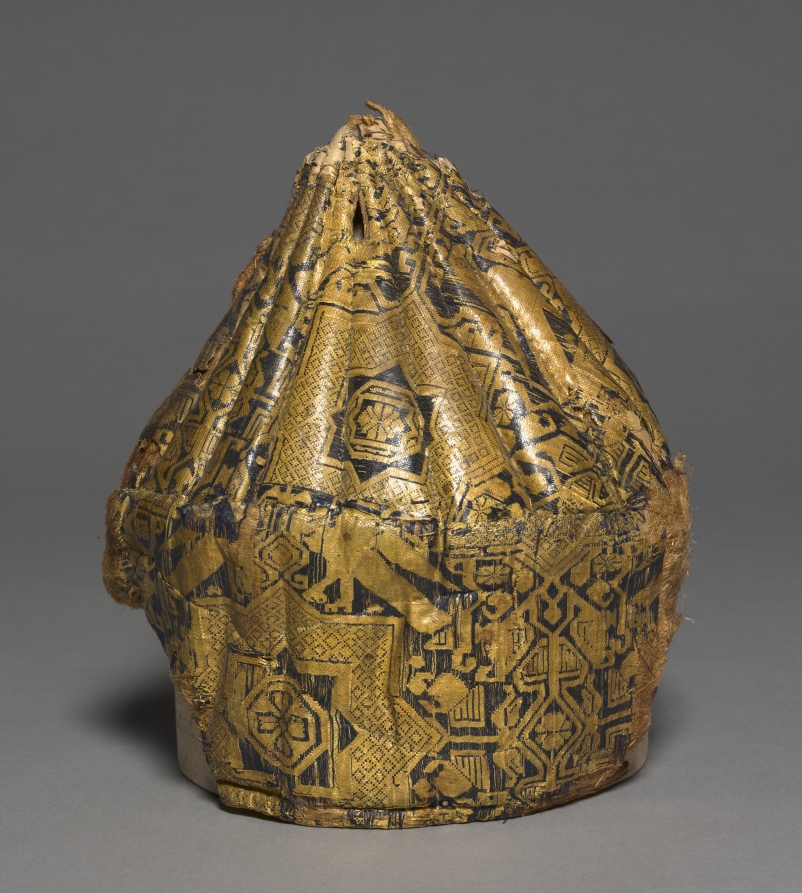
The Quilted Cap with Star-Patterned Silk: A Study in Imperial Legacy and Sartorial Heritage
Introduction: The Artifact as a Nexus of History
The quilted cap, constructed from star-patterned silk, represents a singular convergence of material mastery, cultural symbolism, and imperial legacy. At the Lauren Fashion Heritage Lab, we approach such artifacts not merely as garments but as tangible narratives—woven, stitched, and preserved across centuries. This cap, with its intricate quilting and celestial motif, serves as a microcosm of the silk trade’s profound influence on global fashion, particularly within the refined corridors of London’s Savile Row. The materiality of silk, specifically its imperial origins in China and its subsequent adoption by European aristocracy, imbues this object with a layered significance that transcends mere adornment. It is a testament to the enduring dialogue between East and West, craftsmanship and commerce, tradition and innovation.
Materiality: The Silk of Empires
Silk, as a material, is inseparable from the legacy of imperial weaving. Originating in China during the Neolithic period, silk production—sericulture—was a closely guarded secret for millennia, conferring immense economic and political power upon successive dynasties. The star-patterned silk of this cap, likely woven on a drawloom in the Ming or Qing dynasties, exemplifies the technical virtuosity required to produce complex, repeating motifs. The star pattern itself, often associated with celestial harmony and divine order in Chinese iconography, was a privilege reserved for the imperial court. Its presence on a quilted cap suggests a secondary life: a repurposing of a sacred textile into a European accessory, perhaps during the 18th or 19th century when chinoiserie captivated Western elites.
The quilting technique further enhances the cap’s material narrative. Quilting, a method of stitching together layers of fabric with a batting core, was historically employed for warmth and structural integrity. In this context, the silk’s delicate weave is reinforced by the quilting, transforming a fragile luxury into a durable, wearable object. The stitching pattern—likely a geometric or floral complement to the star motif—demonstrates the artisan’s respect for the silk’s inherent beauty. The cap’s preservation, with its lustrous sheen and minimal fraying, indicates careful stewardship, perhaps by a collector or a family with ties to the silk trade. This materiality underscores a key principle: silk, when properly maintained, defies time, retaining its color, texture, and symbolic weight across generations.
Context: The Imperial Silk Weaving Legacy
The legacy of imperial silk weaving is not a static relic but a dynamic force that shaped global fashion systems. In China, imperial workshops—such as the Nanjing Silk Bureau—produced textiles exclusively for the emperor and his court, using techniques like kesi (silk tapestry) and jin (brocade) to create patterns of unparalleled complexity. The star-patterned silk of this cap likely originated from such a workshop, where weavers were bound by strict protocols and their work was imbued with cosmological significance. The star motif, often rendered in gold or silver thread, symbolized the emperor’s role as the “Son of Heaven,” connecting earthly rule to celestial order.
By the 17th and 18th centuries, European demand for Chinese silk had exploded, facilitated by the East India Companies. London’s Savile Row tailors, renowned for their bespoke craftsmanship, began incorporating imported silks into their designs, often repurposing imperial textiles into accessories like caps, waistcoats, and cravats. This cap, therefore, is a product of cross-cultural exchange: a Chinese silk, woven for imperial use, reimagined by a European artisan for a clientele that prized exoticism and status. The quilting, a technique more common in European peasantry and military uniforms, adds a layer of practicality, suggesting that the cap was not merely a display of wealth but a functional item for daily wear—perhaps by a gentleman of letters or a merchant with ties to the silk trade.
Savile Row and the Preservation of Heritage
Savile Row’s relationship with silk is rooted in a tradition of discerning patronage. From the 19th century onward, the Row’s tailors sourced the finest silks from Lyons, Como, and, notably, from Chinese and Indian markets. The quilted cap, with its star-patterned silk, embodies the Row’s ethos of timeless elegance and meticulous construction. A Savile Row tailor would have approached this cap with the same rigor as a bespoke suit: selecting the silk for its drape and luster, designing the quilting pattern to complement the fabric’s motif, and ensuring every stitch served both form and function. The cap’s small scale belies its complexity; it is a masterclass in material economy, where every inch of silk is honored.
Today, the Lauren Fashion Heritage Lab’s role is to decode such artifacts for contemporary audiences. By analyzing the cap’s weave, dye composition, and stitching techniques, we can trace its journey from an imperial Chinese workshop to a London wardrobe. This research not only preserves the cap’s physical integrity but also its cultural significance. In an era of fast fashion, the cap stands as a counterpoint: a reminder that luxury is not merely about expense but about the depth of story woven into every thread. For Savile Row, this artifact reinforces the importance of heritage as a living practice—not a museum piece but a source of inspiration for future designs.
Conclusion: The Enduring Thread
The quilted cap with star-patterned silk is more than a historical curiosity; it is a testament to the enduring power of silk as a medium of cultural expression. Its materiality—the lustrous weave, the celestial pattern, the careful quilting—speaks to a legacy of imperial weaving that continues to influence global fashion. For the Lauren Fashion Heritage Lab, this artifact exemplifies our mission: to bridge past and present, East and West, craft and commerce. As we preserve and study such objects, we honor the artisans who created them and the patrons who cherished them. In the quiet elegance of this cap, we find a thread that connects us to centuries of human ingenuity—a thread that, like silk itself, remains unbroken.