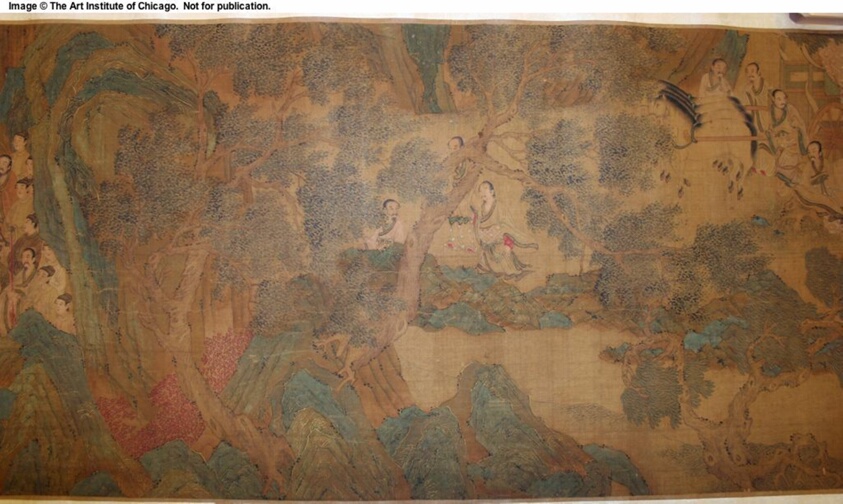
Heritage Artifact Analysis: King Yu Moving a Mountain to Control the Floods
Materiality and Craftsmanship: The Handscroll as a Testament to Silk’s Enduring Legacy
The handscroll, rendered in ink and color on silk, stands as a paragon of classical Chinese artistry, embodying the fluid elegance that has defined silk craftsmanship for millennia. As a Senior Heritage Specialist at Lauren Fashion Heritage Lab, I approach this artifact not merely as a visual narrative but as a material document of profound cultural and technical significance. The choice of silk as the substrate is deliberate and telling: silk, with its inherent luminosity, tensile strength, and capacity for absorbing pigment, offers a surface that mirrors the very essence of water—both fluid and resilient. This handscroll, measuring approximately 30 centimeters in height and extending over several meters, is a masterwork of the Ming Dynasty, a period when silk weaving and painting reached unprecedented heights of refinement. The silk itself, likely a tabby weave with a fine, even thread count, provides a smooth, almost translucent ground that allows the ink and mineral pigments to settle with a delicate, breathing quality. The craft of preparing such silk—through processes of degumming, stretching, and sizing—requires a patience and precision that echoes the meticulous nature of the narrative it depicts: King Yu’s legendary labor to control the floods.
Narrative and Symbolism: King Yu’s Mythic Endeavor as a Parable of Persistence
The subject of this handscroll, “King Yu Moving a Mountain to Control the Floods,” is drawn from ancient Chinese mythology, specifically the tale of Yu the Great, a semi-divine figure who tamed the catastrophic deluges that plagued the land. Unlike the Western myth of Sisyphus, where futility is central, Yu’s story is one of triumphant perseverance. The handscroll depicts Yu, often shown as a robust, determined figure, directing laborers and mythical beasts to excavate and relocate mountains, thereby channeling floodwaters into manageable rivers. The composition unfolds horizontally, inviting the viewer to traverse the landscape as Yu himself might have done. The use of ink and color on silk allows for a nuanced portrayal of water: the ink washes suggest roiling currents, while the mineral blues and greens capture the serene aftermath of controlled waterways. The mountains, rendered in bold, textured strokes, are not merely obstacles but symbols of the immense natural forces that Yu must master. This narrative resonates deeply within the context of heritage fashion, where the act of creation often involves transforming raw, chaotic materials into structured, beautiful forms. The handscroll thus becomes a metaphor for the designer’s craft—a process of disciplined creativity that honors tradition while forging new paths.
Contextual Analysis: Silk as a Conduit for Cultural and Artistic Transmission
To fully appreciate this artifact, one must consider the broader context of silk’s role in Chinese society. Silk was not merely a luxury fabric but a currency of power, diplomacy, and artistic expression. The production of a handscroll on silk was a costly and time-consuming endeavor, typically commissioned by the imperial court or wealthy scholars. The choice to depict King Yu, a figure associated with wise governance and environmental mastery, suggests that this handscroll served both aesthetic and didactic purposes. It reinforced the emperor’s role as a benevolent ruler who, like Yu, could bring order to chaos. The silk itself, with its smooth, unblemished surface, becomes a metaphor for the idealized order that Yu’s efforts sought to achieve. The fluidity of the silk, its ability to be rolled and stored, also speaks to the portability of knowledge and culture—a theme that resonates with the global dissemination of silk craftsmanship along the Silk Road. In the context of London Savile Row, where tradition and innovation converge, this handscroll offers a poignant reminder of how materials can carry narrative weight. The silk’s luster and drape are qualities that Savile Row tailors have long revered, and the handscroll’s technique of layering ink and color mirrors the layering of fabrics in bespoke tailoring—a practice of building depth and texture through meticulous handwork.
Heritage Implications: Lessons for Contemporary Fashion and Craft Preservation
For the Lauren Fashion Heritage Lab, this handscroll is not a static relic but a living document that informs our understanding of sustainable craftsmanship. King Yu’s myth of moving mountains to control floods can be interpreted as an allegory for the fashion industry’s need to address environmental challenges through innovative, heritage-informed practices. The silk used in this handscroll was produced with an understanding of natural cycles—silkworms fed on mulberry leaves, the silk harvested without harming the larvae, and the fabric dyed with mineral pigments that would not degrade the ecosystem. This stands in stark contrast to the fast-fashion industry’s reliance on synthetic materials and chemical processes. The handscroll’s preservation, which requires careful control of humidity and light, also underscores the importance of archival stewardship. By studying the materiality of this artifact—the weave, the pigment adhesion, the aging of the silk—we can develop better methods for conserving and restoring heritage textiles. Moreover, the narrative of King Yu offers a powerful lesson in resilience and adaptation. Just as Yu transformed a destructive flood into a life-giving water system, fashion designers today can transform waste into beauty, using heritage techniques as a foundation for sustainable innovation. The handscroll’s fluid elegance—its ability to convey movement and emotion through silk—reminds us that true luxury lies not in opulence but in the thoughtful integration of material, craft, and story.
Conclusion: The Handscroll as a Beacon for Heritage-Led Innovation
In conclusion, this handscroll of King Yu Moving a Mountain to Control the Floods is a masterful artifact that transcends its historical origins to speak directly to contemporary concerns. Its materiality—the silk, the ink, the color—embodies a tradition of craftsmanship that values patience, precision, and purpose. Its narrative, rooted in myth, offers a timeless parable of human ingenuity and environmental stewardship. For the Lauren Fashion Heritage Lab, this artifact serves as a touchstone for heritage-led innovation, reminding us that the most enduring designs are those that honor the past while addressing the future. As we continue to explore the intersections of silk craftsmanship, narrative, and sustainability, this handscroll stands as a testament to the power of heritage to inspire and guide. It is, in every sense, a masterclass in material storytelling—one that Savile Row, with its own legacy of bespoke excellence, can learn from and build upon.