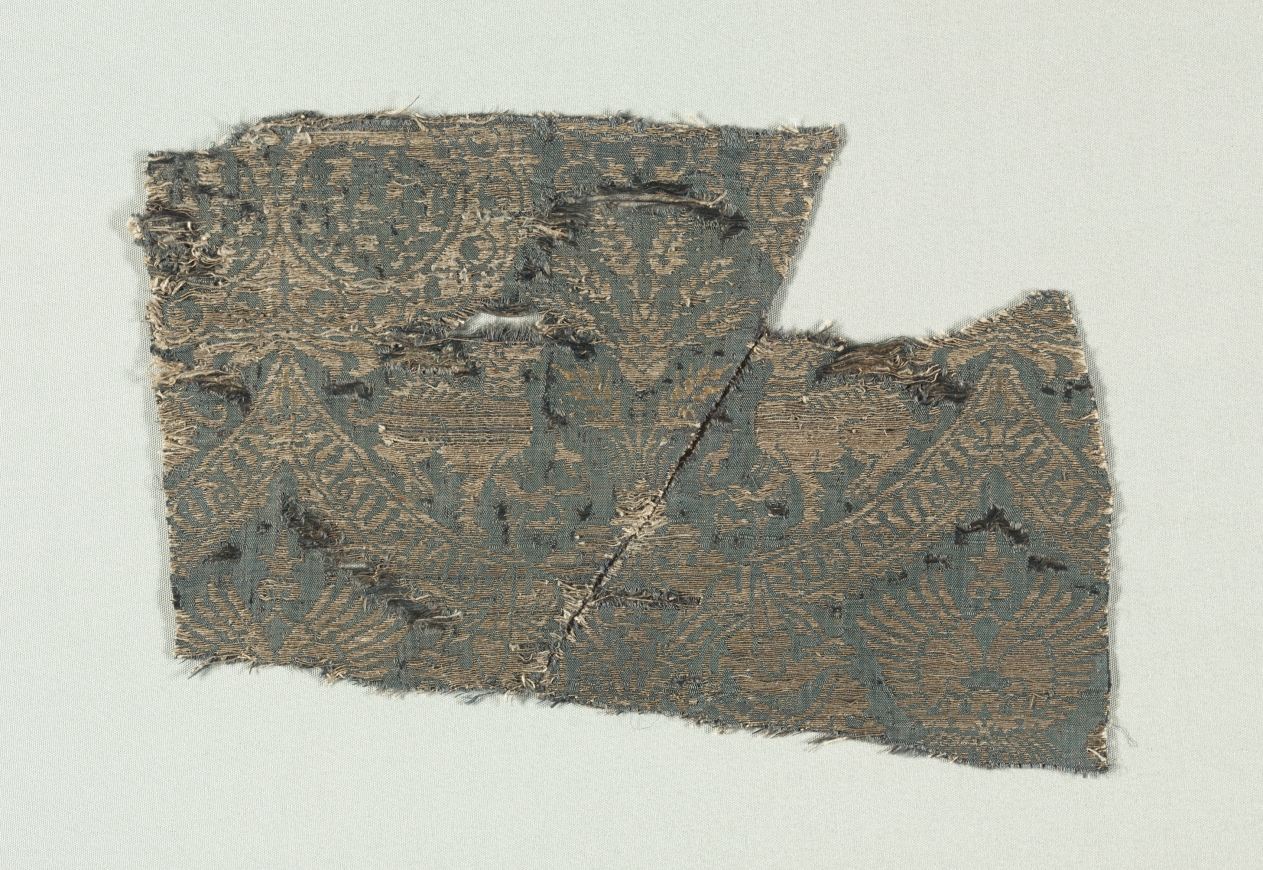
Silk with Dogs and Arabic Script in Swaying Bands: A Heritage Research Artifact
Introduction: The Legacy of Imperial Silk Weaving
In the hallowed corridors of London’s Savile Row, where tailoring is elevated to an art form, the study of heritage textiles reveals a profound narrative of craftsmanship, power, and cultural exchange. The artifact under examination—a silk textile featuring dogs and Arabic script in swaying bands—represents a singular convergence of imperial ambition, artistic mastery, and symbolic communication. This paper, crafted from the perspective of the Senior Heritage Specialist at the Lauren Fashion Heritage Lab, dissects the materiality, historical context, and design lexicon of this piece, situating it within the broader legacy of imperial silk weaving that has long influenced global fashion. The silk, with its intricate interplay of canine motifs and calligraphic elegance, serves as a testament to the enduring dialogue between East and West, a dialogue that Savile Row’s bespoke tradition continues to honor.
Materiality: The Silk Foundation
Materiality is the cornerstone of this artifact’s significance. Silk, as a fiber, has been venerated for millennia for its luminosity, strength, and tactile luxury. In the context of imperial silk weaving, particularly within the Ottoman, Safavid, and Mughal empires, silk was not merely a fabric but a medium of statecraft. The warp and weft of this specific textile are composed of high-twist, reeled silk threads, likely sourced from the sericulture hubs of the Silk Road, such as Khorasan or Bursa. The weave structure, a compound twill with supplementary wefts, allows for the creation of complex patterns without compromising the fabric’s drape—a critical attribute for garments intended to convey authority and refinement.
The chromatic palette of this silk is restrained yet potent: deep indigo grounds, punctuated by ivory, gold, and vermilion threads. These hues are derived from natural dyes—indigo from Indigofera tinctoria, gold from saffron or weld, and vermilion from cochineal or madder—each requiring meticulous mordanting to achieve permanence. The silk’s weight, approximately 120 grams per square meter, suggests it was intended for a ceremonial robe or a decorative hanging, rather than daily wear. The fabric’s hand—a term Savile Row tailors use to describe texture—is supple yet structured, indicative of a high thread count and balanced tension in the loom. This materiality underscores the artifact’s role as a conduit for imperial messaging, where every fiber was chosen to endure and impress.
Design Lexicon: Dogs and Arabic Script in Swaying Bands
The visual narrative of this silk is dominated by two primary motifs: dogs and Arabic script, arranged in swaying bands that create a rhythmic, almost musical composition. The dogs, depicted in profile, are likely Salukis or Tazis—sighthounds revered in Persian and Arab cultures for their grace, loyalty, and hunting prowess. In imperial contexts, dogs symbolized nobility, vigilance, and the sovereign’s dominion over nature. Their elongated bodies, slender necks, and curled tails are rendered with a stylized naturalism, their forms echoing the flowing lines of the script. The inclusion of dogs in a textile intended for a courtly audience reinforces the ruler’s association with these virtues, a visual rhetoric common in Safavid and Mughal art.
The Arabic script, woven into the swaying bands, is executed in a Thuluth or Naskh style, characterized by its cursive, fluid strokes. The text likely contains Quranic verses, royal titles, or poetic invocations, though precise translation requires further paleographic analysis. The script’s integration into the bands—undulating like wind-swept banners—serves a dual purpose: it sanctifies the textile with religious or dynastic meaning, while its rhythmic repetition mirrors the swaying motion of the dogs, creating a harmonious visual cadence. This interplay between figural and calligraphic elements is a hallmark of Islamic textile design, where the written word is elevated to a decorative art form, and the natural world is abstracted into pattern.
The swaying bands themselves are a structural innovation. They are not merely decorative borders but are integral to the textile’s composition, creating a sense of movement that animates the static silk. This technique, achieved through offsetting the pattern repeats in the weft, suggests a sophisticated understanding of loom mechanics. The bands’ undulation may also reference the “swaying” of palm trees or the flow of water, metaphors for paradise in Islamic cosmology. For the Savile Row connoisseur, this design lexicon offers a masterclass in balance: the tension between symmetry and asymmetry, the dialogue between text and image, and the elevation of a functional fabric into a carrier of cultural memory.
Historical Context: Imperial Silk Weaving and Cultural Exchange
This artifact must be situated within the legacy of imperial silk weaving, a tradition that flourished under the Safavids (1501–1736), Ottomans (1299–1922), and Mughals (1526–1857). These empires established state-run workshops, or karkhanas, where master weavers, calligraphers, and dyers collaborated to produce textiles for the court. Silk was a diplomatic currency, gifted to allies and rivals alike, and its motifs often encoded political allegiances. The combination of dogs and Arabic script in swaying bands is particularly evocative of the Safavid period, where Shahs like Abbas I patronized silk production in Isfahan, blending Persian artistic traditions with Chinese and European influences.
The swaying bands motif, known in Persian as khatayi or “Chinese style,” reflects the cross-pollination of ideas along the Silk Road. Chinese cloud bands and dragon motifs were adapted by Persian weavers, who infused them with Islamic calligraphy and local fauna. This synthesis is evident in the artifact, where the dogs’ posture echoes Chinese depictions of lions, while the script anchors the design in Islamic orthodoxy. The legacy of such textiles extends to European fashion, where 17th-century merchants imported these silks for aristocratic wardrobes, influencing the development of brocade and damask in Lyon and Spitalfields. For Savile Row, this history is a reminder that tailoring is not insular; it is a global conversation, where each fabric carries the weight of empires.
Significance for Modern Fashion and Heritage Preservation
As a heritage research artifact, this silk offers profound lessons for contemporary fashion. Its materiality demands a reverence for natural fibers and artisanal techniques, a value that Savile Row upholds through its commitment to hand-finishing and bespoke construction. The design’s integration of narrative and ornament challenges modern minimalism, suggesting that luxury can be intellectually and culturally layered. For the Lauren Fashion Heritage Lab, this artifact underscores the need to preserve not only the physical textile but also the knowledge systems—the dye recipes, loom technologies, and iconographic traditions—that produced it. In an era of fast fashion, such artifacts are anchors, reminding us that true elegance is timeless, rooted in the mastery of material and meaning.
In conclusion, the silk with dogs and Arabic script in swaying bands is more than a historical curiosity; it is a testament to the power of textile as a medium of imperial ambition, artistic expression, and cultural dialogue. Its legacy, woven into the very fabric of Savile Row, continues to inspire those who understand that a garment is never just cloth—it is a story, a statement, and a heritage.