← BACK TO ARCHIVES
Heritage-Black
Heritage Synthesis: Terracotta fragment of a lekythos (oil flask)
Curated on May 25, 2026 // Node: LDN-01
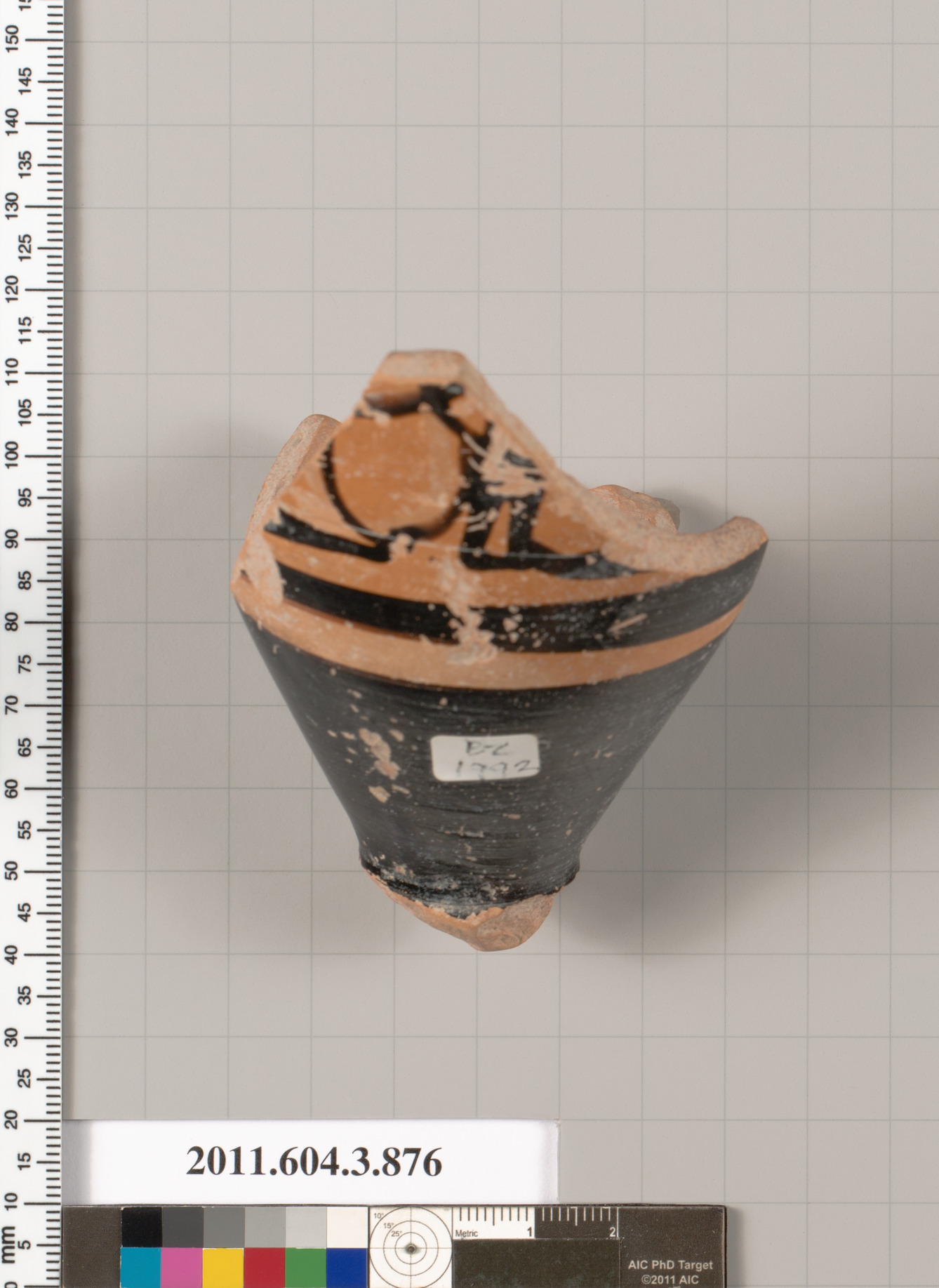
The Terracotta Fragment and the Architecture of Restraint: Reimagining Old Money Silhouettes for 2026
The Lauren Fashion Heritage Lab’s ongoing dialogue between sacred artifacts and secular style finds a compelling nexus in the juxtaposition of a Greek Attic terracotta lekythos fragment with the internal genetic code of Buddhist iconography. While the *Bodhisattva* and the bovine-headed amulet represent the dual poles of public veneration and private protection, the terracotta fragment—a humble, broken vessel from antiquity—offers a third, equally profound paradigm: the aesthetic of *enduring imperfection*. This artifact, with its earthy patina, fractured edges, and functional origins, provides a critical lens through which to reimagine the 2026 “Old Money” silhouette. The Old Money aesthetic, often characterized by understated luxury and generational continuity, risks stagnation into mere nostalgia. The terracotta fragment, however, injects a vital tension: it teaches that true heritage is not about pristine preservation but about the quiet dignity of wear, the narrative of use, and the beauty of material that has weathered time.
From Sacred Vessel to Secular Silhouette: The Terracotta’s Formal Lexicon
The lekythos, an oil flask used in funerary rites and daily life, is defined by its slender, elongated body, a narrow neck, and a single handle. Its terracotta composition—fired clay, unglazed and porous—speaks to a materiality of earth, labor, and ritual. For the 2026 Old Money wardrobe, this translates into a silhouette that prioritizes verticality and compression. The lekythos’s attenuated form suggests a long, lean line: a single-breasted overcoat cut from heavy wool, falling to the mid-calf, with shoulders that are sharp but not exaggerated. The neckline, like the flask’s narrow mouth, should be high and enclosed—a funnel-neck or a standing collar that creates a sense of contained elegance. The handle, a functional curve, inspires a subtle asymmetry: a single pleat or a draped panel on one side of a jacket, echoing the vessel’s organic asymmetry without disrupting the overall harmony.
The fragment’s broken edge is not a flaw but a feature. In the context of Old Money, this translates to a deliberate embrace of imperfect finishes. Raw hems on a silk blouse, unlined seams on a cashmere cardigan, or a slight fraying on a wool trouser cuff—these details signal that the garment has been lived in, handed down, and loved. They reject the sterile perfection of fast fashion in favor of a patina that whispers of history. The terracotta’s earthy hue—a spectrum of burnt umber, ochre, and sienna—further dictates a restrained palette: not the stark black of mourning, but a heritage-black softened by age, a deep charcoal, a dusty olive, and a muted rust. These colors, drawn directly from the fired clay, ground the silhouette in a sense of place and permanence.
The Bodhisattva’s Grace and the Amulet’s Power: A Dialectic of Form and Function
The internal genetic code’s discussion of the *Bodhisattva* and the bovine-headed amulet illuminates a crucial tension for the 2026 silhouette. The *Bodhisattva* represents an “outward” compassion—an idealized, open form designed to inspire and elevate. Its flowing drapery and serene proportions suggest a silhouette of generosity: a wide-leg trouser in fluid wool, a cape-like coat that moves with the body, and a soft, unstructured shoulder. This is the public face of Old Money—the philanthropic gala, the boardroom, the museum opening. It is the silhouette of visible ease, where luxury is expressed through volume and the quality of drape.
Conversely, the amulet embodies an “inward” protection—a compact, concentrated form meant for the individual. Its bovine head, a symbol of power and guardianship, demands a silhouette of armored restraint. This manifests as a structured blazer with a pronounced notch lapel, a high-waisted trouser with a sharp crease, or a leather jacket with precise, military-inspired stitching. The amulet’s scale—small, personal, worn close to the body—translates into details: a hidden pocket, a reinforced elbow patch, a button crafted from horn. These are not decorative; they are functional talismans, offering the wearer a sense of psychological security. The 2026 Old Money silhouette must synthesize these two impulses: the graceful, outward-facing volume of the *Bodhisattva* and the protective, inward-facing structure of the amulet. The result is a garment that is both expansive and contained—a double-faced cashmere coat that is fluid on the outside but has a structured, fitted interior lining, or a silk dress with a hidden corset-like boning.
The Terracotta as a Third Path: Heritage as Process, Not Product
Where the *Bodhisattva* and the amulet represent static ideals—one of perfected grace, the other of concentrated power—the terracotta fragment introduces a dynamic, temporal dimension. It is a fragment of a whole, a remnant of a ritual. Its value lies not in its original form but in its survival and its transformation. For the 2026 Old Money silhouette, this suggests a shift from *heritage as a product* (a perfect replica of a 1920s blazer) to *heritage as a process* (a garment that is designed to age, to be repaired, to be passed on). This is a radical departure from the current luxury market, which often fetishizes newness and rarity.
Concretely, this means designing garments with intentional obsolescence—not in the sense of planned failure, but in the sense of planned evolution. A wool herringbone blazer might be constructed with a partially unfinished hem, allowing the wearer to let it fray or to have it tailored to a new length. A cashmere sweater might feature a visible darning stitch on the elbow, not as a repair but as a decorative element that anticipates future mending. The terracotta’s fragmentary nature also encourages a modular approach: a skirt that can be worn as a tunic, a jacket with removable sleeves, a dress that can be layered over trousers. This versatility mirrors the lekythos’s multiple functions—funerary, domestic, ritual—and aligns with the modern Old Money ethos of investment pieces that adapt to a life of varied contexts.
The color palette, again, is key. Rather than a uniform black, the heritage-black of the 2026 silhouette should be a spectrum of near-blacks: a black with a hint of brown, a black with a trace of green, a black that has been faded by sunlight. These are the colors of the terracotta fragment after centuries in the earth—not the color of new clay, but of clay that has been fired, broken, and reburied. This palette communicates a depth of time that cannot be replicated by a single dye lot.
Conclusion: The Enduring Fragment as the New Luxury
The terracotta fragment, the *Bodhisattva*, and the bovine-headed amulet are not competing artifacts but complementary nodes in a larger spiritual and aesthetic network. The *Bodhisattva* teaches the silhouette to aspire to grace; the amulet teaches it to protect the self; the terracotta teaches it to embrace time. For the 2026 Old Money silhouette, the most powerful statement is not a pristine, museum-quality garment but one that bears the marks of a life lived. The fragment is the ultimate luxury—a piece that cannot be replicated because its value is inseparable from its history. By integrating the terracotta’s lessons of verticality, imperfect finish, and temporal depth, Lauren Fashion can redefine Old Money not as a static status symbol but as a living, breathing archive of personal and cultural memory. The silhouette becomes a vessel, not for oil, but for meaning—a fragment of heritage that the wearer completes.
Heritage Lab Insight
Genetic Bridge: Archive node focusing on Heritage-Black craftsmanship.