The Terracotta Eye-Cup and the Architecture of Old Money: A Genealogy of Restrained Opulence in the 2026 Silhouette
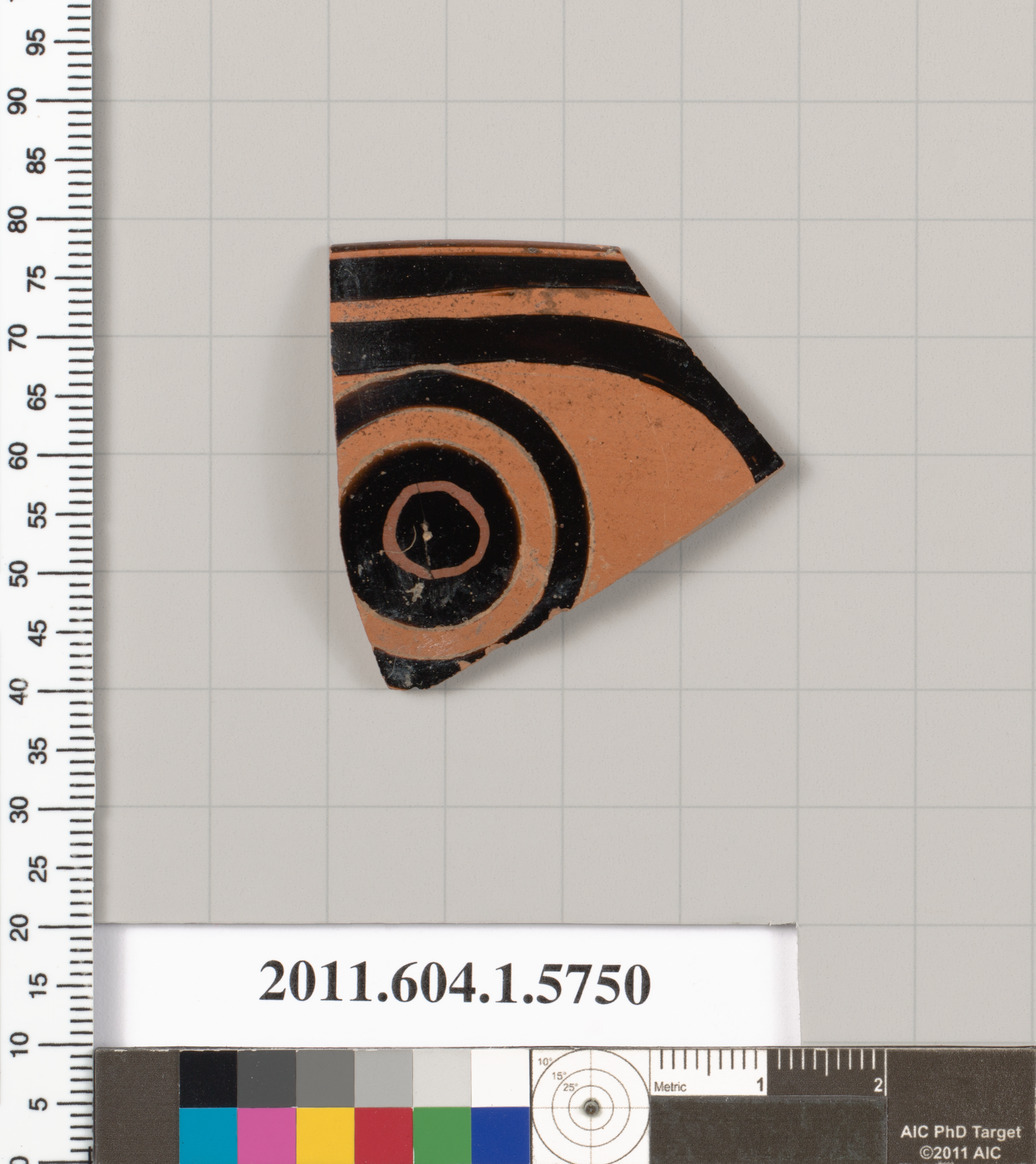
The Lauren Fashion Heritage Lab’s internal genetic code—a comparative reading of Johannes Vermeer’s A Maid Asleep and George Caleb Bingham’s A Vignette of Life on the Frontier—illuminates a profound aesthetic principle: that the most enduring beauty emerges not from grand narratives but from the meticulous ordering of transitional, seemingly mundane spaces. This principle, which we have termed “controlled stillness” and “dynamic equilibrium,” finds an unexpected yet remarkably resonant material analogue in the museum artifact under consideration: a terracotta rim fragment of an Attic kylix, specifically an eye-cup from the late 6th century BCE. This humble drinking vessel, broken and incomplete, is not merely an archaeological curiosity. It is a foundational text for understanding the 2026 Old Money silhouette—a fashion language that, like the kylix itself, speaks of power through restraint, of lineage through form, and of timelessness through the deliberate mastery of a single, potent gesture.
I. The Kylix as a Model of Transitional Space
The Attic eye-cup was designed for the symposium, a ritualized space of social bonding and philosophical discourse among the Athenian elite. Its form is deceptively simple: a shallow bowl on a stem, with two horizontal handles. The “eye” motif—a large, apotropaic eye painted on the exterior—served a dual function. When the cup was raised to drink, the eye appeared to watch the drinker, creating a moment of self-awareness. When the cup was empty and set down, the eye stared outward, guarding the space. This is a design of profound transitionality. The kylix exists in the liminal space between public display and private consumption, between the communal act of drinking and the individual experience of intoxication, between the protective gaze of the deity and the vulnerable gaze of the human. It is, in essence, a vessel for the “in-between”—the very same territory Vermeer and Bingham explored through paint.
The terracotta fragment, with its broken rim and faded glaze, amplifies this quality. It is a relic of a completed action—a symposium that ended millennia ago—yet it retains the potential energy of its original function. The eye, though partially missing, still commands attention. The curve of the rim, though chipped, still suggests the perfect circle of the original bowl. This is not a fragment of decay, but a fragment of essence. It is the material equivalent of Vermeer’s sleeping maid: a moment of stillness that contains the entire narrative of labor, desire, and respite. It is Bingham’s frontier dock: a point of convergence where the chaos of expansion is momentarily held in a stable, harmonious composition.
II. The 2026 Old Money Silhouette: From Terracotta to Tailoring
The 2026 Old Money silhouette, as informed by this kylix, rejects the overt opulence of recent seasons. It does not seek to display wealth through volume, logos, or novelty. Instead, it pursues heritage-black as its foundational color—not as a negation, but as a container. Just as the black-figure painting on the kylix’s terracotta body creates a field of tension between the fired clay and the applied slip, the 2026 silhouette uses deep, matte blacks (wool, cashmere, silk faille) as a ground against which single, precise gestures of form and detail can resonate.
The key structural borrowings from the kylix are threefold:
1. The “Eye” as a Focal Point of Restraint. The apotropaic eye on the kylix is not decorative; it is functional. It directs the gaze, creates a moment of pause, and establishes a relationship between the object and the viewer. In the 2026 silhouette, this translates to a single, carefully placed architectural detail: a sharp, asymmetric shoulder seam on a double-breasted blazer; a single, deep pleat on a trouser that creates a vertical line from waist to hem; a precisely cut lapel that mirrors the curve of the kylix’s rim. These are not embellishments. They are formal anchors that organize the entire garment, much like the eye organizes the cup’s surface. The effect is one of controlled power—the wearer is not overwhelmed by the garment, but rather, the garment becomes an extension of the wearer’s own disciplined presence.
2. The Rim as a Silhouette Edge. The rim of the kylix is a perfect, unbroken circle—a line that defines the boundary between inside and outside, between the liquid contents and the external world. In the 2026 silhouette, this translates to a renewed emphasis on clean, uncluttered hemlines and necklines. The coat’s hem falls with geometric precision, neither too long nor too short, creating a clear visual terminus. The neckline of a cashmere sweater is a simple, rolled edge that sits exactly at the collarbone, neither too high nor too low. This is not minimalism for its own sake; it is the articulation of a boundary. Just as the kylix’s rim contains the wine, the garment’s edge contains the body, defining a space of personal sovereignty. This echoes Bingham’s frontier: the edge is not a limit, but a point of possibility.
3. The Terracotta Body as a Material Philosophy. Terracotta is fired earth. It is humble, durable, and deeply connected to the ground. The kylix’s value does not come from precious materials, but from the mastery of a common material—the precise control of clay, slip, and fire. The 2026 Old Money silhouette adopts this philosophy. Fabrics are chosen for their inherent quality and longevity: heavyweight worsted wool, pure linen, dense cashmere. The finish is matte, not shiny. The construction is visible in its integrity—a hand-finished buttonhole, a perfectly matched stripe, a lining that is as carefully cut as the exterior. This is the opposite of fast fashion. It is slow luxury, where the value is embedded in the process, not the appearance. It is the terracotta fragment’s lesson: that a broken piece of fired clay, when made with intention, can speak across millennia.
III. The Dialectic of Order and Escape
The internal genetic code identified a central tension in both Vermeer and Bingham: the dialectic between order and escape. The maid sleeps within a rigid geometric grid; the frontiersmen are composed into a classical frieze. The kylix embodies this same dialectic. Its form is rigorously symmetrical and balanced—a product of the potter’s wheel and the painter’s compass. Yet its function is to facilitate a temporary release from social norms: the symposium was a space for wine, poetry, and philosophical transgression. The eye-cup, with its apotropaic gaze, both permits and polices this release.
The 2026 silhouette operates on this same principle. The garments are structurally severe—sharp shoulders, narrow trousers, fitted bodices—but they are designed for movement and adaptation. A wool coat with a military cut is paired with a fluid silk blouse. A tailored trouser has a hidden side zip that allows for a subtle change in silhouette. This is not rigidity; it is controlled flexibility. The wearer is not trapped in the garment; they are held by it, supported by its architecture, free to move within its defined space. This is the luxury of confidence—the knowledge that one’s appearance is a deliberate, self-authored statement, not a submission to trend.
IV. Conclusion: The Eternal Fragment
The terracotta rim fragment of the Attic eye-cup is a perfect metaphor for the 2026 Old Money silhouette. It is broken, yet complete. It is ancient, yet utterly contemporary. It speaks of a civilization that valued form, function, and symbolic power in equal measure. The 2026 silhouette, with its heritage-black foundations, its single architectural gestures, and its philosophy of restrained opulence, is a direct descendant of this lineage. It is not a costume or a revival. It is a continuation of a conversation that began in the symposium, continued through Vermeer’s quiet interiors and Bingham’s dynamic frontiers, and now finds expression in the cut of a coat, the fall of a trouser, the precise curve of a lapel. In this silhouette, the wearer does not merely dress. They inhabit a fragment of eternity—a moment of stillness, balance, and profound, unspoken power.