The Paradox of Form: Terracotta Kylix and the Architecture of Old Money Silhouettes
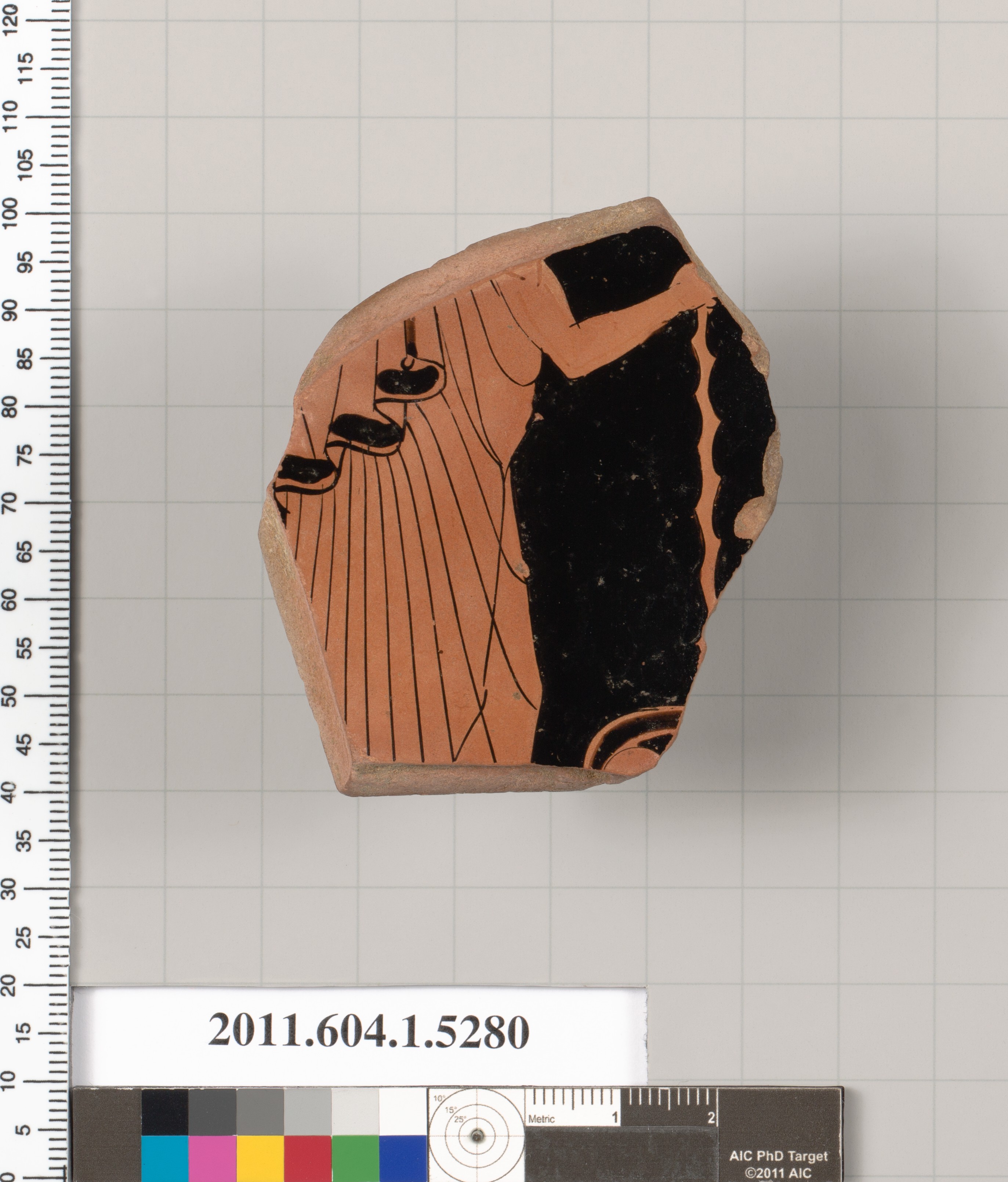
In the grand narrative of fashion, the most enduring statements are often those that speak in whispers. The Lauren Fashion Heritage Lab, in its ongoing excavation of the genetic code of timeless elegance, finds a profound interlocutor in an unlikely source: a terracotta fragment of a Greek Attic kylix, a humble drinking cup. This artifact, stripped of narrative and reduced to pure geometric essence, does not merely inspire a 2026 Old Money silhouette—it prescribes it. The internal genetic code of our heritage, drawn from the tension between Jacques-Louis David’s The Death of Socrates and this anonymous vessel, reveals a core truth: the deepest spirituality and the most potent luxury reside in the most unadorned material form. The kylix, with its silent, perfect emptiness, becomes the blueprint for a new austerity in luxury—a silhouette defined not by what it displays, but by the poised, unshakeable container it creates for the self.
The Kylix as Material Theology: From Drinking Cup to Silhouette
The museum artifact—a fragment of a kylix—is an exercise in radical subtraction. Its spherical bowl, concave interior, and convex exterior, balanced upon a diminutive stand, possess no decorative ambition. There is no figuration, no mythic scene, no gilded excess. Its aesthetic power derives from the precise calibration of curve and proportion. This is the same principle that must govern the 2026 Old Money silhouette. The kylix teaches us that the most luxurious form is one that contains without asserting. In fashion terms, this translates to a jacket or coat whose shoulder is not padded to aggression, but subtly structured to hold space; a trouser that falls with a weight that suggests permanence, not transient trend. The “empty” surface of the kylix is not a void—it is a field of potential, a waiting vessel for meaning. The 2026 silhouette, therefore, must be a container for the individual, not a display of the designer’s ego. The line must be so pure that the wearer’s presence becomes the sole ornament.
This directly informs the architectural rigor of the new Old Money wardrobe. Consider the double-breasted overcoat in a dense, matte wool—a fabric that mimics the terracotta’s earthy, unreflective surface. Its lapels are not wide and flamboyant, but precisely proportioned, echoing the kylix’s rim. The silhouette is not fitted to the body like a second skin, but rather stands away from it, creating a space between fabric and flesh. This is the “internal void” of the kylix made wearable. The coat does not cling; it envelops. It is a traveling home for the self, a portable architecture of dignity. The hemline, like the kylix’s base, provides a quiet, grounded anchor. This is not the silhouette of a man or woman in a hurry; it is the silhouette of one who has arrived, who possesses the luxury of stillness.
From David’s Drama to the Kylix’s Silence: The 2026 Sartorial Paradox
The internal genetic code juxtaposes David’s theatrical Socrates with the kylix’s mute presence. David’s painting is a masterpiece of “telling”—it converts philosophical argument into visual epic. The kylix is a masterpiece of “silence”—it offers no story, only a perfect form that invites the viewer to project their own. The 2026 Old Money silhouette must synthesize these two poles. It must possess the structural clarity and rational composure of David’s composition—the clean lines, the balanced proportions, the sense of a willed order. Yet it must also embody the humble, unassuming completeness of the kylix—the refusal to shout, the confidence in emptiness.
This synthesis manifests in the reimagined suit. The jacket is cut with the precision of a Neoclassical frieze, its seams as deliberate as the lines in David’s canvas. Yet the fabric—perhaps a heavy, unpatterned cashmere or a worsted wool in a deep, undyed black—absorbs light rather than reflecting it. There are no distracting pinstripes, no flashy buttons. The silhouette is monolithic, a single, uninterrupted volume from shoulder to hem. The trousers are cut with a full, straight leg, breaking just above the shoe—a gesture of quiet completion, like the kylix’s perfect circular base. This is the “great silence” of the vessel made into a garment. It does not tell a story of wealth or status; it is the story of a life lived with intention, of a person who has made peace with their own form.
The Materiality of the Vessel: Fabric as Terracotta
The kylix’s terracotta is not a precious material; its value lies in the integrity of its making. The 2026 silhouette must similarly privilege material honesty over surface novelty. This points toward a renewed emphasis on Heritage-Black—not as a color, but as a philosophical position. Heritage-Black is the black of the kylix’s fired clay: deep, matte, and unyielding. It is the black of a perfectly cut wool crepe, a dense vicuña, a raw silk that has been left un-dyed to reveal its natural, slightly irregular texture. These fabrics do not compete with the wearer; they support them. They are the container for the self, just as the kylix is the container for the drink.
The silhouette itself becomes a study in negative space. A high, closed neckline on a coat or dress evokes the kylix’s rim, creating a contained, inward-facing form. Sleeves are cut with a subtle volume, not for dramatic effect, but to echo the kylix’s generous, spherical body. The overall effect is one of monumental simplicity. This is not minimalism as a style; it is minimalism as a moral and aesthetic discipline. It is the refusal to add anything that does not serve the fundamental purpose of the garment: to be a dignified, silent vessel for the human spirit.
Conclusion: The Enduring Form
As we project toward 2026, the terracotta kylix offers a radical prescription for Old Money luxury. It tells us that the most powerful statement is not an exclamation, but a period. The silhouette it inspires is one of poised containment—a coat that is a home, a suit that is a philosophy, a dress that is a vessel for a life. It rejects the frantic novelty of fast fashion and the gaudy signaling of new money. Instead, it returns to the fundamental architecture of the body, treating it with the same reverence that an ancient Greek potter treated a lump of clay. The 2026 Old Money silhouette, informed by this fragment, will be a study in stillness, a testament to the truth that the greatest luxury is not what you possess, but the space you hold—for yourself, and for the world to quietly, respectfully, observe.