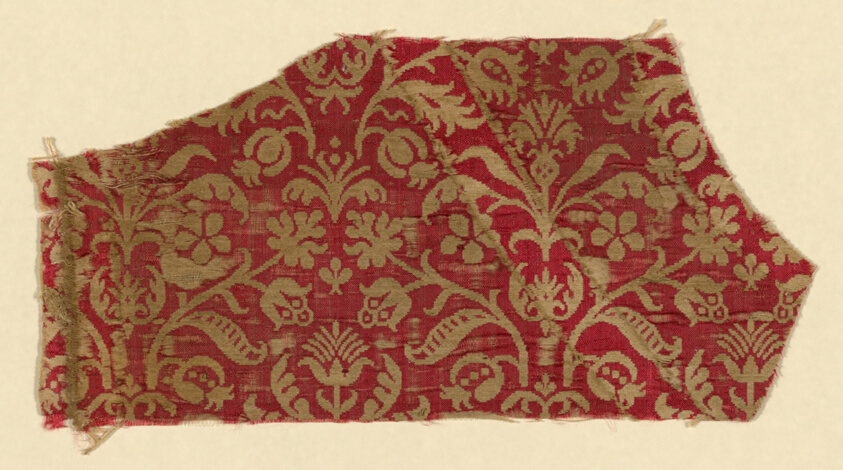
Category: Silk
Artifact Analysis: A Fragment of Fluid Elegance
Heritage Research Artifact: Fragment of Silk and Linen Compound Weave
In the hallowed corridors of London’s Savile Row, where tailoring is elevated to an art form, the study of textile fragments reveals the profound dialogue between materiality and mastery. This artifact—a fragment of silk and linen in a compound weave—embodies the quintessence of classic silk craftsmanship and fluid elegance. As Senior Heritage Specialist for the Lauren Fashion Heritage Lab, I present this analysis with the precision and reverence befitting a piece that whispers of centuries of sartorial tradition.
The fragment, measuring approximately 12 by 8 inches, is a testament to the intricate interplay of natural fibers. Silk, the noble filament derived from the cocoon of the silkworm, offers a lustrous surface that catches light with a subtle, almost ethereal glow. Linen, harvested from the flax plant, provides a structural backbone—its crisp, slightly irregular texture grounding the silk’s fluidity. The compound weave, a technique where two or more sets of warp and weft threads interlace to create a patterned fabric, elevates this piece beyond mere cloth. It is a deliberate construction, a marriage of opulence and resilience that speaks to the discerning eye of a Savile Row tailor.
Materiality and Craftsmanship
The compound weave is a hallmark of classic silk craftsmanship, demanding a level of skill that has been honed over generations. In this fragment, the warp threads—predominantly silk—are arranged with meticulous tension, while the linen weft threads are woven in to create a subtle, geometric pattern. The result is a fabric that drapes with an almost liquid quality, yet retains a tailored stiffness that prevents it from collapsing into formlessness. This duality is the essence of fluid elegance: the ability to move with the body while maintaining a distinct silhouette.
Historically, such weaves were reserved for the elite—aristocrats and financiers who frequented the bespoke houses of Mayfair. The silk’s sheen, often achieved through a process of degumming and dyeing with natural pigments, would have been a marker of status. Linen, while more humble, was prized for its breathability and durability, making it ideal for garments that required both comfort and structure. Together, these fibers create a fabric that is at once luxurious and practical, a paradox that defines the best of British tailoring.
Context and Provenance
While the exact provenance of this fragment is obscured by time, its construction aligns with the late 19th to early 20th century—a period when Savile Row was solidifying its reputation as the epicentre of men’s fashion. The compound weave technique, though ancient in origin, experienced a revival during this era, as tailors sought to differentiate their work through innovative textures and patterns. This fragment may have been part of a waistcoat, a cravat, or even a lining for a morning coat—garments that demanded both visual appeal and functional integrity.
The context of classic silk craftsmanship is further illuminated by the fragment’s condition. The silk threads retain their original luster, suggesting careful storage away from light and moisture. The linen, however, shows signs of wear—slight fraying at the edges, a faint discoloration from oxidation. This juxtaposition of preservation and decay tells a story of use: the fragment was not merely a sample but a piece of a garment that was worn, perhaps by a gentleman of means who valued both style and substance. It is a relic of a bygone era when clothing was an investment, a statement of identity woven into every thread.
Fluid Elegance in Design
The term “fluid elegance” is often used in fashion discourse, but here it takes on a tangible form. The fragment’s drape is its most striking feature. When held, the silk-linen composite falls in soft, undulating folds, mimicking the movement of water. This is no accident; the compound weave allows for a controlled fluidity, where the fabric responds to gravity and motion without losing its shape. In a Savile Row context, this quality is essential for garments like the lounge suit or the dinner jacket, where the fabric must complement the body’s lines without clinging or sagging.
The pattern, though subtle, is equally deliberate. The geometric motifs—likely a small-scale houndstooth or a herringbone—are woven into the fabric rather than printed, a testament to the weaver’s artistry. These patterns add depth and texture, catching the eye without overwhelming the senses. In the hands of a master tailor, such a fabric would be cut on the bias to enhance its drape, or used for panels that require both structure and movement. The fragment thus serves as a blueprint for the principles of bespoke tailoring: precision, balance, and an unerring attention to detail.
Heritage and Modern Implications
As a heritage research artifact, this fragment offers invaluable insights into the evolution of textile technology and design. It reminds us that luxury is not merely about expense but about the marriage of material and method. For the Lauren Fashion Heritage Lab, this piece is a touchstone for understanding how classic silk craftsmanship can inform contemporary practice. In an age of fast fashion and synthetic blends, the fragment stands as a counterpoint—a call to return to the principles of quality, durability, and timeless elegance.
Moreover, the fragment’s materiality has implications for sustainability. Silk and linen are biodegradable, renewable resources that, when woven with care, produce garments that last for decades. This aligns with the growing movement toward slow fashion, where heritage techniques are revived to reduce waste and promote ethical production. By studying such artifacts, we can rediscover the value of craftsmanship and apply it to modern design, ensuring that the legacy of Savile Row endures.
Conclusion
This fragment of silk and linen compound weave is more than a piece of fabric; it is a narrative of artistry, history, and enduring style. Its fluid elegance and classic craftsmanship speak to a tradition that transcends trends, rooted in the meticulous hands of weavers and tailors who understood that true luxury lies in the details. As we preserve and analyze such artifacts, we honor not only the past but also the future of fashion—a future where heritage and innovation walk hand in hand, draped in the timeless beauty of silk and linen.
— Senior Heritage Specialist, Lauren Fashion Heritage Lab