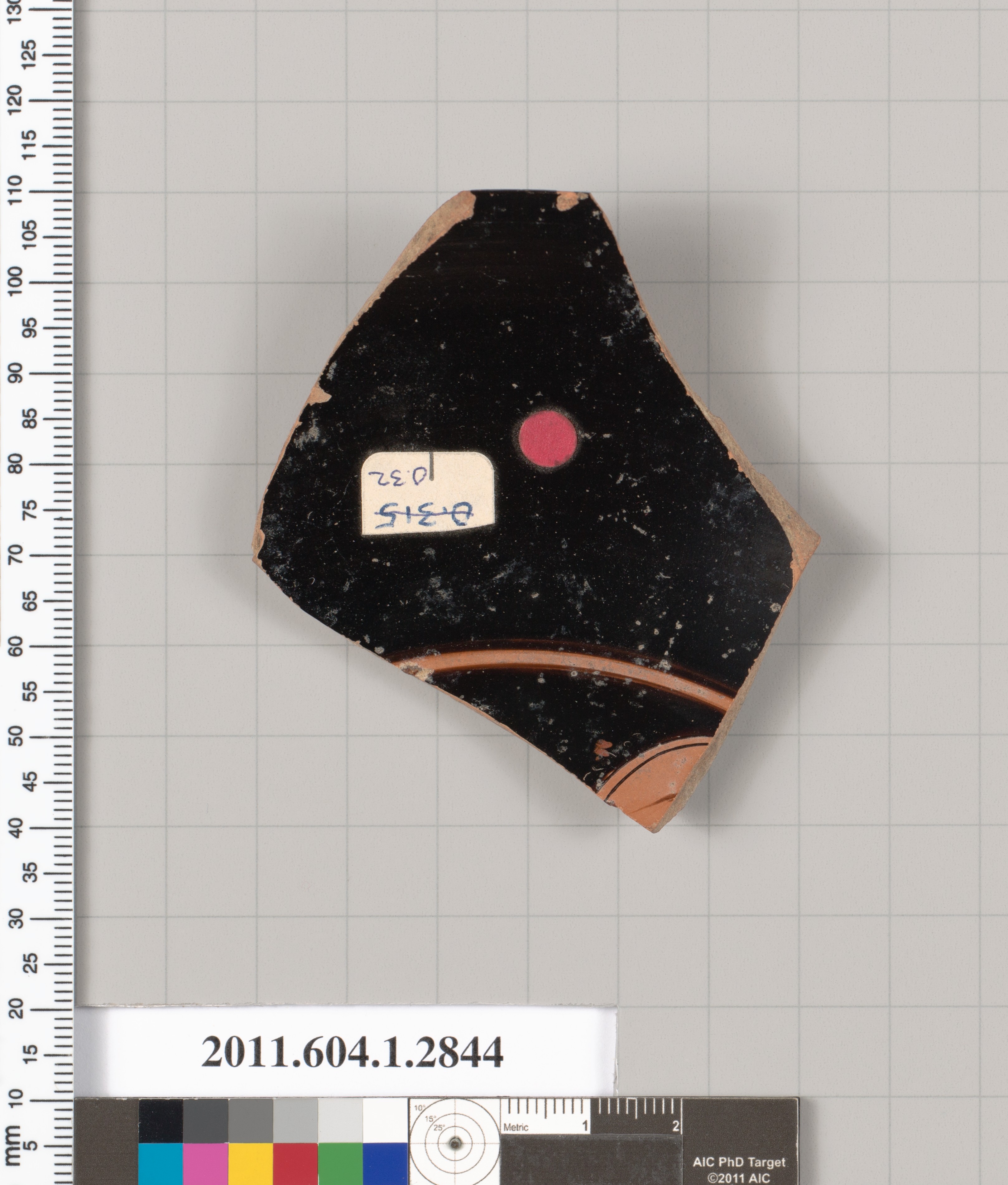
From Symposium to Sartorial Sacrifice: The Terracotta Kylix and the 2026 Old Money Silhouette
The terracotta fragment of an Attic kylix—a shallow, two-handled drinking cup central to the Greek symposium—offers an unexpected yet profound wellspring for the 2026 Old Money silhouette. While the internal genetic code of Lauren Fashion Heritage Lab draws a parallel between David’s Death of Socrates and the Shang-Zhou bronze fangyou, this humble ceramic shard, broken and incomplete, speaks a different language. It is not a grand narrative of philosophical sacrifice nor a ritual vessel for cosmic transformation. Instead, it embodies the quotidian elegance of restrained participation—a quality that, when translated into contemporary tailoring, defines the quiet authority of the 2026 Old Money aesthetic. This analysis argues that the kylix’s formal properties—its balanced asymmetry, its tactile invitation, and its integration of the human hand into a social ritual—inform a silhouette that prioritizes understated structure, deliberate incompleteness, and the material memory of use.
I. The Kylix as a Study in Controlled Asymmetry
Unlike the symmetrical perfection of David’s Neoclassical composition or the geometric rigidity of the bronze fangyou, the kylix fragment reveals a dynamic equilibrium born of breakage. The original vessel, with its two handles extending outward like arms, was designed to be passed from hand to hand, creating a continuous flow of gesture and gaze. In its fragmented state, the missing section becomes a negative space that demands the viewer’s imaginative completion. This principle of controlled asymmetry directly informs the 2026 Old Money silhouette. The new tailoring eschews the rigid, boxy shoulders of the 1980s power suit and the exaggerated proportions of the 2020s streetwear-influenced blazer. Instead, designers are embracing a deliberate imbalance: a single shoulder slightly dropped, a hemline that dips lower on one side, or a lapel that folds asymmetrically. These details are not random; they mimic the kylix’s structural logic, where the handles create a visual counterweight to the bowl’s volume. The result is a garment that appears both effortless and intentional, suggesting a lineage of wear rather than a single moment of creation.
II. The Tactile Imperative: Materiality and the Hand
The kylix was not merely a visual object; it was a tactile interface. The drinker’s hand would grip the handle, the fingers curving around the terracotta’s slightly rough surface, while the lips met the rim. This haptic engagement is central to the Old Money philosophy of material authenticity. In the 2026 silhouette, this translates into a renewed emphasis on textured, weighty fabrics that demand to be touched and handled. Think of a double-faced cashmere coat whose interior is as refined as its exterior, or a wool flannel trouser with a subtle herringbone weave that catches the light differently with each movement. These materials, like the kylix’s terracotta, carry the memory of the maker’s hand—the slight irregularities in the weave, the natural drape of the fabric, the way a seamstress’s stitch creates a subtle ridge. This is a direct counterpoint to the digital perfection of fast fashion. The 2026 Old Money silhouette is not about pristine novelty; it is about the patina of use. A slight pilling on a sleeve, a faded crease at the elbow—these are not flaws but biographies, akin to the kylix’s broken edge, which tells a story of symposiums past.
III. The Ritual of Pouring: Silhouette as a Vessel for Social Performance
The kylix’s primary function was to hold wine for the symposium—a ritual of philosophical discourse, poetry, and social bonding. The act of pouring from a larger krater into the kylix, then passing it, was a choreography of inclusion. The 2026 Old Money silhouette borrows this logic of ritualized movement. The garments are designed not for static display but for dynamic social performance. A coat’s wide lapel, when turned up, frames the face as if for a symposium’s intimate conversation. A trouser’s high waist and gentle flare allow for a fluid stride, reminiscent of a philosopher pacing the agora. The silhouette itself becomes a vessel for the wearer’s gestures. The interior pockets are deep enough to hold a leather-bound notebook or a fountain pen—tools of intellectual exchange. The cut of a jacket’s shoulder allows for a natural, unforced posture, inviting the wearer to lean in, to listen, to participate. This is the antithesis of the armor-like, defensive silhouettes of contemporary luxury; it is an invitation to dialogue, much like the kylix passed from hand to hand.
IV. Heritage-Black as the New Terracotta: Color and the Absence of Color
Finally, the choice of Heritage-Black as the category tag for this analysis is deliberate. The terracotta fragment, in its raw, fired state, is a warm, earthy red-brown. Yet the kylix was often decorated with black-figure or red-figure painting, where the black slip created a stark, luminous contrast against the clay. In the 2026 Old Money palette, Heritage-Black functions similarly. It is not the flat, dead black of synthetic dyes but a rich, nuanced black that absorbs and reflects light differently depending on the weave—a wool broadcloth’s deep charcoal, a silk crepe’s jet shimmer, a cashmere’s matte velvet. This black is a negative space that allows the silhouette’s asymmetry and the fabric’s texture to speak. It is the color of the symposium’s evening sky, of the philosopher’s cloak, of the broken kylix’s shadow. It is a color that refuses spectacle, demanding instead a quiet, sustained attention. In this, it mirrors the kylix’s own aesthetic: a humble object, broken yet whole, whose beauty lies not in perfection but in its capacity to hold meaning.
Conclusion: The Silhouette as a Fragment of Civilization
The terracotta kylix, in its fragmentary state, teaches us that completeness is not the goal. The 2026 Old Money silhouette, informed by this artifact, is not a finished statement but a fragment of a larger civilization—a civilization of intellectual exchange, tactile pleasure, and quiet ritual. Like the kylix passed among symposiasts, the garments are designed to be shared, worn, and broken in. They are not costumes for a performance but tools for living. In an era of digital saturation and visual overload, this silhouette offers a return to the physical, the haptic, and the social. It is a vessel for the hand, a frame for the gesture, and a testament to the enduring power of understated, material intelligence. The kylix may be shattered, but its spirit—of balance, of ritual, of human connection—lives on in every carefully draped shoulder and every asymmetrical seam of the 2026 collection.