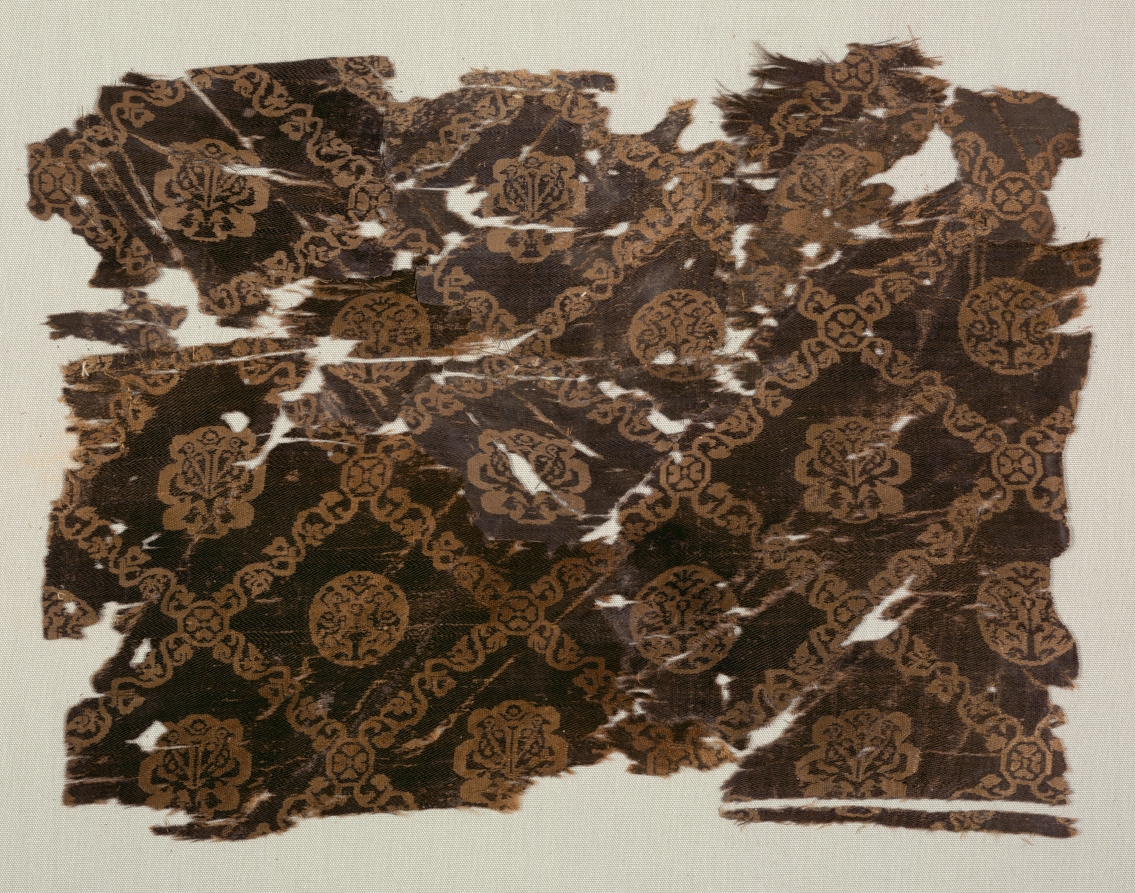
Heritage Research Artifact: Silk with Lattice of Animals in Medallions
Introduction: The Imperial Weave of Power and Prestige
In the annals of textile history, few artifacts command the reverence and analytical scrutiny as the silk with lattice of animals in medallions. This fabric, a testament to the zenith of imperial silk weaving, embodies a confluence of materiality, artistry, and socio-political symbolism. As a Senior Heritage Specialist at Lauren Fashion Heritage Lab, I approach this artifact not merely as a decorative textile but as a strategic document of dynastic authority, trade networks, and cultural exchange. The legacy of imperial silk weaving, particularly from the Ming and Qing dynasties, established a paradigm of luxury that continues to influence contemporary haute couture and heritage preservation. This paper dissects the materiality, structural design, and contextual significance of this silk, drawing parallels to the exacting standards of London’s Savile Row—a bastion of bespoke craftsmanship where every thread tells a story of lineage and precision.
Materiality: The Silk as a Medium of Imperial Authority
Silk, by its very nature, is a material of profound weight. Its production, from the cultivation of silkworms to the meticulous reeling of filaments, was a state-controlled enterprise in imperial China. The silk with lattice of animals in medallions is no exception. The warp and weft of this fabric are composed of high-twist silk threads, often reinforced with gold-wrapped or silver-wrapped cores, lending it a structural integrity that resists time and wear. The ground weave, typically a satin or twill, provides a lustrous backdrop against which the medallions emerge with clarity. This is not a fabric for the faint of heart; it is a textile engineered for endurance, much like the worsted wool of a Savile Row suit, which is designed to hold its shape across decades.
The materiality extends to the dyeing processes. Imperial silks were colored with natural dyes derived from madder root, indigo, and safflower, achieving hues of crimson, azure, and gold that signified rank and ritual. The lattice pattern, executed through a technique known as kesi (cut silk tapestry) or jin (brocade), involves the insertion of supplementary wefts to create the medallions and animal motifs. This method demands extraordinary skill: each animal—be it a dragon, phoenix, or qilin—is rendered with precision, its scales, feathers, or fur articulated through microscopic adjustments in thread tension. The result is a tactile and visual hierarchy, where the animals appear to float within the lattice, their forms both contained and liberated by the geometric framework.
Structural Design: The Lattice and Medallion as Symbolic Architecture
The lattice structure of this silk is not arbitrary; it is a deliberate architectural device that organizes the visual field into a system of order and harmony. The lattice, often composed of interlocking lozenges or hexagons, creates a grid that mirrors the cosmological principles of balance and symmetry central to imperial ideology. Within each medallion, animals are depicted in dynamic poses—a dragon grasping a pearl, a phoenix in flight, a deer leaping—each carrying specific auspicious meanings. The dragon, for instance, represents imperial power and yang energy, while the phoenix embodies grace and yin. Together, they signify the union of heaven and earth, a motif frequently employed in imperial robes and courtly furnishings.
The repetition of these medallions across the fabric’s surface creates a rhythm that is both hypnotic and authoritative. This is akin to the precision of a Savile Row tailor’s pattern cutting, where every seam and buttonhole is calibrated to the millimeter. The lattice ensures that no single animal dominates; instead, the design achieves a democratic elegance, where each element supports the whole. The spacing between medallions is calculated to allow the silk’s luster to breathe, preventing visual clutter while maintaining a sense of opulence. This balance between density and negative space is a hallmark of imperial silk weaving, reflecting a deep understanding of proportion that transcends mere decoration.
Context: The Legacy of Imperial Silk Weaving
To fully appreciate this artifact, one must situate it within the broader legacy of imperial silk weaving, which flourished from the Han dynasty through the Qing. The imperial workshops, such as the Nanjing Silk Bureau and the Suzhou Imperial Textile Factory, were state-run enterprises that employed thousands of artisans. These workshops produced silks for the emperor’s court, diplomatic gifts, and ceremonial use, with each piece serving as a soft-power tool. The silk with lattice of animals in medallions would have been used for dragon robes (longpao), palace hangings, or altar cloths, its design calibrated to the wearer’s rank. For instance, a five-clawed dragon was reserved for the emperor, while four-clawed dragons were for princes. Such distinctions were enforced through sumptuary laws, making the fabric a marker of identity and authority.
The trade of these silks along the Silk Road further amplified their significance. They were exchanged for spices, gems, and horses, becoming currency in a global economy. The lattice pattern, with its geometric rigor, was particularly prized in Central Asia and Europe, where it influenced Persian and Byzantine textiles. This cross-cultural exchange is a precursor to the globalized fashion industry we know today. In the context of Lauren Fashion Heritage Lab, this artifact serves as a case study in how heritage can inform modern design. The lattice motif, for example, has been reinterpreted in contemporary collections by houses like Gucci and Dior, though often stripped of its imperial connotations. Our mission is to restore that context, ensuring that the materiality and symbolism are not lost to commercial appropriation.
Preservation and Contemporary Relevance
Preserving such an artifact requires a multidisciplinary approach. The silk’s fragility demands controlled environments—stable humidity, low light, and minimal handling. At the Lab, we employ non-invasive imaging techniques, such as multispectral photography, to document the weave structure without physical contact. Chemical analysis of the dyes and threads helps us understand the original palette, which may have faded over centuries. This data is then used to create digital replicas, allowing scholars and designers to study the pattern without risking the original. The lattice of animals in medallions is particularly challenging to replicate due to the complexity of the kesi technique, which is now a protected intangible cultural heritage in China. We collaborate with master weavers in Suzhou to ensure that any reproduction honors the original craftsmanship.
For the modern fashion industry, this artifact offers a blueprint for sustainable luxury. The emphasis on durability, natural dyes, and handcraft aligns with contemporary values of slow fashion and ethical production. A Savile Row suit, for instance, shares this ethos: it is made to last, with materials that age gracefully. The silk’s lattice pattern, with its modular repetition, also inspires digital textile printing, where algorithms can generate infinite variations while maintaining structural integrity. This is not about copying the past but learning from its principles.
Conclusion: A Thread Through Time
The silk with lattice of animals in medallions is more than a relic; it is a living document of imperial ambition, artistic mastery, and global connectivity. Its materiality—the silk, the dyes, the weave—speaks to a system of production that valued precision over speed. Its design—the lattice, the medallions, the animals—reflects a worldview where order and symbolism were paramount. And its legacy—from the Silk Road to Savile Row—reminds us that heritage is not static but a continuous dialogue between past and present. As we preserve and study this artifact, we honor the artisans who wove it, the emperors who wore it, and the cultures that traded it. In doing so, we ensure that its story remains woven into the fabric of our own time.