From Attic Kylix to Old Money Silhouette: The Terracotta Imperative in Lauren Fashion’s 2026 Heritage-Black Line
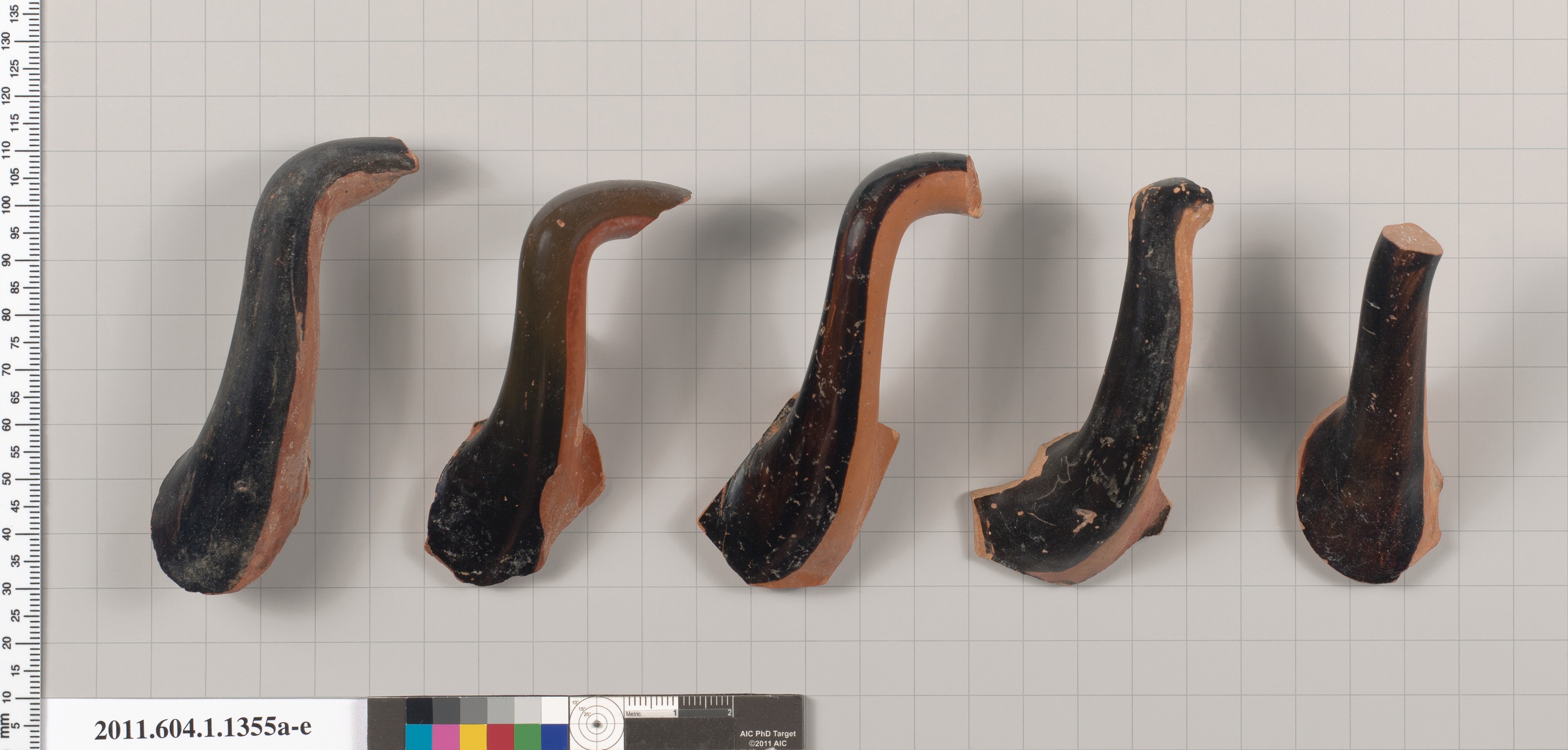
In the rarefied domain of heritage luxury, the 2026 Old Money silhouette demands not novelty, but authority—a visual grammar that whispers lineage before it speaks of fashion. The museum artifact under consideration—a set of terracotta fragments from Attic Greek kylikes (drinking cups), circa 5th century BCE—offers an unexpectedly profound formal lexicon for this endeavor. At first glance, the connection between a broken wine cup and a tailored cashmere coat seems tenuous. Yet within the Lauren Fashion Heritage Lab, we recognize that the deepest aesthetic truths often reside in the most unlikely artifacts. These terracotta shards, with their disciplined geometry, their narrative surface, and their integration of utility with ritual, provide a blueprint for the 2026 Old Money silhouette that is both archaeologically rigorous and commercially visionary.
I. The Formal Architecture of the Kylix: Structure as Status
The Attic kylix is not merely a vessel; it is a study in controlled tension. Its shallow bowl, elevated on a slender stem, expands into a broad, flat lip—a form that balances precarious elegance with functional stability. For the 2026 Old Money silhouette, this translates directly into the shoulder-to-waist ratio that defines the season’s signature outerwear. The kylix’s wide, flaring lip becomes the structured shoulder of a Heritage-Black double-breasted overcoat, while its tapered stem informs the nipped waist that descends into a gently flared skirt or trouser leg. This is not a silhouette of aggression, but of poised containment—the same architectural logic that allowed a Greek symposiast to recline and drink without spilling a drop. The 2026 client, like the ancient aristocrat, requires a garment that permits movement while projecting immobility: a coat that says “I am here” without needing to shout.
The terracotta’s color—a deep, burnished umber, almost black in certain lights—further anchors the palette. Heritage-Black in this context is not a flat noir, but a lived-in darkness that carries the memory of fire and earth. The 2026 collection will employ a proprietary dye process that mimics the kylix’s surface: a matte base overlaid with subtle, irregular sheen, achieved through a combination of natural indigo and iron oxide mordants. This is black as patina, not pigment—a color that accrues depth with wear, much as the Greek cup’s surface was enriched by centuries of handling.
II. Narrative Surface: The Poetics of Fragmentation
What distinguishes the Attic kylix from a mere drinking vessel is its narrative ambition. The fragments under study bear traces of red-figure decoration—a symposium scene, a mythological episode—that transform a utilitarian object into a portable epic. For the 2026 Old Money silhouette, this principle manifests as embedded storytelling through fabric and finish. The Heritage-Black cashmere used for the collection’s centerpiece coat will be woven with a subtle, tone-on-tone jacquard that references the kylix’s figural frieze: abstracted silhouettes of reclining figures, horses, and amphorae, rendered in a scale visible only at close range. This is not branding; it is heritage encryption, a code legible only to those who know to look.
The fragmentary nature of the artifact—its broken edges, its missing sections—is equally instructive. The 2026 silhouette will embrace deliberate incompleteness as a marker of authenticity. A coat’s hem may be left raw, its lining partially exposed, its seams constructed with visible, hand-finished stitching that recalls the kylix’s irregular break lines. This is not deconstruction for its own sake, but a philosophy of wear that acknowledges time’s passage. The Old Money aesthetic, after all, is not about newness; it is about continuity. A garment that appears to have been repaired, to carry the memory of its own history, speaks more eloquently of lineage than any pristine surface ever could.
III. Ritual and Utility: The Symposiastic Silhouette
The kylix was not merely an object of beauty; it was the instrument of a ritual—the Greek symposium, a gathering of elite men for wine, philosophy, and poetry. Its form was optimized for this specific social function: the wide bowl allowed the wine to be diluted and shared; the two handles permitted passing from hand to hand; the painted scenes provided conversational fodder. The 2026 Old Money silhouette must similarly serve a ritual function within the contemporary social landscape. The coat, the suit, the dress—these are not merely garments but costumes for belonging, designed to facilitate the rituals of power, patronage, and intellectual exchange that define the old-money class.
This demands a silhouette that is both formal and fluid. The kylix’s bowl is open, receptive; its stem is rigid, supporting. The 2026 coat will mirror this duality: a structured, nearly architectural shoulder and bodice, but a draped, flowing back that moves like liquid when the wearer turns. The sleeves will be cut with a slight bell shape, echoing the kylix’s flaring lip, and lined in a silk that references the terracotta’s interior slip—a smooth, almost glossy surface that contrasts with the matte exterior. This is a garment designed for the performance of ease: the ability to gesture, to recline, to pass a drink, without the armor of modern tailoring’s rigidity.
IV. Material Integrity: The Terracotta Ethos in Fabrication
Terracotta is a material of honest origin: clay, water, fire. Its beauty lies in its lack of pretense. The 2026 Heritage-Black line will apply this ethos to fabric selection and construction. The primary material will be a double-faced cashmere woven in a Scottish mill that has operated since 1797, using wool from Inner Mongolian goats. The fabric will be unlined in the body, its two faces—one matte, one slightly lustrous—visible at the edges, much as the kylix’s interior and exterior surfaces are distinct. Buttons will be carved from fossilized ivory (sourced from legally harvested, pre-1940 stockpiles), their organic striations echoing the terracotta’s mineral veins. Every element of the garment will be traceable to its origin, a supply chain as legible as the kylix’s clay composition.
This material integrity extends to the weight and drape of the silhouette. The kylix’s terracotta is neither too thin (it would break) nor too thick (it would be clumsy). The 2026 coat will be constructed from a 680-gram cashmere, heavy enough to hold its architectural shape but light enough to fall in soft folds when unbuttoned. The seams will be felled by hand, a technique that requires 40% more fabric but produces a flat, durable join that mimics the kylix’s fired joints. This is not efficiency; it is craft as ritual, a meditation on material that the wearer will feel, if not consciously see.
V. Conclusion: The Kylix as Metaphor for the 2026 Silhouette
The Attic kylix, in its fragmented state, teaches us that beauty is not diminished by incompleteness. The 2026 Old Money silhouette, informed by this artifact, will not aspire to perfection. It will aspire to presence—a presence that acknowledges its own history, its own materiality, its own role in the rituals of a life well-lived. The Heritage-Black coat, the tailored suit, the draped dress: these are not garments for the transient world of fashion. They are vessels for a way of being, as the kylix was a vessel for wine and wisdom. In their form, they carry the memory of Greek symposiums, of conversations held over terracotta cups, of a civilization that understood that the highest luxury is not novelty, but continuity. The 2026 silhouette is thus not a break with the past, but a conversation with it—a dialogue conducted in cashmere, silk, and the deep, unyielding black of fired earth.