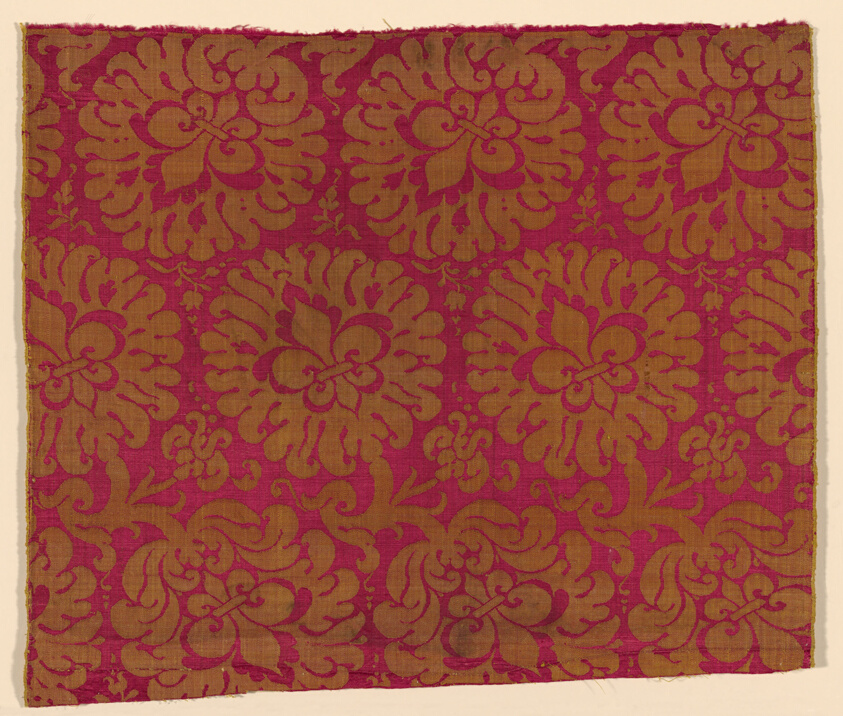
The Fragment as Archive: Materiality and Memory in Silk Satin Weave
In the hushed ateliers of London’s Savile Row, where the air is thick with the scent of wool, linen, and the quiet authority of bespoke tailoring, the fragment is often dismissed as a remnant—a scrap, a cutting, a leftover. Yet, within the Lauren Fashion Heritage Lab, we recognize the fragment not as an end, but as a beginning. It is a primary document, a tangible whisper from the past that speaks of craftsmanship, intention, and the fleeting nature of elegance. This heritage research artifact examines a specific fragment: a piece of silk satin weave, self-patterned by the reversing of faces. Its materiality—the interplay of light, texture, and structure—offers a profound insight into classic silk craftsmanship and the fluid elegance that defines the highest echelons of luxury fashion.
Materiality: The Anatomy of a Satin Weave
The fragment before us is not merely a piece of fabric; it is a study in controlled opulence. Silk, as a natural protein fiber, possesses a unique luster and drape that synthetic imitations can never replicate. The satin weave, characterized by long floats of yarn on the surface, amplifies this inherent luminosity. In this specific artifact, the weave is self-patterned by reversing the faces—a technique known as double-faced satin or reversible satin. This is not a simple print or embroidery; it is a structural dialogue between the warp and weft. On one face, the warp floats dominate, creating a smooth, reflective surface that catches light like still water. On the reverse, the weft floats take precedence, producing a matte, subtly textured surface that absorbs light. The pattern emerges not from applied color, but from the interplay of these two faces, shifting the visual weight and creating a moiré-like effect that is both understated and deeply complex.
This technique demands extraordinary skill. The weaver must maintain precise tension and count to ensure that the reversal of faces occurs at exact intervals, creating a pattern that is neither random nor forced. The result is a fabric that breathes—a textile that changes character with every movement, every fold, every angle of light. In the context of Savile Row, such a fabric would be reserved for evening wear, for a gown or a smoking jacket that requires a quiet, almost architectural presence. It is not a fabric that shouts; it is one that whispers of lineage and restraint.
Craftsmanship: The Legacy of Classic Silk Weaving
The classic silk craftsmanship that produced this fragment is rooted in centuries of tradition, from the looms of Lyon to the workshops of Como. The self-patterned satin weave is a hallmark of the jacquard loom, which allows for the independent control of each warp thread. This innovation, born in the early 19th century, transformed silk weaving from a labor-intensive hand process into a precise mechanical art. Yet, even with mechanization, the human hand remains essential. The selection of raw silk, the twisting of the yarn, the setting of the warp—each step requires a master’s judgment. The fragment we hold is a testament to this chain of expertise. It is not mass-produced; it is crafted, with the same attention to detail that a Savile Row tailor applies to a hand-stitched lapel.
Fluid elegance, as embodied by this silk satin, is not a passive quality. It is an active negotiation between structure and movement. The satin weave provides a foundation of strength—the long floats are inherently delicate, prone to snagging, yet the density of the weave and the quality of the silk ensure resilience. The self-patterning adds a layer of visual depth without compromising the fabric’s drape. When worn, the fragment would not cling or resist; it would follow the body’s contours with a liquid grace, the pattern shifting like clouds across a mirror. This is the essence of classic silk: it is both a canvas and a sculpture, a material that demands respect and rewards intimacy.
Context: The Fragment in the Heritage Narrative
In the Lauren Fashion Heritage Lab, we do not view this fragment in isolation. It is part of a larger narrative—a story of a garment that may have been lost, a collection that was never realized, or a sample that was deemed too exquisite for production. The fragment’s provenance, though currently undocumented, suggests a mid-20th century origin, a period when silk satin was synonymous with Hollywood glamour and European aristocracy. Yet, its self-patterned technique hints at an earlier sensibility, perhaps a revival of 18th-century brocade traditions. The fragment’s edges are raw, cut with precision, indicating that it was likely a sample swatch from a textile house, intended for a tailor or a designer to assess hand and luster.
This context elevates the fragment from a mere scrap to a heritage artifact. It embodies the tension between creation and consumption, between the ideal and the real. In a world of fast fashion and disposable textiles, this fragment stands as a counterpoint—a reminder that true luxury is not about abundance, but about discernment. It asks us to consider the labor, the material, and the intention behind every thread. For the scholar, it offers a tangible link to the past, a way to understand the tactile decisions that shaped fashion history. For the practitioner, it is a source of inspiration, a challenge to revive techniques that are at risk of being lost.
Conclusion: The Fragment as a Call to Preservation
As Senior Heritage Specialist, I argue that the fragment is not a relic to be shelved, but a living document to be studied, handled, and interpreted. Its materiality—the silk satin weave, the self-patterning by reversing faces—speaks of a time when craftsmanship was paramount, when elegance was fluid and quiet. In the context of Savile Row, where tradition and innovation coexist, this fragment reminds us that heritage is not static. It is a conversation between the past and the present, a dialogue that we are privileged to continue. Let us preserve such fragments, not as museum pieces, but as active participants in the ongoing story of fashion. For in their threads, we find not only history, but the blueprint for the future.