← BACK TO ARCHIVES
Heritage-Black
Heritage Synthesis: Terracotta fragment of a kylix (drinking cup)
Curated on May 26, 2026 // Node: LDN-01
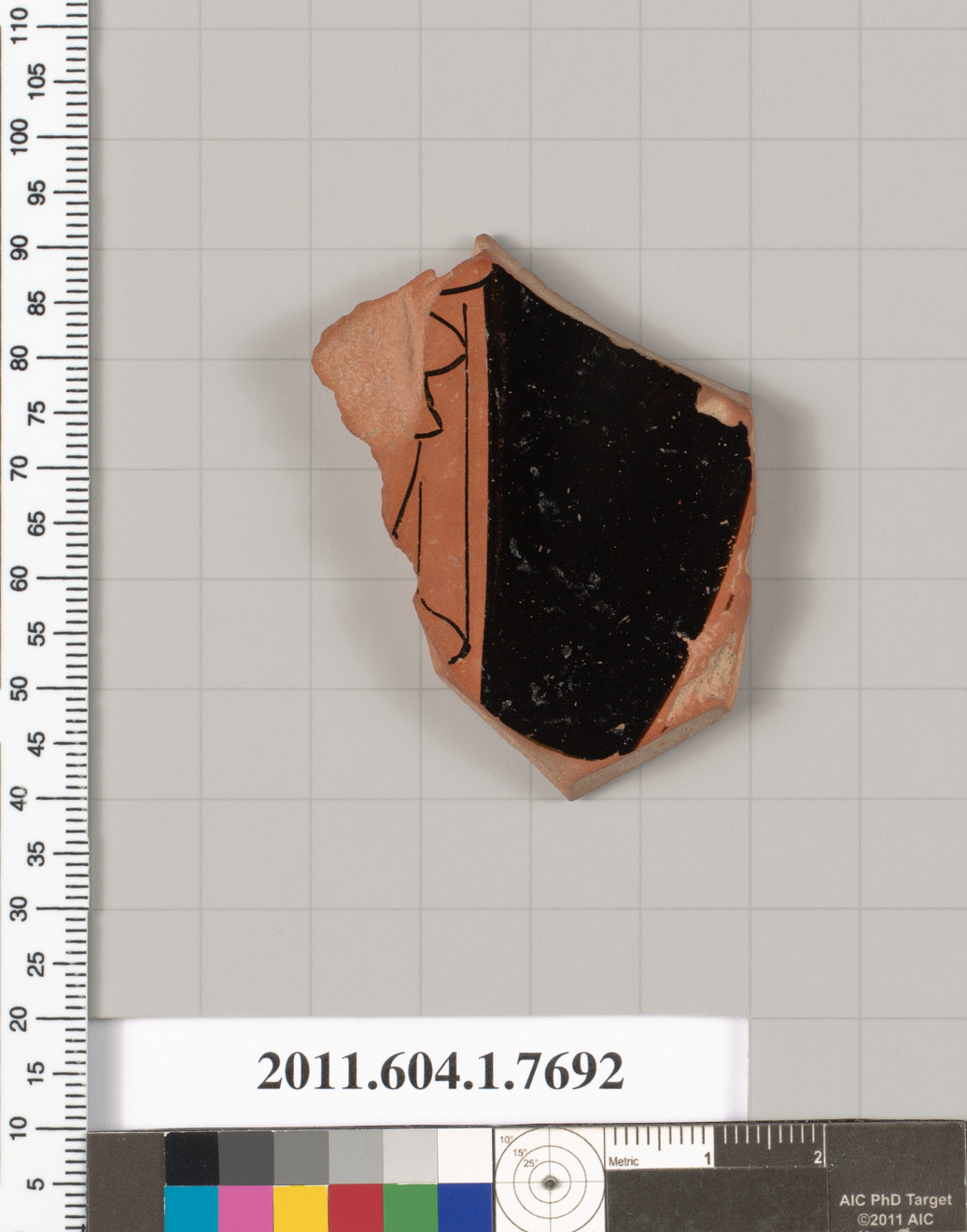
The Terracotta Kylix and the Architecture of Restraint: Recasting Attic Symmetry for 2026 Old Money Silhouettes
In the hushed galleries of the Lauren Fashion Heritage Lab, where the whisper of silk meets the permanence of stone, we turn our gaze from the spiritual intermediaries of the East and Near East to a fragment of the everyday: a terracotta kylix from Attic Greece. This drinking cup, broken yet eloquent, is not a vessel for wine alone. It is a blueprint for a philosophy of form—one that resonates profoundly with the emerging 2026 Old Money silhouette. Where the *Bodhisattva* and the *Amulet* sought to materialize the transcendent, the kylix embodies a different kind of power: the power of proportion, of civic grace, and of a restrained, almost mathematical, elegance. It is this grammar of symmetry and controlled volume that informs the next chapter of heritage dressing.
I. The Kylix as a Formal Archetype: Symmetry, Balance, and the Tondo
The Attic kylix, particularly in its black-figure and red-figure phases, is a masterclass in structural clarity. Its form is a study in concentric circles: the broad, shallow bowl; the elevated lip; the slender stem; and the flared foot. The most critical element, however, is the *tondo*—the circular painting within the interior of the cup. This is not mere decoration; it is the focal point, revealed only when the cup is drained. The tondo organizes the visual field with an unyielding centripetal force, drawing the eye inward to a singular, often narrative, image.
For the 2026 Old Money silhouette, this principle of the tondo translates into a new vocabulary of tailoring. The suit jacket, for instance, is no longer merely a garment; it is a structured vessel. The shoulder line becomes the kylix’s lip—clean, defined, and slightly projecting. The waist is the stem, a point of dramatic but controlled narrowing. The skirt or trouser hem becomes the foot, grounding the entire composition. The “tondo” itself is the focal point of the ensemble: a single, immaculate cashmere vest in a deep charcoal, a silk cravat tied with geometric precision, or a single, unadorned gold-Thread brooch pinned at the lapel. The rest of the garment recedes into a field of quiet, monochromatic wool or velvet, allowing this central element to command attention without competing. The aesthetic is not one of display, but of revelation—a quiet power that emerges only upon sustained observation.
II. The Material Logic of the Fragment: Terracotta’s Lesson in Texture and Weight
The kylix is made of terracotta—a humble, fired clay. Its value lies not in preciousness but in its utility and the skill of its maker. The surface, when intact, is polished to a subtle sheen, a “slip” that creates a tactile contrast between the matte clay and the glossy black glaze. This interplay of textures is a lesson in material hierarchy. The Old Money aesthetic, at its core, rejects ostentation. It finds luxury in the *quality* of the mundane: the drape of a heavy wool, the slight nap of a brushed cashmere, the irregular weave of a raw silk.
For 2026, this translates into a renewed emphasis on fabric weight and surface finish. The silhouette will favor fabrics that possess a “terracotta weight”—a substantial, grounded feel that does not float or flutter. Think of a double-faced wool coat that stands away from the body with architectural precision, or a linen suit that has been washed and pressed into a state of soft, lived-in structure. The “glaze” is the finishing: a subtle sheen on a satin lapel, the matte finish of a tightly woven gabardine, the faint luster of a mother-of-pearl button. The goal is to create a visual and tactile dialogue between the matte and the glossy, the heavy and the light—a direct echo of the kylix’s own material language. This is not the flash of a sequin, but the quiet authority of a perfectly pressed seam.
III. The Civic Body: From Symposium to the Boardroom
The kylix was the vessel of the *symposium*—a ritualized, male-dominated gathering of intellectual and social exchange. Its form was designed for the reclining body, the hand that holds it, the eye that contemplates its interior. This is a garment for the body in motion, but a motion that is deliberate, measured, and self-aware. The 2026 Old Money silhouette, therefore, is not a static uniform. It is a system of proportions designed for the architecture of the modern civic space: the boardroom, the gallery opening, the private club, the university quad.
The kylix’s shallow bowl suggests a silhouette that is broad in the shoulder and chest, but never exaggerated. The “shoulder” of the garment—whether a coat or a blazer—should have a clean, continuous curve, like the rim of the cup. The torso tapers in a gentle, uninterrupted line, avoiding the aggressive suppression of a wasp waist. The hem of a jacket should fall at the hip, creating a visual horizontal that echoes the kylix’s foot. This is a silhouette that prioritizes *extension* over *constriction*. It is a body that is comfortable in its own space, confident enough to be generous in its proportions, yet disciplined enough to avoid excess. The result is a look that is simultaneously authoritative and approachable—the very essence of Old Money’s understated power.
IV. The Heritage-Black Synthesis: A Dialogue Across Time
To synthesize these insights, we must return to the concept of the “intermediary.” The kylix, like the *Bodhisattva* and the *Amulet*, is a mediator. It mediates between the drinker and the wine, between the individual and the social ritual, between the mundane and the aesthetic. In the 2026 Old Money silhouette, the garment itself becomes this intermediary. It is not a statement of wealth, but a vessel for presence. The terracotta fragment teaches us that true luxury is not about the rarity of the material, but the precision of the form. A perfectly cut jacket in Heritage-Black wool, with a single, perfectly placed pocket square, is the modern equivalent of the kylix’s tondo: a quiet, powerful center around which the entire composition revolves.
The 2026 silhouette, informed by this Attic logic, will be one of *controlled volume* and *centered focus*. It will reject the asymmetrical deconstruction of recent trends, returning to a symmetry that is both classical and modern. The palette will be monochromatic, anchored by Heritage-Black, deep navy, and charcoal, with accents of ivory and burnished gold. The textures will be rich but subdued: the nap of velvet, the crispness of linen, the weight of wool. The result is a wardrobe that functions as a personal architecture—a structure of restraint, balance, and quiet, undeniable authority. It is the legacy of the kylix, reborn not in clay, but in cloth.
Heritage Lab Insight
Genetic Bridge: Archive node focusing on Heritage-Black craftsmanship.